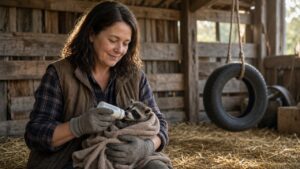
At first, the man who found her thought she was a bear cub.
It was mid-June near Corry, Pennsylvania. An off-duty Pennsylvania Game Commission officer was fishing nearby when he glimpsed something dark moving through the brush.
He looked closer, expecting a little bear. Instead, he found a young bald eagle who had fallen out of her nest.
That mix-up gave her the perfect name. They called her Ursa, the Latin word for a female bear.
A Nestling Who Fell in the Wind
Ursa was still a nestling when she came to Tamarack Wildlife Center, a wildlife rehabilitation center in northwestern Pennsylvania.
According to the center’s executive director, Carol Holmgren, the young eagle had fallen from her nest during a high-wind event.
She was big for her age, but she was in trouble. She arrived dehydrated and underweight.
A baby eagle on the ground can’t feed itself or protect itself. Without help, the odds would have been very poor.
Luckily, the right person happened to be fishing in the right spot that day.
It is easy to imagine how differently this could have gone if he had simply kept on fishing.
Learning to Be an Eagle
At Tamarack, Ursa’s recovery went well, Holmgren said.
But getting healthy was only the first step. A young eagle also has to learn how to be an eagle.
Normally, her parents would have taught her. But nobody could identify the tree her nest had come from, so the team couldn’t simply put her back.
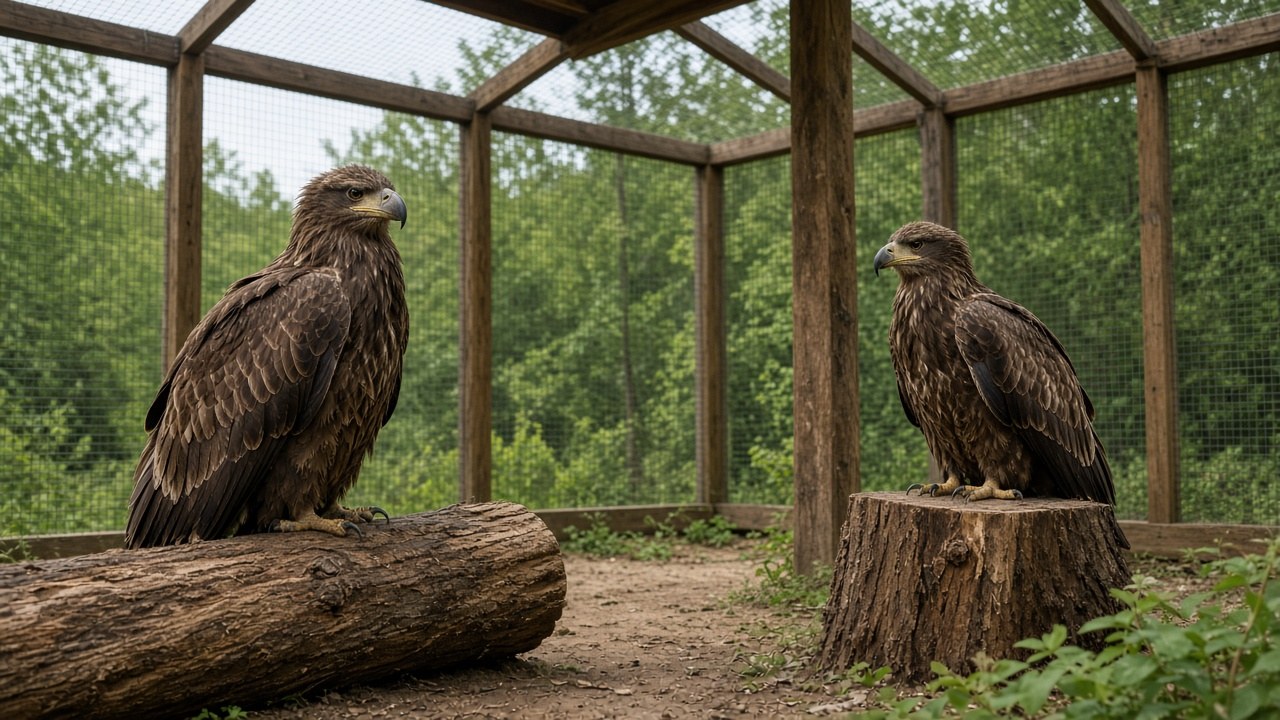
So soon after she arrived, Ursa was housed with other eagles at the center.
There, she could learn the life skills she would have picked up from her own family. Flying, and building stamina.
And all the other things a youngster needs to know before living on her own, like recognizing natural food sources.
Think about that for a moment. A whole community of eagles and humans stepped in to raise one lost baby.
Nobody could hand her a lesson plan. She had to watch, try, fail and try again, day after day.
More Than Four Months of Work
Ursa spent more than four months rehabilitating at Tamarack.
By the end, she weighed 10 pounds, and her wingspan was reported at 8 feet.
But there was one thing she had never done. She had never flown outside of an enclosed space.
On Wednesday afternoon, October 21, that finally changed.
Release Day at the Marsh
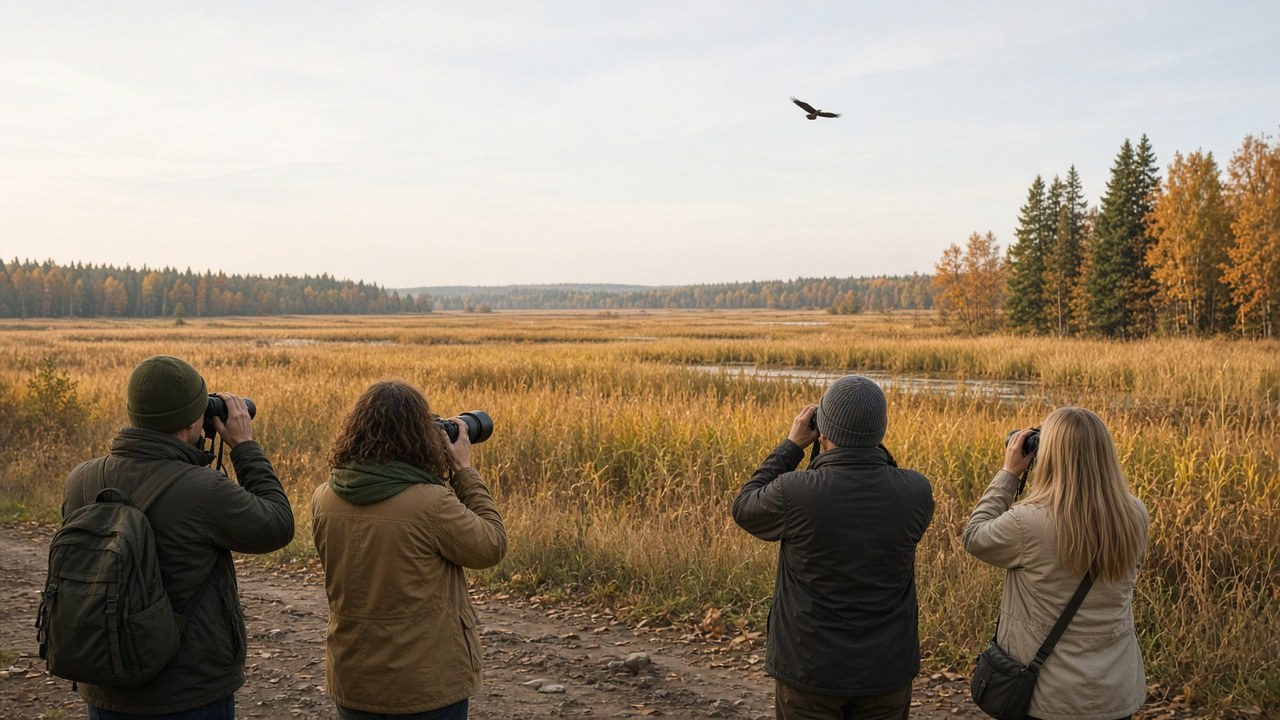
Holmgren and Game Warden Stephen Wingenbach brought Ursa’s carrier to the Pymatuning Wildlife Management Area’s Hartstown Marsh Project.
About 15 people lined a dirt road to watch. They were Tamarack volunteers, board members and supporters who wanted to see the release up close.
Some held clicking cameras. Some held silent binoculars. Everyone waited.
After all those weeks inside, this was the moment that would show whether everything had worked.
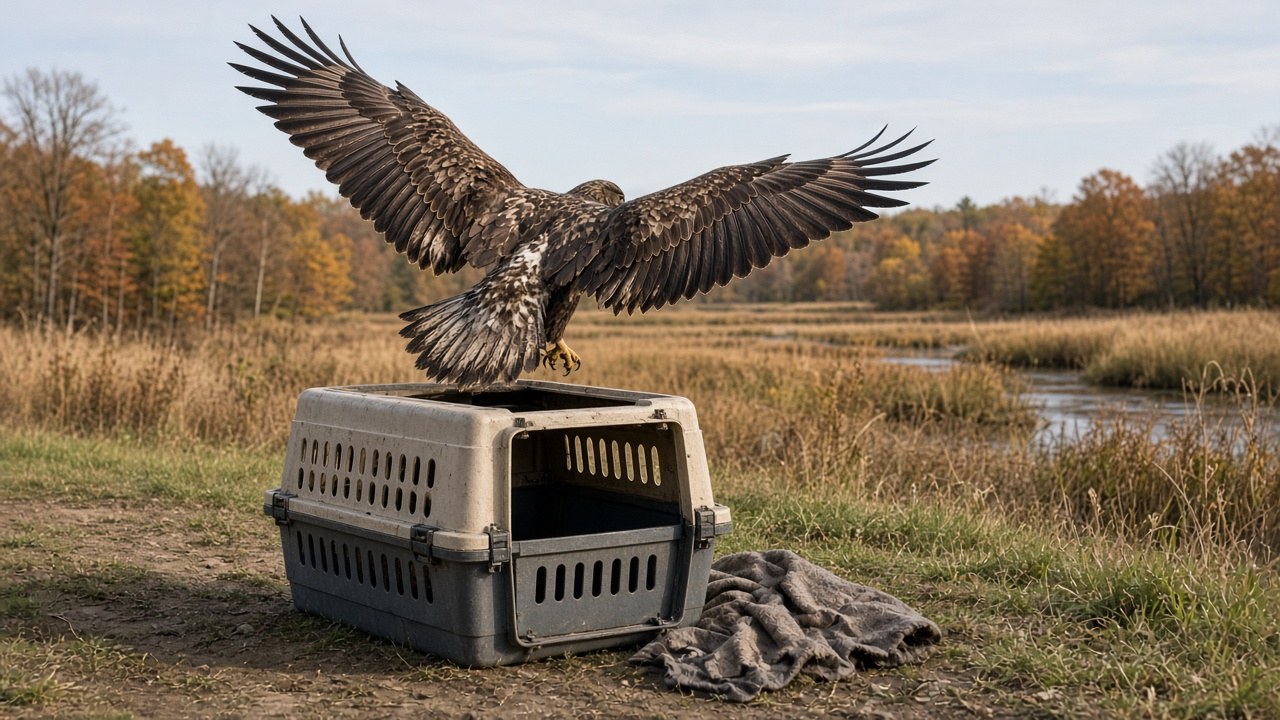
Then Holmgren and Wingenbach lifted a blanket off the carrier and opened the door.
Ursa came out of the crate into a completely new world. The marsh stretched about 200 yards in front of her, with a stand of trees beyond it.
She worked her wings. And she climbed into the sky.
She Circled Five Times
What happened next surprised everyone.
Ursa didn’t just fly away. She began a series of slow circles over the marsh.
Each loop was a little wider than the last. Each one brought her a little closer to the people watching, and then a little farther away.
Maybe she was getting her bearings. Maybe she was taking one last look at the crate she’d just come out of.
One of the watchers, Kathi Swann, had another theory.
“She’s quite the showoff,” Swann said.
Five times, Ursa circled. Then she peeled off to the southeast, flying low over the marsh toward a branch at the edge of the trees.
“Oh, she just soared,” said Diana German, who watched with the group.
“A Spiritual Moment”
Holmgren has led a lot of releases. She says the experience never gets old.
A release day is when all the center’s hard work finally pays off. It’s always one of her favorite days of the year.
“It’s really special. I’m always happy to see an eagle healthy, flying free and it’s always a spiritual moment, I think, for all of us,” she said. “There’s something that they tap into.”
For the people standing on that dirt road, it clearly meant something deep too.
Annette Devinney, of Pittsburgh, brought a camera with a very long lens. She got into watching eagles and other birds about 20 years ago, and calls it her “crazy hobby.”
“It changed my life,” she said.
German, who also came from Pittsburgh, said being that close to the bird felt like a gift.
“It’s such a spiritual experience and just to be so close and connected to nature,” she said. “It’s such an honor.”
She Still Has Growing Up to Do
If you saw Ursa today, you might not recognize her as a bald eagle at all.
Young bald eagles are mostly brown. Her head won’t turn the famous bright white of an adult for several more years.
But she’s out there now. Flying on her own, over the marshes and trees of western Pennsylvania.
From a “bear cub” in the brush to an eagle circling over a crowd of happy faces, Ursa has come a very long way.
How You Can Help Wildlife Like Ursa
If you ever find a baby bird or wild animal that seems hurt or alone, don’t try to raise it yourself.
Keep pets and people away, and call your state wildlife agency or a licensed wildlife rehabilitator as soon as you can. They know what to do.
Ursa’s story is proof that one phone call, and a lot of patient people, can give a wild animal a second chance at the sky.
Would you have guessed she was a bear cub too? Tell us in the comments, and share this if Ursa made you smile today.