Just finding Lana’s story? Read Part 37 here to catch up on what Rita told Royce at the county jail, the pickup with its brights on, and the envelope hidden in Clay’s Bible.
Last time, I stood in Clay Kettering’s kitchen and watched Royce open an envelope that had waited twenty-five years for him.
Two pages, folded in thirds. Clay wrote them the night before my mother died.
Royce read the second page and every bit of color left his face.
“He’s telling me who he was afraid of,” Royce said. “Who he thought would come for her if she ever crossed the Ketterings.”
I asked if it was Rita.
“No, sweetheart,” he said. “Not Rita.”
What Clay Wrote on the First Page
Nobody moved for a long time. The woodstove ticked. The old oak scraped the kitchen window.
Vera was the one who finally spoke. “Uncle Royce. Read it out loud. Please. I need to hear Daddy say something true.”
Royce looked at Cole. Cole nodded once.
So Royce smoothed the first page flat with both hands. He cleared his throat twice before any words came out.
“Roy. I don’t know how to start a letter to you, so I’ll just start.”
“Caroline Brooks is sitting in my kitchen right now. She’s braver than both of us put together.”
Royce stopped. He pressed his thumb against his mouth. Then he kept going.
“She came for the paper she signed for me. She wants it back so she can tear it up. I told her no.”
“Not because I want it. Because as long as that paper sits in my house, Daddy thinks I’ve got her handled.”
I felt my stomach drop. Royce’s daddy. Clay’s daddy.
My great-grandfather.
Royce read on, slower now.
“You got out, Roy. I stayed. I told myself it was for the business. It wasn’t. It was so he’d leave you alone.”
“Mama would be ashamed of both of us. You for never calling. Me for never telling you why.”
“So I’m telling you now. I’m sorry, Roy. I was the one who stayed.”
Royce put the page down.
“Tell Roy I’m sorry I was the one who stayed,” he whispered. “That’s what he wrote in the letter he left for Lana. I thought it meant he was sorry he got the ranch.”
“It didn’t,” Vera said softly. “It meant he was sorry he couldn’t leave.”
I looked down at the page in Royce’s hands. At Clay’s heavy, slanted letters, pressed so hard they’d dented the paper.
For eleven years, everybody in this county called Clay Kettering a hard man. Even Rita called him that.
But hard men don’t write letters like that. Scared men do.
The Name on the Second Page
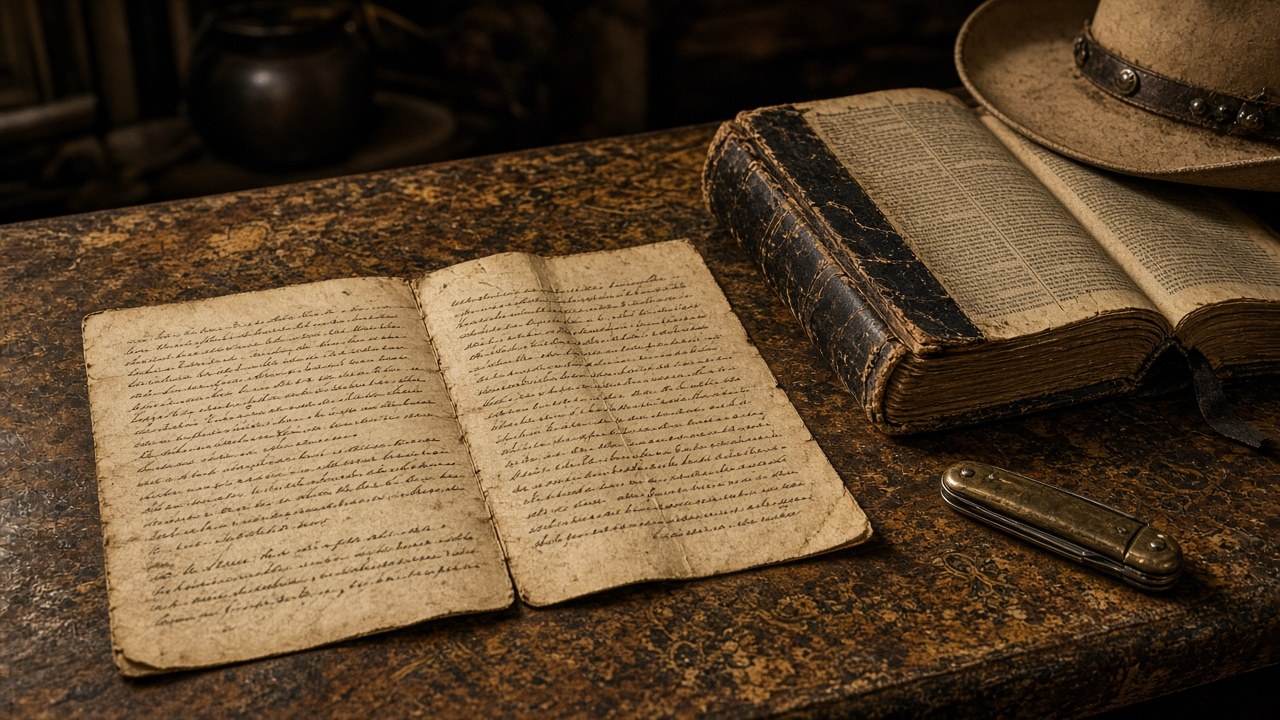
Royce couldn’t read the second page out loud. He tried. His voice gave out on the first line.
So he slid it across the table to Cole.
“You’d better read this one, Sheriff,” Royce said. “It’s about your family too.”
I saw Cole’s hand stop in midair. Just for a second. Then he picked it up.
He read the way he does everything. Carefully. All the way to the bottom before he said a word.
Then he sat down in Clay’s chair without asking. I’d never seen him sit down in somebody’s house without asking.
“Read it, Cole,” I said.
He did. His voice was flat, like he was reading somebody else’s police report.
“Daddy knows who Caroline is now. He knows what his will says about the first grandchild. He’s been asking about her paper for a month.”
“He doesn’t drive at night anymore. He doesn’t have to. He has Wade Pruitt.”
Cole stopped there. He didn’t look up.
“Wade,” I said. “Who’s Wade?”
“My brother,” Cole said. “My big brother. Deke’s daddy.”
Vera put her hand over her mouth.
Cole kept reading. He didn’t stop again.
“Wade does Daddy’s hard work. He’s the one who put those papers on the Whitaker land in ’98. He’s been sitting at the end of Caroline’s road three nights this week.”
“He drives with his brights on so nobody ever sees the man behind them.”
“If Caroline crosses the Ketterings, Daddy won’t lift a finger. He won’t have to. He’ll send Wade. That’s who I’m afraid of, Roy.”
“So I’m giving her this letter instead of her paper. Carry it to Royce, I told her. Hand to hand. Not the mail.”
“You’re the only one Daddy never could make do anything. Come home and stand in front of her. I can’t do it alone. Clay.”
Cole laid the page on the table, very gently. Like it might break.
Nobody said anything for a long time.
“The first grandchild,” Royce said finally. “What does that mean? What did Daddy’s will say?”
Vera answered him. Her voice was very small.
“The letter Daddy left for Lana says it,” she said. “Granddaddy’s will gave half of everything to his first grandchild. Half the land. Half the cattle. Half the company.”
“Caroline was the first grandchild,” I said. “And nobody was supposed to know she existed.”
“So she signed a paper,” Royce said slowly. “To keep it quiet. To keep her baby safe.”
“And then she wanted it back,” I said.
Then Royce said the thing we were all thinking.
“She never got to hand it to me,” he said. “Rita took it back to Clay. And I never came home.”
Cole’s Brother
Cole got up and went to the window. He stood there with his back to us, looking at the dark yard.
“Wade never drove at night without his brights on,” he said. “Said it was so the deer would see him coming.”
“Our mama hated it. Said it was rude to blind people on a two-lane road.”
“He had a white Ford back then. Kettering Land and Cattle bought it for him. I thought he got it because he was good at his job.”
He laughed once. There was nothing funny in it.
“I was twenty-two. Pumping gas at the co-op. I didn’t wear a badge yet. My brother bought me lunch every Friday.”
“And on Thursday nights, he was sitting at the end of Caroline Brooks’s road with his lights off.”
I didn’t know what to say to him. I don’t think anybody could have.
Vera did, though. She got up, walked over and stood beside him at the window. She didn’t touch him. She just stood there.
“You carried me up a creek bank inside your jacket,” she said. “I don’t care whose brother you are.”
Cole’s shoulders came down about an inch.
“That’s kind of you, Vera,” he said. “But I’m still the sheriff. And Wade’s name is on this page now.”
“Wade’s been dead twelve years,” Royce said quietly. “So has my daddy.”
“I know,” Cole said. “But Nadine hasn’t.”
The room went cold.
“Nadine married Wade that summer,” Cole said. “She was eighteen. She rode in that white Ford everywhere he went.”
What Royce Never Told Anybody
Cole went out to his truck to call June and radio the office. Vera started a pot of coffee nobody wanted.
Royce walked out onto the porch. After a minute, I followed him.
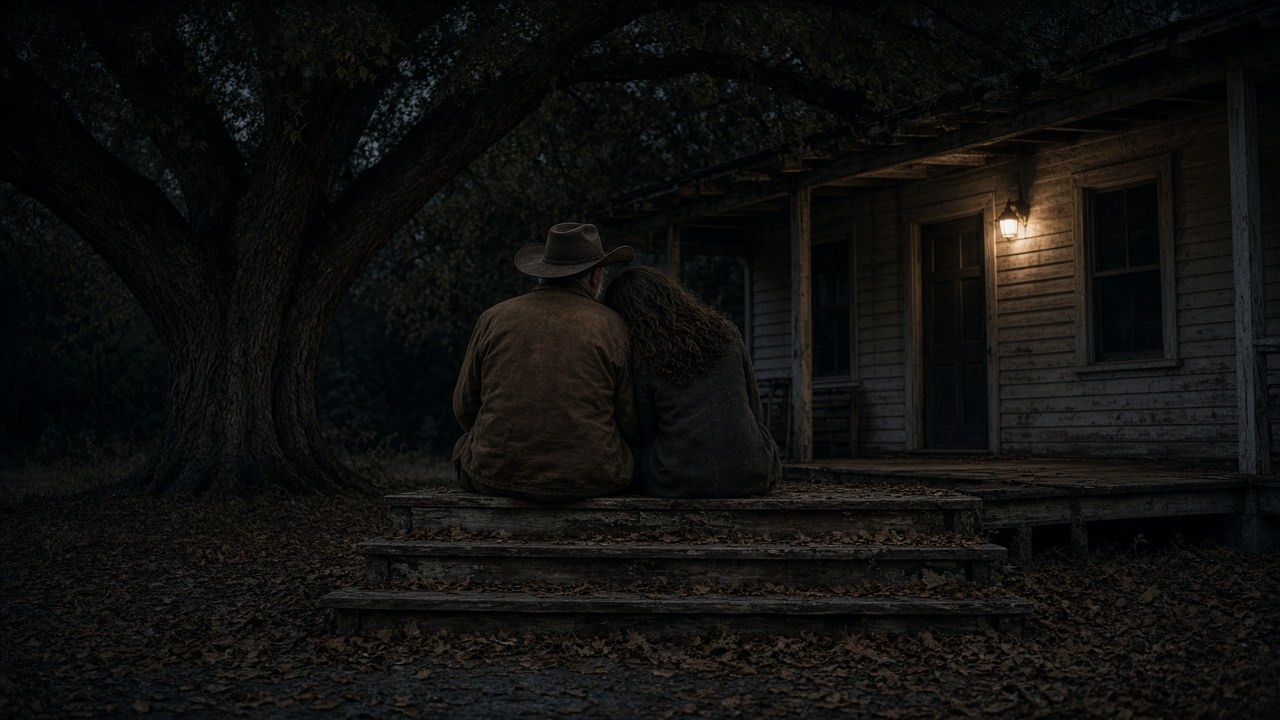
He was sitting on the top step under the old oak. Leaves kept landing in his hat brim. He didn’t brush them off.
I sat down next to him. Close enough that our shoulders touched.
“You know why I left in the eighties?” he asked.
“Clay said it was the business.”
“It was Daddy,” Royce said. “He broke a colt in front of me once. Broke him for good. Because the colt wouldn’t load in a trailer.”
“I was nineteen. I watched him do it. And I thought, I’m going to turn into that man if I stay here one more year.”
“So I left. And I trained horses on my own little place for forty years. Gentle. Every single one.”
I thought about Willow pushing her nose into my pocket for peppermints. About Royce loading her that first morning without even a halter rope.
“I never knew why Clay stayed,” Royce said. “I thought he wanted the money. I thought he wanted to be Daddy.”
“He stayed so you could go,” I said.
Royce nodded. He couldn’t talk.
“I think Mama knew that,” I said. “That’s why she went to his house that night. She trusted him.”
“She trusted him enough to ask for her paper back,” Royce said. “And he trusted me enough to send her to me.”
“And I was up in Oklahoma, working somebody’s cutting horse. I never even knew she came.”
I put my head on his shoulder. He smelled like hay and shaving soap. He let me stay there.
“You’re here now,” I said.
“I’m here now,” he said. “I’m not leaving this time, Lana. Not ever. You hear me?”
I heard him.
We sat there a while longer. A truck went by out on the county road, slow, with its low beams on. We both watched it until it was gone.
“Every set of headlights,” Royce said. “I’m going to be looking at every set of headlights in this county for the rest of my life.”
“Me too,” I said.
The screen door creaked behind us. Vera was standing there with her arms wrapped around herself.
“Cole wants everybody inside,” she said. “He doesn’t want anybody sitting out in the dark tonight.”
Royce stood up and held his hand down to me. His hand was rough and warm. I let him pull me up.
The Picture Through the Kitchen Window
When we went back inside, Cole was standing by the rolltop desk with his phone in his hand.
“June’s on her way,” he said. “She wouldn’t let me talk her out of it. She’s bringing the shotgun and a pie.”
For the first time that night, Royce almost smiled.
“And I’ve got a deputy pulling every old title on Wade’s white Ford,” Cole said. “If that truck still exists, I’m going to find it.”
Vera poured the coffee. Her hands were shaking so badly she spilled some on the oilcloth. Royce took the pot from her and finished pouring.
“Cole,” she said. “Where is Nadine? Right now. Do you know?”
“No,” Cole said. “Nobody’s seen her since her car turned up at the grain elevator with the engine running. Deke either. Wherever they are, they don’t want me finding them.”
“She sent you that text, Lana,” Vera said. “Up in the hayloft. She said he isn’t the one you should be afraid of.”
I remembered. I’d read it fifty times. I’d always thought she meant Deke.
We sat around Clay’s table with the two pages in the middle and the Bible beside them.
Cole asked me to read Clay’s letter one more time. Out loud. Slowly. So he could write it down word for word.
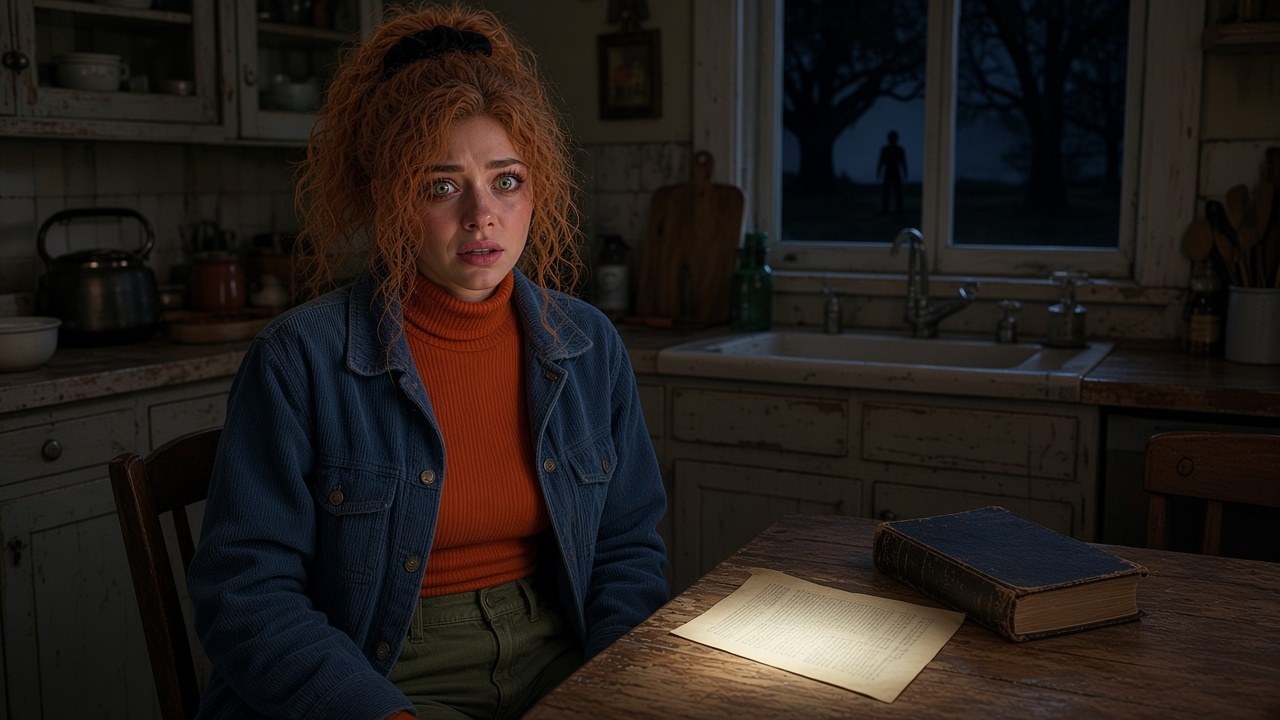
I got halfway down the second page when my phone buzzed on the table.
A text. From a number I didn’t know.
I almost didn’t open it. Then I saw there was a picture attached.
It was this kitchen. Right now.
Taken from outside, in the dark, through the window over the sink.
Royce at the end of the table. Vera with the coffee pot. Cole by the rolltop desk. And me, with Clay’s letter in my hands.
I couldn’t breathe.
Under the picture was a message.
“Clay got one thing wrong, Lana. Wade wasn’t driving that truck the night before your mother died. I was.”
“Come to the grain elevator at midnight. Come alone. And don’t let my brother read the rest of that letter.”
“N.”
I looked up at the black window over the sink.
Something moved out there under the oak tree. Then it was gone.
Cole was already reaching for his flashlight.
“Lana,” he said. “Who’s that from?”
I turned the phone face down on Clay’s table.
And for the very first time, I didn’t know if I should tell him.
So now I’m asking you. Was Nadine really behind the wheel of that white Ford, with her brights on behind Mama, the night before she died?
Why would she tell me now, after twenty-five years? And what’s left in Clay’s letter that she doesn’t want her own brother to read?
Should I go to the grain elevator alone at midnight? Or should I turn that phone over and show Cole?
Next Part: Read Lana’s Story Part 39 here Follow Reiterin on Facebook so you don’t miss it.