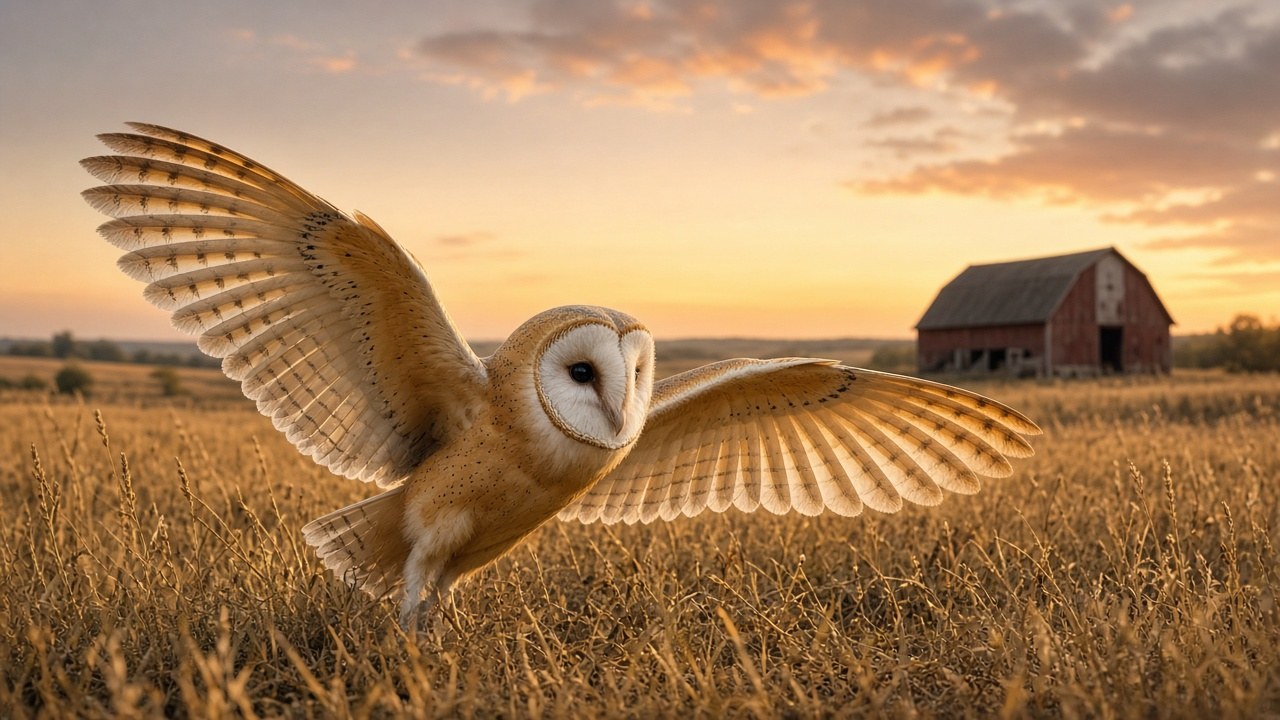
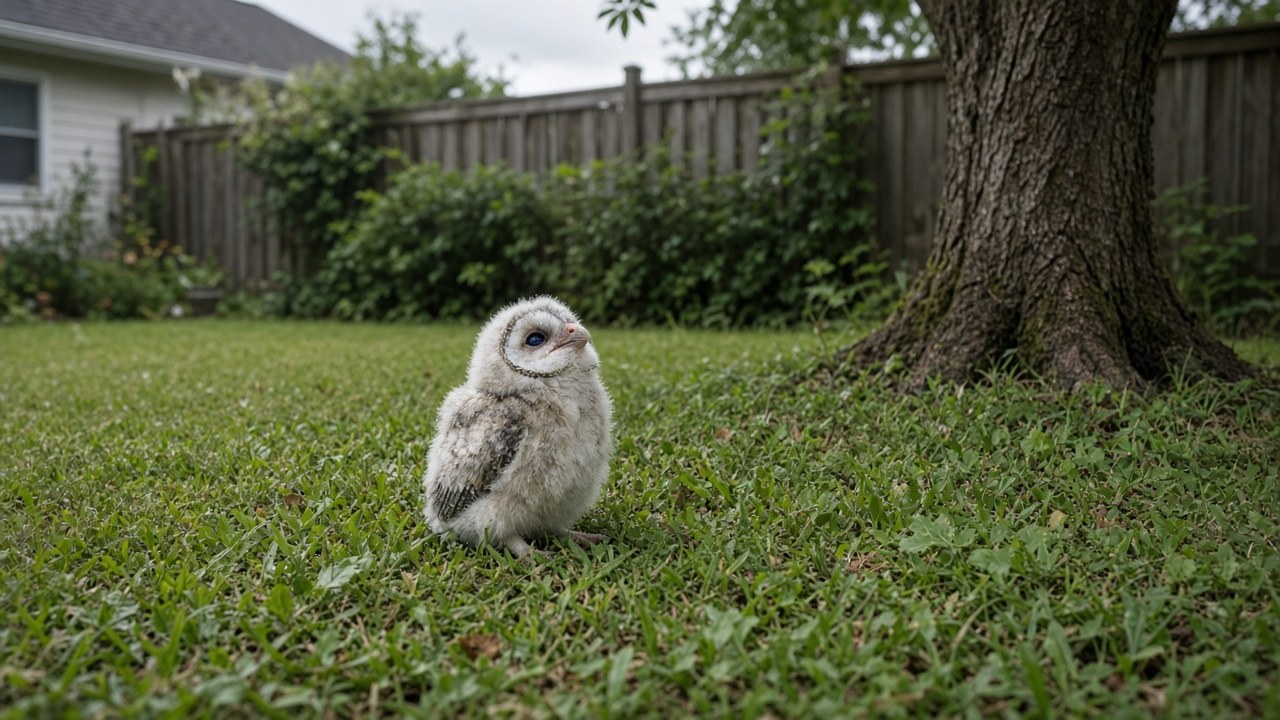
It started with two tiny owlets lying on the ground in someone’s yard.
One of them was already gone. The other was weak, thin and starving.
Nobody knew it yet, but that little bird was about to make history in Michigan.
A Sad Discovery in August
The two owlets were found in a yard in Michigan in August, MLive reported.
Sadly, one had already died. Its sibling was emaciated and badly needed help.
The survivor was taken to Wildside Rehabilitation and Education Center in Eaton Rapids.
Back in August, local TV station WILX spoke with the Wildside team as they cared for the rare young bird.
The people caring for it knew just how special it was.
It was an American barn owl.
And in Michigan, that is almost unheard of.
A Bird Michigan Had Lost
Barn owls are easy to recognize. They have pale tawny backs, white bellies and a heart-shaped white face with dark eyes.
They are medium-sized owls, about 16 inches long, according to the Michigan Natural Features Inventory.
They often nest in big hollow trees, in buildings like old barns, or in nest boxes.
But in Michigan, they had all but vanished.
The last breeding pair in the state was recorded in 1983, according to MLive.
There have been a few sightings of single birds since then. But the species is listed as extirpated in Michigan, meaning there are no known breeding pairs.
These owlets changed that. For the first time in more than 40 years, American barn owlets had been found in the state.
And two babies meant something important: somewhere nearby, a pair of adult barn owls had nested.
“The fact that we have a breeding pair in Michigan that we are aware of is truly amazing,” said Louise Sagaert of Wildside.
‘Once in a Lifetime’
Sagaert has spent 36 years caring for injured and orphaned wildlife.
She had never treated a barn owl before.
“This is the first barn owl I have ever had as a wildlife rehabber, in 36 years,” she told MLive.
She has never even seen one in the wild.
Wildside put it simply in a Facebook post: “This is a once in a lifetime owl for all of us.”
Nursed Back to Health
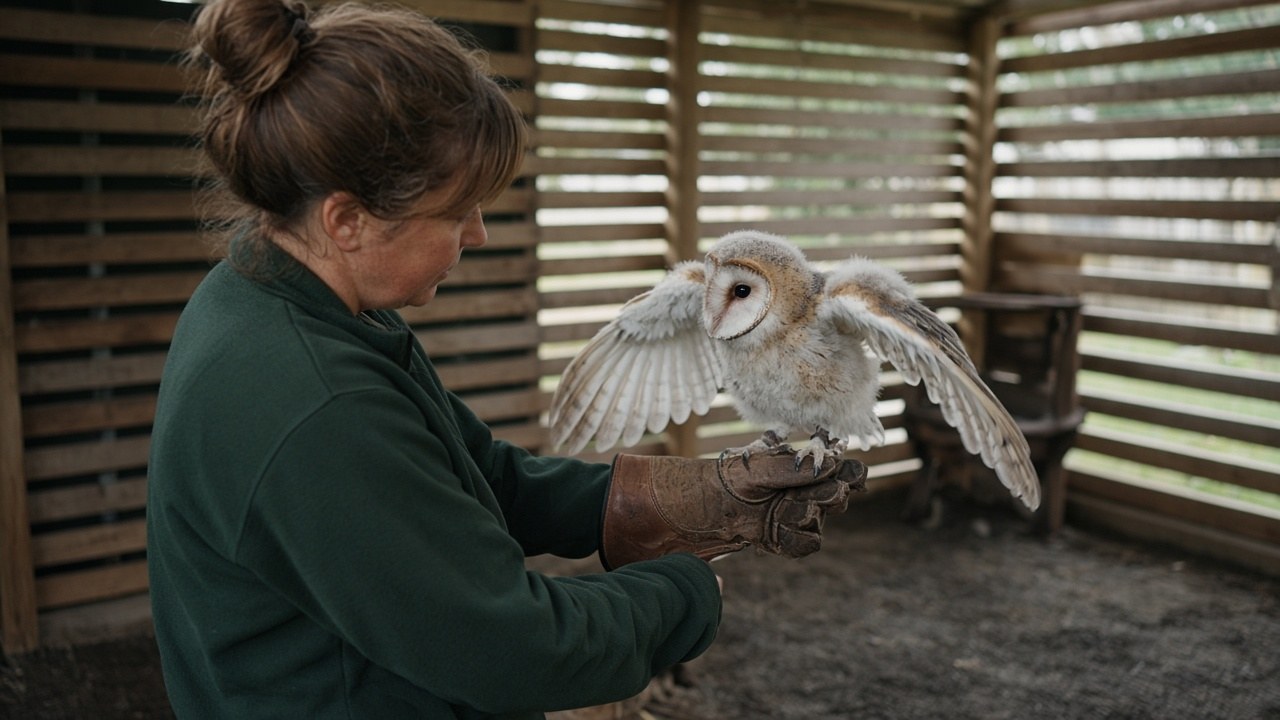
The little owlet spent about two months at Wildside, MLive reported.
The team gave it fluids, food and deworming medication to help it recover.
Slowly, the fragile baby gained weight and grew stronger.
Day by day, the tiny ball of fluff began to look more like a real owl.
“Unfortunately, the sibling did not survive, but we were able to successfully help this fluffy owlet grow into a beautiful American Barn Owl,” the center wrote on Facebook.
As he grew, he also developed quite the personality.
“He grew up and became ‘spicy,’ jumping, hissing and mantling over food when approached,” Sagaert said.
Mantling is when a bird spreads its wings over its food to guard it.
For a wild owl getting ready to go home, that feisty attitude was a very good sign.
Learning to Fly and Hunt
Getting strong was only the first step. A wild owl also has to fly well and catch its own food.
So Wildside teamed up with a falconer to continue his flight training and hunting practice.
“Once he successfully completed his hunts and was flying beautifully, he was ready for release,” the center wrote.
Before he left, he was fitted with a band, so he can be tracked and identified in the future.
Then, in October, the young owl was set free.
After everything he had been through, he flew off into the Michigan sky on his own wings.
A Secret Location
Wildside is not sharing where the owl was released. The goal is to protect this rare bird.
The center even turned off comments on its Facebook post.
“We have shut off comments because we want to keep the location of this owl private,” it wrote.
There is a good reason for the caution.
Barn owls are very sensitive to disturbance, said Jennifer Kleitch, an endangered species specialist with the Michigan Department of Natural Resources.
In the past, visitors coming to see barn owls have caused the owls to abandon their nests, she warned.
Is a Comeback Possible?
It is too early to say whether barn owls are returning to Michigan, the DNR says.
But Kleitch says breeding pairs could be living in the state without anyone noticing or reporting them.
“We know that barn owls are still nesting in Ohio, so this may be a single pair of birds that strayed north and found suitable nesting habitat,” she said.
Or, she added, “it might mean that there are small numbers of birds nesting in the state.”
Either way, it is the most hopeful barn owl news the state has had in decades.
For the people at Wildside, just knowing a pair raised babies here is reason to celebrate.
How People Can Help
The loss of grasslands is a major reason barn owls disappeared from Michigan, according to Kleitch. They need open fields full of rodents to hunt.
The state’s Natural Features Inventory also points to farms shifting from pastures to intensive row crops, along with rat poisons.
Kleitch shared a few simple ways to help.
If you spot a barn owl or a nest, report it, and think twice before posting the location on social media.
If you own a barn near open fields, consider putting a nest box high up inside it.
And you can support local land conservancies that protect native grasslands.
Somewhere in Michigan tonight, a young barn owl with a band on his leg is hunting on his own.
A few months ago, he was a starving baby on the ground. Now he might be the start of something big.
Related Posts
 The Orca Mother Who Carried Her Dead Calf for 17 Days Was Just Spotted With a Brand-New Baby Boy
 He Was Reporting on a Flood When a Driver Disappeared Into the Water. He Handed Off His Phone and Swam Out
 Trolls Tore Her Apart After She Lost 40 Pounds. Then Thousands of Strangers Secretly Came to Her Rescue