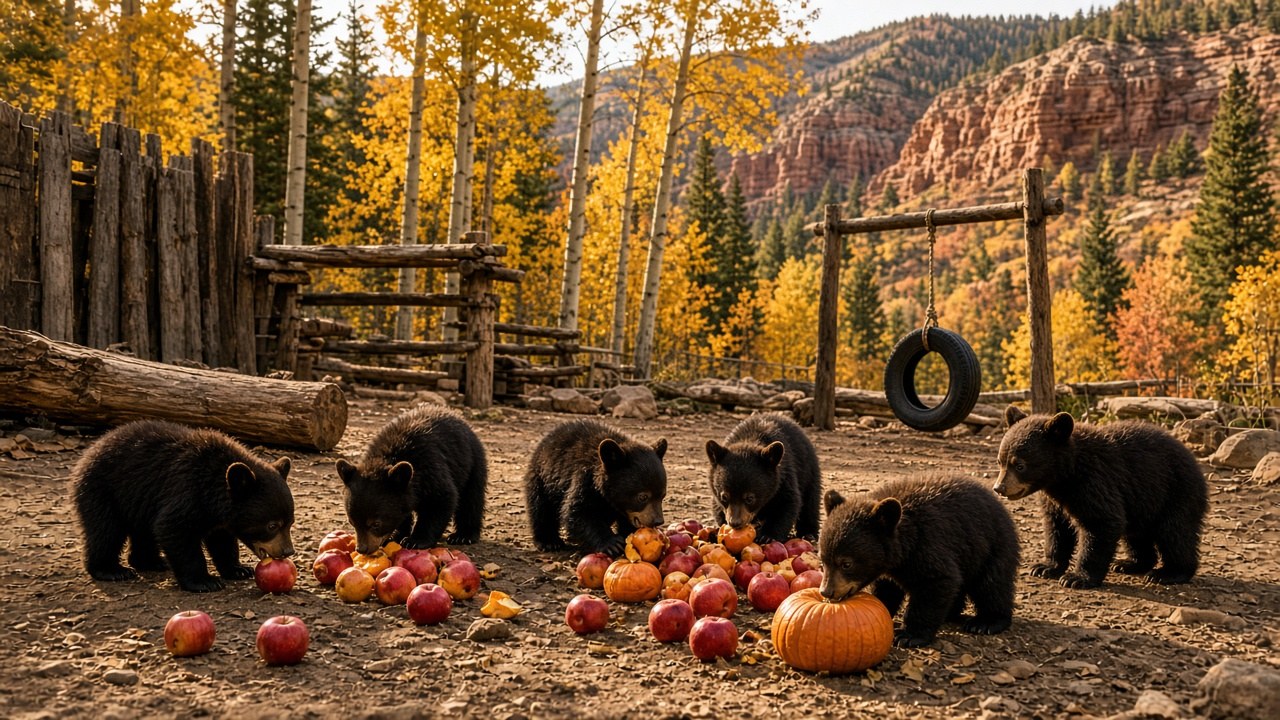
Last year, a small wildlife rescue in Colorado cared for just three bear cubs.
This year, the phone would not stop ringing.
By mid-October, more than 30 hungry cubs were sleeping under its roof.
A Rescue in the Mountains
The Pauline S. Schneegas Wildlife Foundation sits in Silt, a small town on Colorado’s Western Slope.
Its founder and executive director is Nanci Limbach.
She started it almost 45 years ago, she told KDNK radio. “Started out small in the backyard and grew,” she said.
“Our main purpose is to take in injured and orphaned wildlife and get them back to the wild as soon as we possibly can.”
The center is one of only two in Colorado licensed by Colorado Parks and Wildlife to care for bears, The Colorado Sun reported.
In a normal year, it takes in around five to nine cubs.
Last year, it had just three.
Then the Cubs Kept Coming
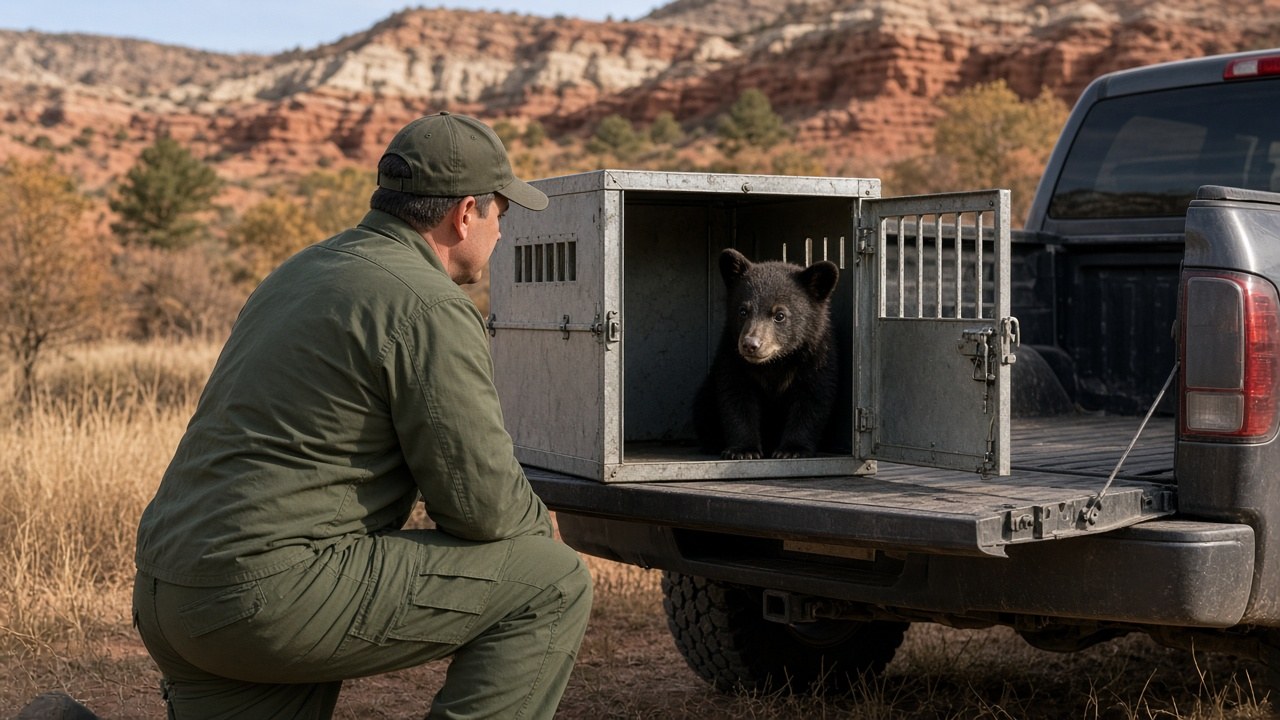
This year, the calls started early, back in May.
By mid-October, 32 cubs were living at the facility, with another one on its way from Paonia, according to The Colorado Sun.
That is more than 10 times last year’s number.
They came from all over the Western Slope, including Aspen, Eagle, Fruita, Meeker, Rangely and Steamboat Springs.
Limbach blames a hard spring freeze that wiped out fruit and other wild food, followed by a dry summer.
“It’s been a bad forage year,” she told Colorado Newsline. “The drought didn’t help but it was the freeze that started all this.”
“Lots of creeks dried off, so lots of bears moved to town,” she said.
Why the Babies Are Alone
Some of the cubs lost their mothers in heartbreaking ways.
In August, a mother bear was hit on Colorado 82 near Aspen. Officers found two cubs, The Colorado Sun reported.
In New Castle, another cub was orphaned when its mother was shot with a bow and arrow.
All three of those cubs are now safe in Silt.
“Moms are getting hit by cars because they’re down here along the river,” Limbach told NPR’s Weekend Edition on Oct. 24.
Other mothers, she believes, simply could not find enough food for everyone.
“It’s almost like they take them to the edge of towns and say, ‘Here you go. I’ve shown you all the trash cans,'” she told The Colorado Sun.
Most arrive really small. “They only weigh about 10 to 20 pounds,” she told KDNK radio in September.
Midnight Drop-Offs
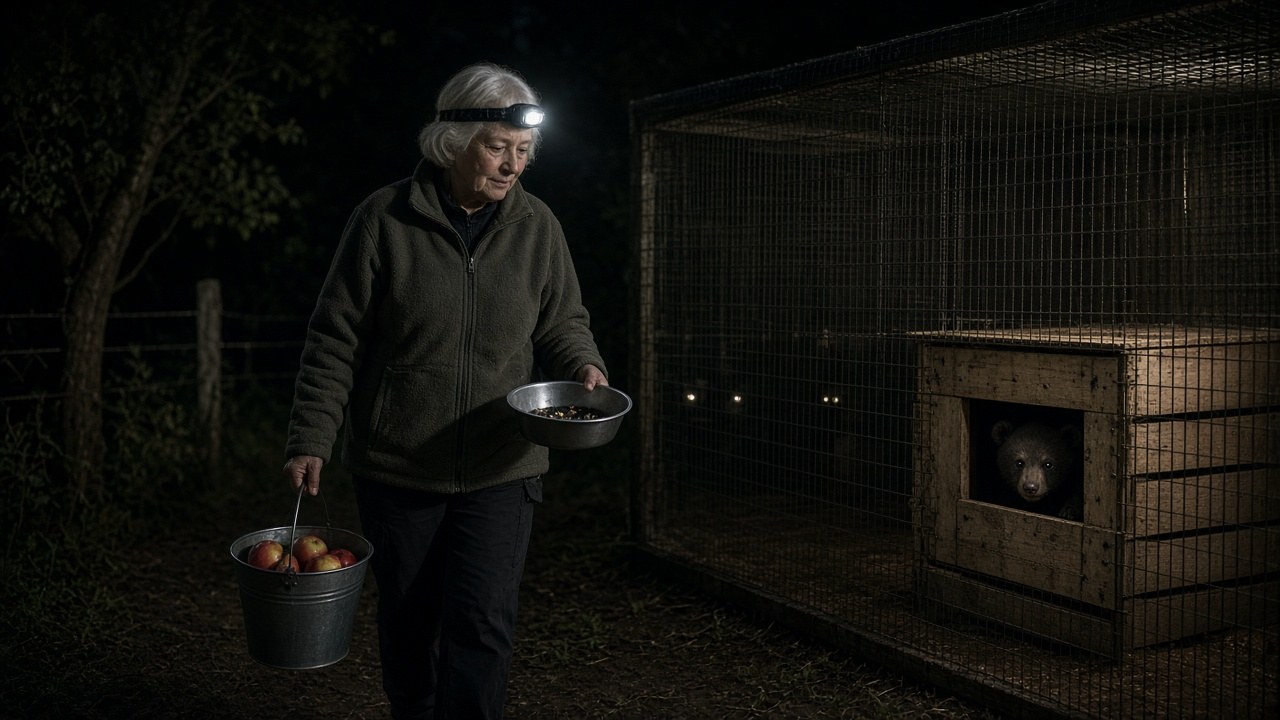
Limbach just turned 70. She has a staff of three.
And she is the only one who handles the late-night arrivals.
This year, it seemed like most of the cubs came at night.
“So I have to open the security gates ’cause they’re already locked for the night,” she told The Colorado Sun.
“Then, I go out, find some lights to turn on, and get a cage ready. Find a water tub, find a food bowl, put some food in it, find some apples.”
“And it’s like, the rest of the bears are looking at you, going, ‘What are you doing?'”
“As long as I’m out here and it’s 11:30 or midnight, I might as well feed (the animals),” she said. “And then I can sleep ’til 4. Your body just gets used to it.”
A Ton of Fruit Every Week
The cubs eat about 2,000 pounds of fruit and 1,000 pounds of high-quality dog food every week, The Colorado Sun reported.
For decades, Limbach relied on donated food. This year, for the first time, she has had to start paying for it.
“All the apples froze too, ’cause they’re on the same cycle as, say, oak brush is,” she said. “So if the oak brush froze, so did the apples.”
Talbott Farms helped find a shipment of apples from out of state, and one kind donor offered to pay for the fruit.
Neighbors dropped off leftover squash from their gardens and acorns from their backyards.
The Halloween Pumpkin Surprise
Then came one of the sweetest donations of all.
Sunlight Mountain Resort gave the center carved Halloween pumpkins from its annual skier appreciation picnic.
The bears happily ate the jack-o’-lanterns.
“It was kind of sad seeing the pumpkins in there,” Limbach told The Colorado Sun.
“It was like, ‘Oh, somebody didn’t keep their pumpkin. That’s really cute,’ you know, as the bear’s chomping away on it.”
A Snowmobile Ride to Their Winter Dens
The goal is to get each cub to about 55 or 60 pounds before winter.
Most will spend the cold months in dens at the foundation’s ranch on Sunlight Mountain, around 8,000 feet up.
In January or February, they get a ride most kids would envy.
“They’ll go on a snowmobile sled,” Limbach told NPR. “And they’ll go for a ride to wherever in the mountains that Colorado Parks and Wildlife determines that they’re going to go.”
There, artificial dens are waiting. “It’s usually, like, a little snow cave, and the bears will be put into those,” she said.
“And then in March and April, they come out like regular bears.”
They never sleep alone. “We do den them with another one, so they always have company,” she said.
A few cubs are too small to hibernate. They will be fed through the winter and released when food returns in early summer.
‘We Never Lost One’
Limbach has done this work for more than 40 years.
In her early years, every bear she released wore a radio collar so it could be tracked.
“We never lost one in hibernation. Let’s put it that way,” she told NPR.
“So that’s a pretty good success when you realize you’ve done several hundred.”
But for now, more than 30 little bears have full bellies, warm dens and a second chance.
And somewhere in Silt, a 70-year-old woman is still getting up at midnight to make sure every one of them gets fed.
Related Posts
 She Asked Miley Cyrus to Shave Her Head Before Chemo. The First Night, Nothing Happened. Then an Email Arrived
 He Waited Over 300 Days for Someone to Pick Him. His New Dad Showed Up With One Small Thing That Made Everyone Cry
 A School Bus Rolled Past His Family’s Store With the Door Open and 19 Kids Inside. He Had Never Driven a Bus