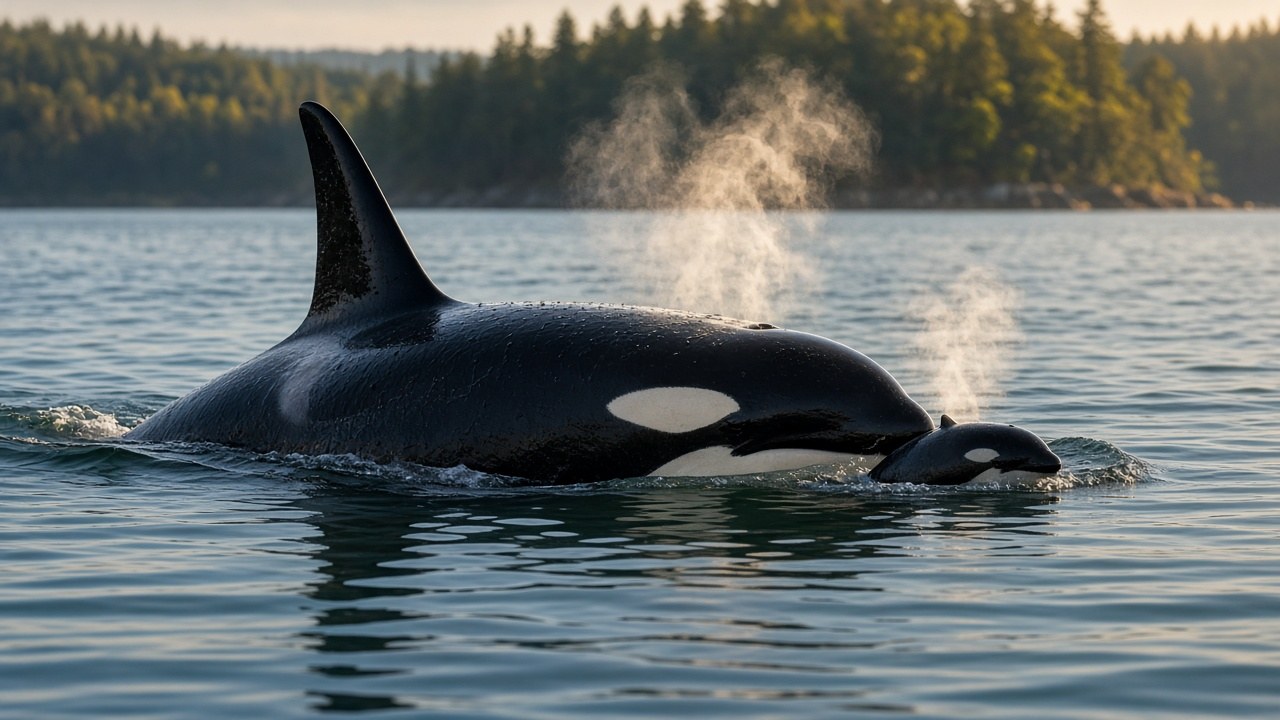
In 2018, the whole world watched a grieving mother refuse to let go of her baby.
For 17 days, she carried her dead calf through the ocean. People everywhere cried with her.
Now, eight years later, that same mother has been spotted with a brand-new baby boy.
The Mother the World Never Forgot
Her name is Tahlequah. Scientists know her as J35.
She is a Southern Resident killer whale, also called an orca. Her family lives mostly in the waters of the Pacific Northwest.
In 2018, she lost a newborn daughter.
Instead of leaving the tiny body behind, Tahlequah kept carrying it with her, day after day.
She was observed carrying her dead calf for 17 days, the Center for Whale Research said.
The journey became known as the “Tour of Grief,” KIRO 7 News reported. It made headlines around the globe.
“It’s not totally uncommon to see orcas or even dolphins carry deceased calves,” Tamra Kelly of Orca Conservancy told KIRO 7.
“But what made that so impactful was the length of time that she was observed carrying that calf.”
A Very Small Fin Next to Mom
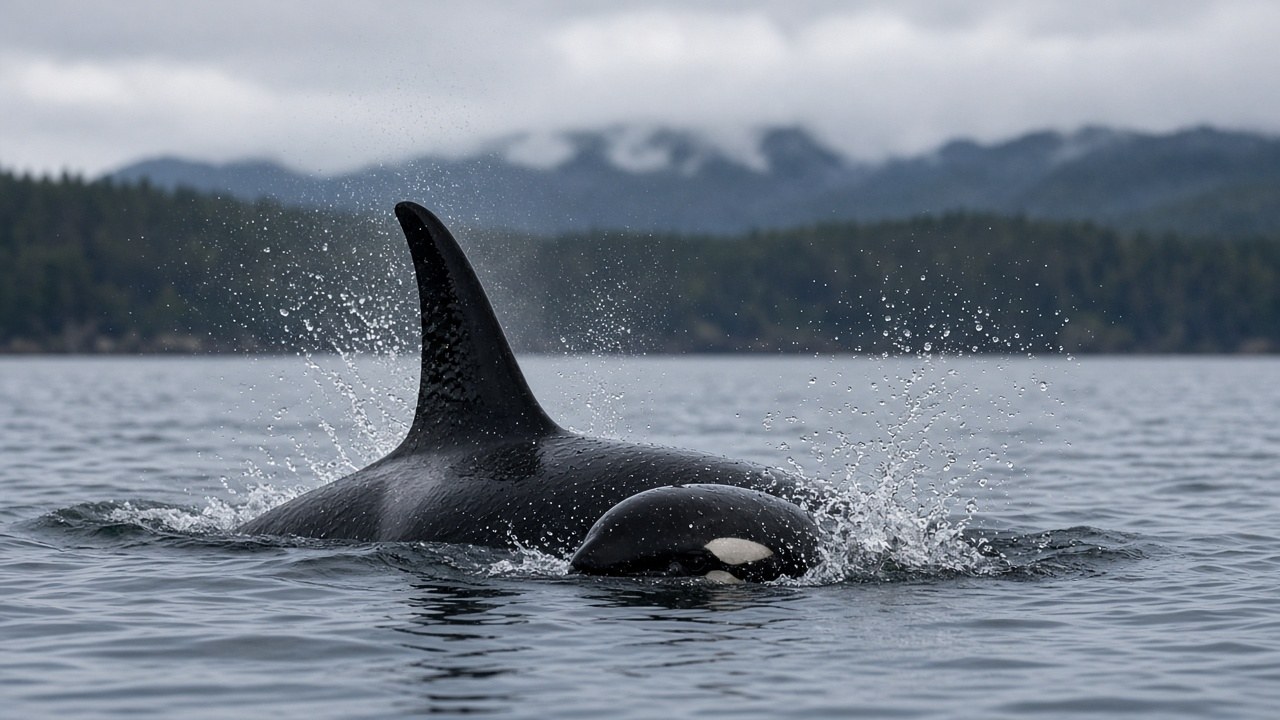
On October 19, 2026, researchers from the Center for Whale Research were out on the water.
That is when they saw something special. A very young whale was traveling right beside J35.
Based on how the little one looked, and on earlier sightings of his mother, he was believed to be less than a week old.
The team found the pair again the very next day, still swimming together.
This time, they sent up a drone. The footage confirmed the newborn is a boy.
He has been given the official designation J65.
The center shared the happy news on Tuesday, October 20, KOMO News reported.
“An Unexpected Joy”
One of the first people to see the baby from shore was Monika Wieland Shields of the Orca Behavior Institute.
She had been sitting on her favorite rocks below the Lime Kiln Lighthouse on San Juan Island, watching for orcas in the distance.
“What an unexpected joy it was to see this little head pop up next to mom J35 Tahlequah yesterday off the rocks at Lime Kiln,” she wrote.
She had only hoped to see a few blows far out in the water.
“I never would have predicted a close pass from the J35s and J41s that included a brand new baby!” she wrote.
Her message to the newborn was a sweet one.
“Welcome, little one. May we share many more passes at Lime Kiln together in the years ahead!”
So Far, So Good
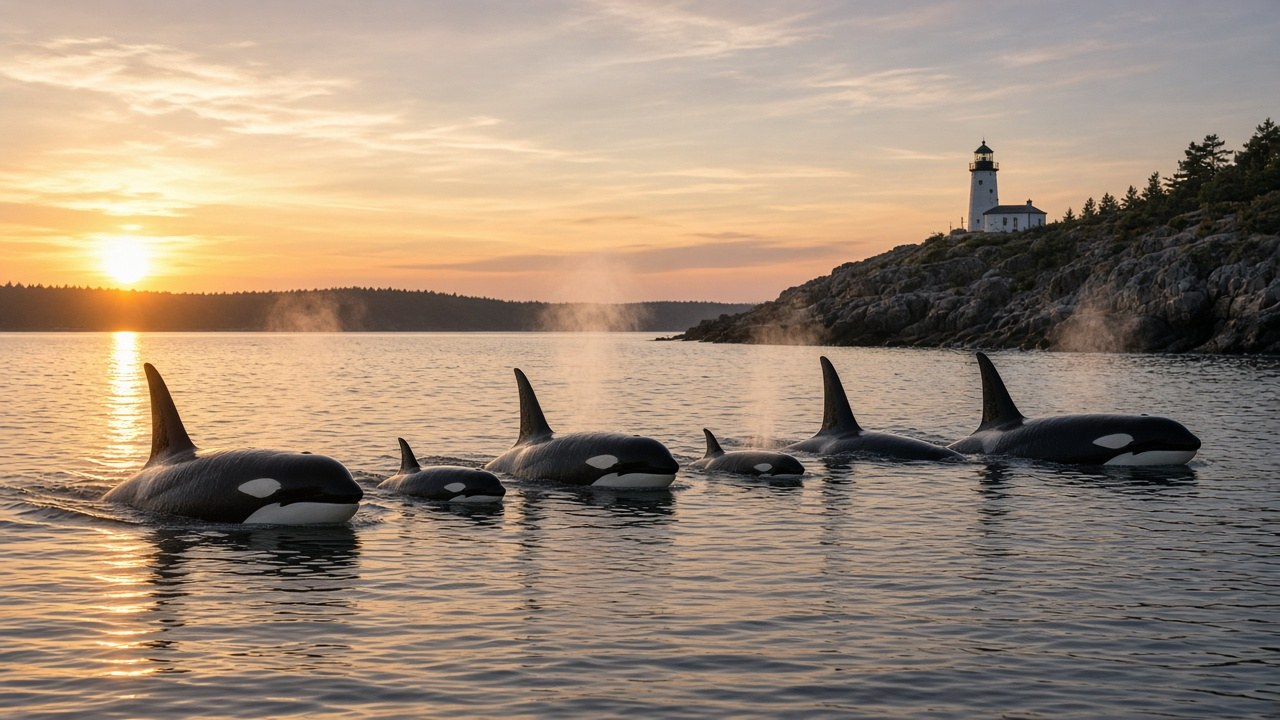
The best news is how well the baby seems to be doing.
“Our team saw no immediate indication of health issues in the calf,” said Dr. Michael Weiss, Research Director at the Center for Whale Research.
The team watched J65 moving well, socializing and nursing from his mother.
“Right now they are saying it’s looking really healthy and strong. So that’s good news,” Tamra Kelly told KIRO 7.
For a mother who has known so much loss, every one of those small signs matters.
A Family Story Full of Ups and Downs
J65 is Tahlequah’s sixth documented calf, according to the Center for Whale Research.
Her first, a son named J47, was born in 2010. He is now a teenager.
Then came the heartbreaking loss of 2018, the calf she carried for 17 days.
In 2020, she gave birth to another son, J57.
In 2024, she had a daughter, J61. Sadly, that calf did not survive.
Now there is J65, her newest son.
Kelly said the birth is welcome news for J35 and for the whole J pod.
Why One Little Orca Means So Much
Southern Resident killer whales are endangered. Every new calf counts.
Earlier this month, the Center for Whale Research announced its yearly census. It counted 76 living Southern Residents, KOMO News reported.
That was two more whales than the year before. It was the second year in a row the population grew.
But scientists say the whales still face real threats.
They include underwater noise, disturbance from people, pollution and a shortage of Chinook salmon, their main food.
“In order for the southern residents to grow consistently, we need to address the threats they’re facing,” Dr. Weiss said in October.
The Hard First Year Ahead
Baby orcas have a tough road, even when they look strong.
“Early life is challenging for these whales, with only half of them making it through their first year,” Dr. Weiss said.
Kelly explained that pollution can build up in whales’ bodies and pass from mothers to their babies, including through nursing.
“These calves are being born full of toxins which can compromise their immune system, like impact growth,” she said.
“And so they have an uphill battle that they’re trying to climb.”
That is why researchers will be keeping a close eye on the little one.
“The CWR team and our colleagues will continue to monitor the calf when possible,” Weiss said.
Everyone Is Rooting for Him
Across the Pacific Northwest, people who remember 2018 are cheering for this baby.
Axios Seattle summed up the feeling in just a few words: “We’re pulling for you, kid!”
For Tahlequah, this new chapter is about hope.
Eight years ago, she swam for days with a baby she could not save.
This fall, she is swimming beside a son who is nursing, moving well and socializing with his family.
A New Beginning in the Salish Sea
No one can promise how J65’s story will turn out. The first year will be the hardest test of all.
But for now, the little orca is doing everything a newborn should.
And somewhere off San Juan Island, a mother who once taught the world about grief is showing it what hope looks like.
Researchers will be back on the water watching, and so will we. The next sighting could be the best news yet.
Related Posts
 He Was Reporting on a Flood When a Driver Disappeared Into the Water. He Handed Off His Phone and Swam Out
 A Starving Baby Owl Was Found on the Ground in a Michigan Yard. It Was the First of Its Kind Found There in 40 Years
 Trolls Tore Her Apart After She Lost 40 Pounds. Then Thousands of Strangers Secretly Came to Her Rescue