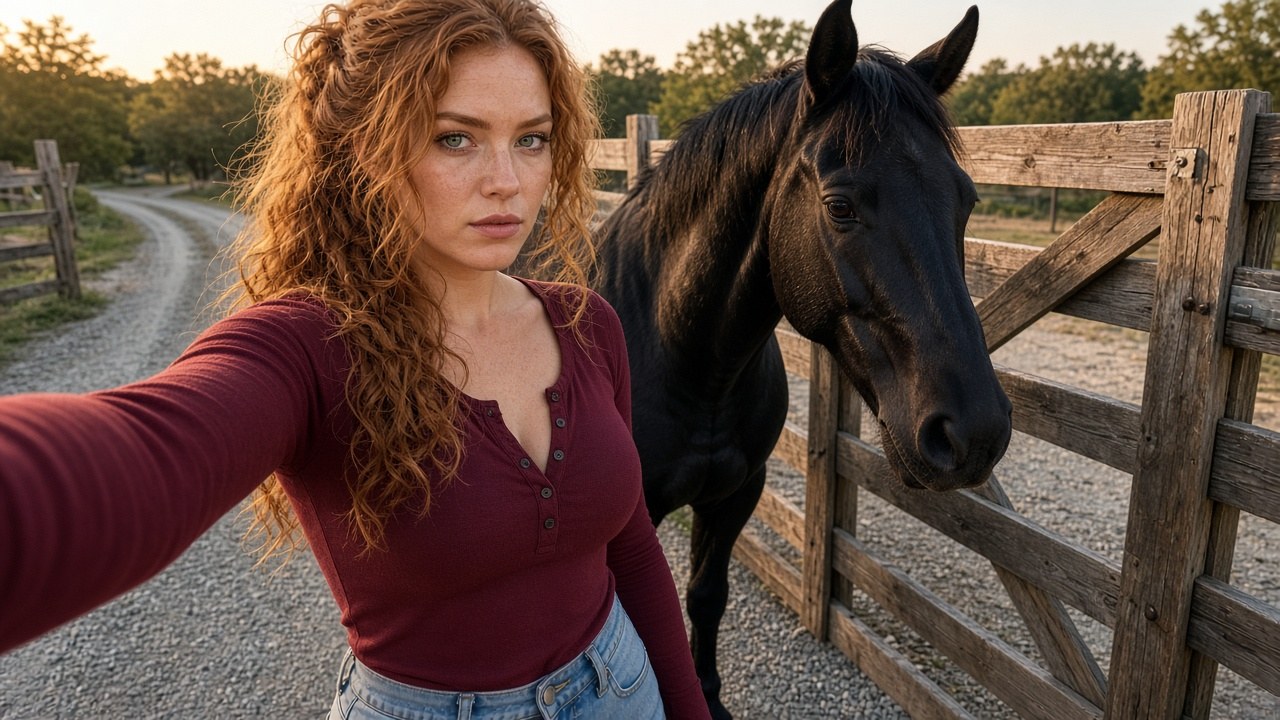
Just finding Lana’s story? Read Part 14 here to catch up on the promise my mother made Clay Kettering, the false name she signed, and the newspaper clipping of me from last spring that somehow ended up in a shoebox Clay couldn’t have touched.
I slept maybe two hours. Every time I closed my eyes I saw that barrel-race photo under the kitchen lamp — me and Raven mid-turn, mud flying, the county fair banner blurred behind us — and Royce’s voice asking the only question that mattered.
Clay died eleven years ago. Who has been keeping this box up to date?
So many of you asked the same thing in the comments. By Sunday night, I had part of the answer. And I wish it had stayed a mystery.
What Was Written on the Back

At dawn I spread everything from June’s shoebox across my kitchen table. The agreement. The C.K. note. The fire clippings. And that one photograph from last spring, still smelling faintly of newsprint.
I turned it over.
On the back, in pencil so light I almost missed it, was a date and three words in that same heavy, slanted hand as Clay’s old note.
April 19. She’s ready.
My barrel race was April 19. Somebody watched me win, cut the photo out of the paper, wrote those words, and put it in a box that was supposed to be sitting on a high shelf in June’s spare room for twenty-five years.
Royce came over before coffee. He held the clipping to the window light for a long time.
“That’s Clay’s hand,” he said quietly. “Or somebody who studied it until it was.”
June’s Spare Room

We drove straight back to June’s. She met us at the door in her robe with her white braid over one shoulder, and for the first time since I’ve known her she looked afraid.
“I only opened that box twice before yesterday,” she said. “Once the week Caroline died, and once when Ruth asked me to keep it. I keep it on the top shelf of the spare closet. Behind the Christmas quilts.”
“Who else has a key to your house?” Royce asked.
June sat down hard on the porch swing.
“Just Lana’s grandma, God rest her. And the girl who helps me with groceries on Thursdays. Vera. She’s been coming since last winter. Quiet. Always offers to put things away upstairs so I don’t have to climb.”
Vera. A name I’d never heard. A Thursday helper who’d been alone in the spare room with that closet.
“Where does she live?” I asked.
June’s mouth trembled. “I don’t know, honey. She always comes on foot. Said she stays out past the Kettering place.”
The Active P.O. Box

Royce knew every inch of the old county paper. We took the clipping to the office on Main Street and asked who ordered an extra print of the barrel-race page last April.
The woman at the counter pulled a yellow order slip from a drawer like she’d been waiting years for somebody to ask.
“Cash order,” she said. “April twentieth. Name on the slip is C. Kettering. P.O. Box 414 at the little post office by the feed store.”
Clay’s box. The one Royce thought the county closed when the estate settled.
We went to the post office. The clerk shook his head when Royce asked if 414 was inactive.
“Somebody’s been picking up mail there once a month for years,” he said. “Pays the fee in cash. Always comes mid-morning on a Tuesday. Never gives a name. Just shows a key.”
Royce’s jaw tightened until I thought it might crack.
“Clay’s dead,” he said.
“Then somebody else has his key,” the clerk answered.
Lights at the Kettering Place
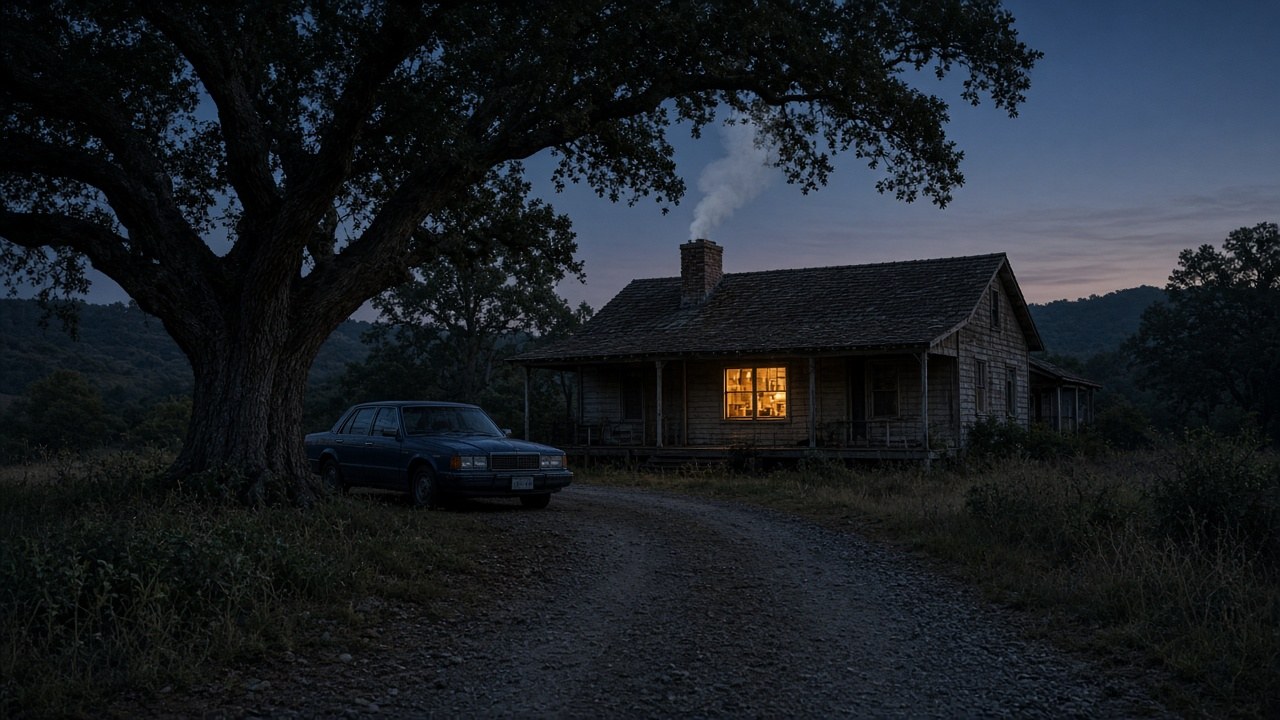
We didn’t talk on the drive out. The Kettering ranch house sits three miles past the north fence line, down a gravel road most folks around here haven’t used since the funeral. Royce said the place had been locked and empty for eleven years. Estate lawyers. Dust. Nothing else.
There were tire tracks in the gravel. Fresh ones.
And when we came around the last bend, a light was on in the kitchen window.
Royce stopped the truck so hard the shoebox slid forward on the seat. Smoke — thin, woodstove smoke — curled from the chimney. A blue sedan I didn’t recognize was parked under the old oak like it belonged there.
“Stay in the truck,” Royce said.
I didn’t.
The Door That Opened

We walked up the porch steps together. Through the screen I could see a kitchen table with a newspaper spread open, a coffee mug, and a small stack of yellowed envelopes tied with the same kind of baling twine June used on her shoebox.
Royce knocked once.
Footsteps. Soft ones. Then the door opened a few inches, and a woman about my age looked out at us.
Curly hair. Not strawberry-blonde like mine — darker, almost auburn — but the same wild curls. And green eyes. The same green as Royce’s. The same green as the ones in Grandma’s old photographs of a girl who never got to grow up.
She looked at the shoebox under my arm. Then at Royce. Then at me.
“You’re Lana,” she said. Not a question. “I’ve been putting things in that box for eleven years. He told me to wait until you won.”
My mouth went dry. “Who told you?”
She smiled the smallest, saddest smile I’ve ever seen.
“My father,” she said. “Clay Kettering. He said when you were ready, I was supposed to bring you here. And give you the rest of what he left.”
Royce made a sound like the air had been knocked out of him.
Clay Kettering had another child. A daughter my age. Living in his house. Updating the shoebox. Watching me ride.
And whatever he left for me is still inside that house.
So now I’m asking you. Do I walk through that door? And what exactly did Clay Kettering leave for the granddaughter he tried to claim?
Part 16 is coming soon. Follow Reiterin on Facebook so you don’t miss what happens next.
Related Posts
 Firefighters Pulled 3 Dogs and 3 Cats From a Burning Phoenix Home. Some Needed Oxygen to Survive
 A Kitten Was Trapped Inside a Brick Wall. Firefighters Opened It One Brick at a Time
 Firefighters Found a Dog Unconscious Inside a Burning House. They Refused to Give Up
 A 14-Year-Old Golden Retriever Was Stuck at the Bottom of a 20-Foot Ditch After the Hurricane
 Lana’s Story Part 14: The Promise My Mother Made Clay Kettering
 Scared Dog Wouldn’t Come Out From Under a Shed. Firefighters Found Another Way