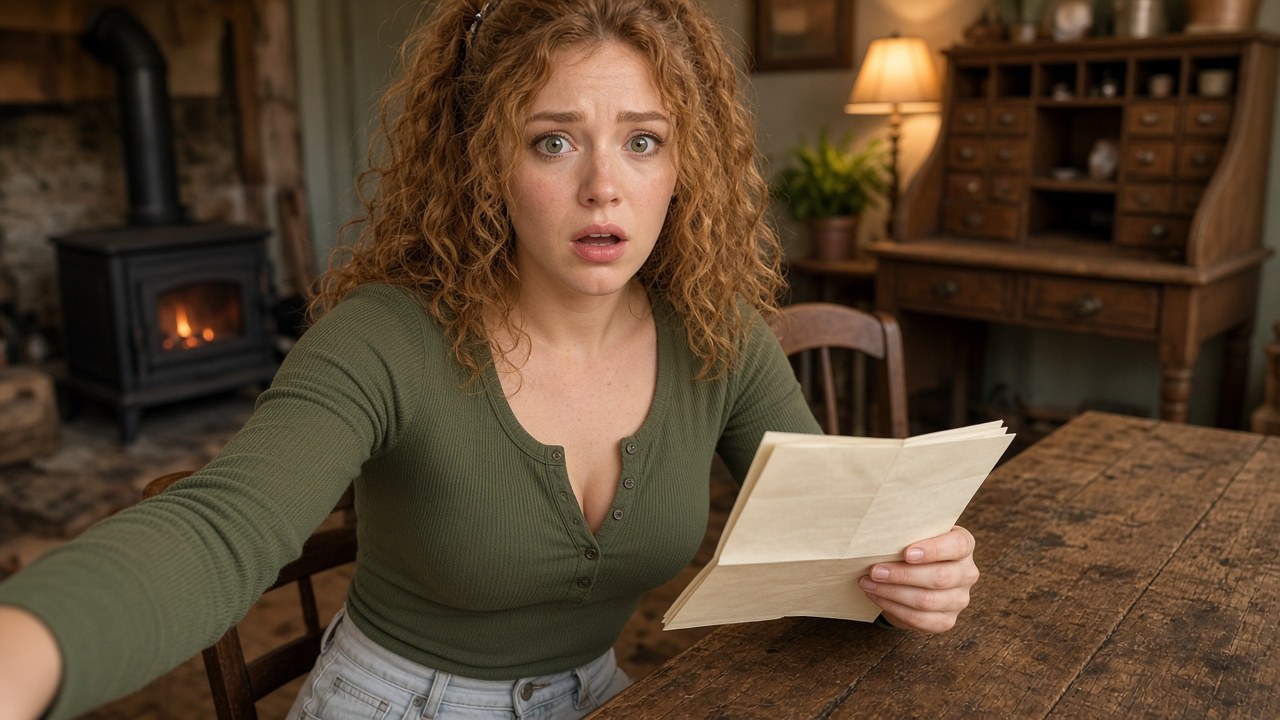
Just finding Lana’s story? Read Part 15 here to catch up on the pencil note on the back of my barrel-race photo, the P.O. box that never closed, and the woman with auburn curls who opened Clay Kettering’s door and said my name.
Last time, I was standing on the porch of a house that was supposed to be empty, holding a shoebox, staring at a woman my age with my grandfather’s green eyes.
“My father,” she said. “Clay Kettering.”
So many of you told me the same thing in the comments: go in, Lana. I did. And I walked out of that house two hours later carrying something I never asked for and still don’t know how to hold.
The Kitchen Clay Never Let Anyone See
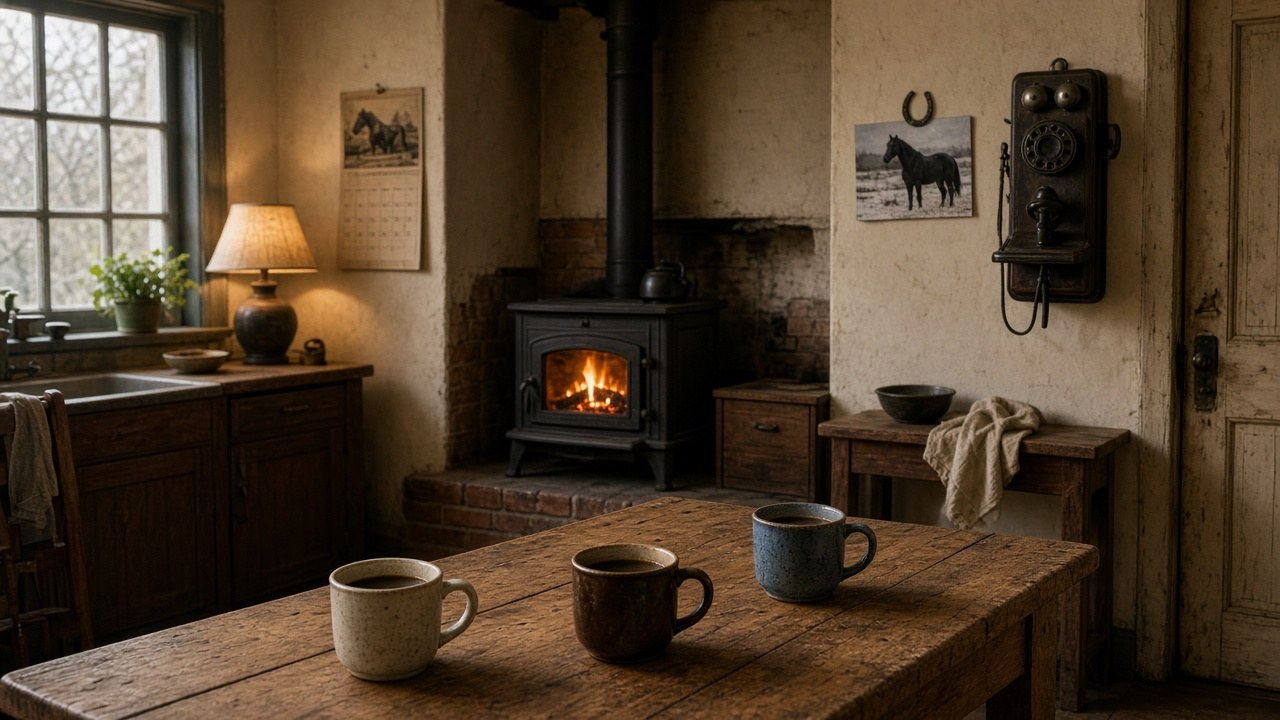
She stepped back and held the screen door open. Royce didn’t move. I don’t think his legs would let him. So I went first.
The kitchen smelled like woodsmoke and old coffee. Everything was clean, but nothing was new. A calendar from eleven years ago still hung by the phone, turned to March. Next to it, pinned with a horseshoe nail, was a photo of a black horse I knew better than my own face.
Raven. Last spring. The same picture from the shoebox.
“Sit down,” the woman said gently. “Please. Both of you. This is going to take a while.”
Royce finally came in. He took his hat off in that kitchen the way he takes it off in church, and he looked around like every board in the floor had a memory nailed into it.
“Fifty years,” he said quietly. “Fifty years since I stood in this room.”
Vera Kettering
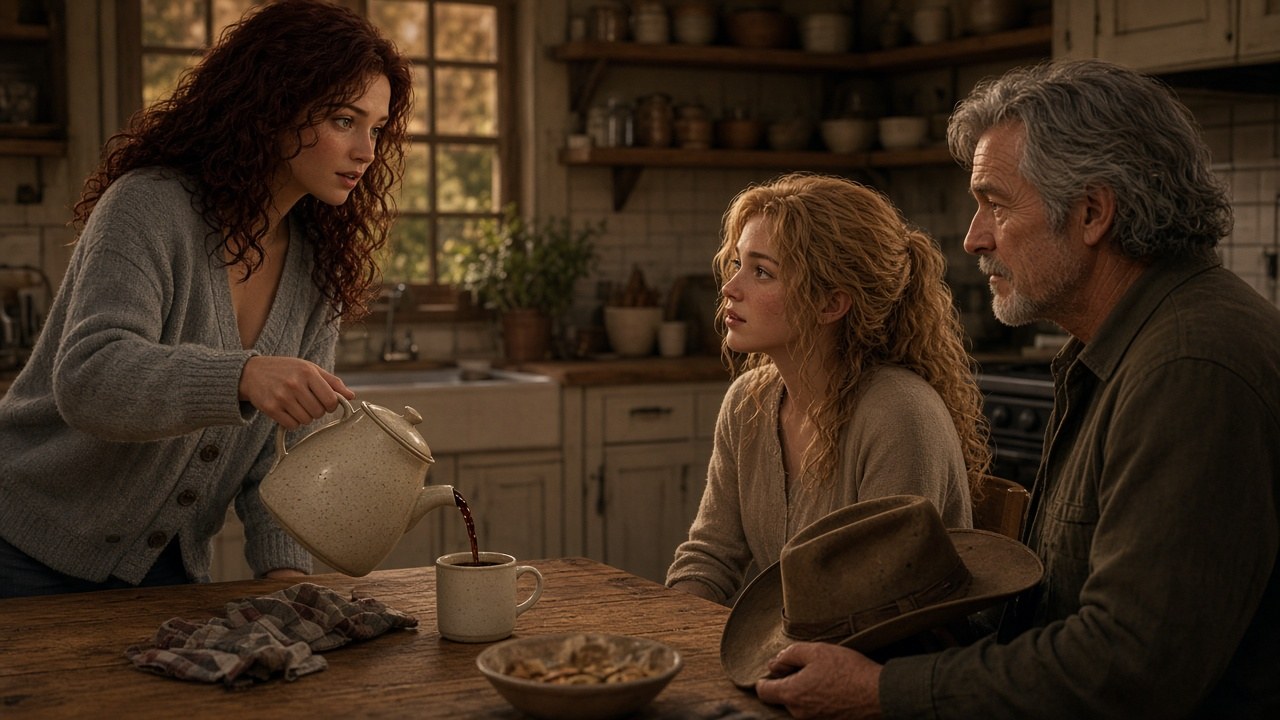
“My name is Vera,” she said, pouring three cups of coffee none of us drank. “June knows me as Vera Lane. Lane was my mother’s name. Kettering is the part I didn’t tell her.”
Her mother was a barrel racer from New Mexico. She met Clay at a rodeo one summer and never told him she was pregnant. Vera grew up in a horse trailer and a string of rented rooms, and she didn’t know her father’s name until her mother got sick when she was thirteen.
“Mama wrote to him before she died,” Vera said. “He drove eleven hours to get me. I lived in this house one year. That’s all I ever had with him. One year.”
She looked at Royce.
“He wasn’t the man you remember by then. He was dying, and he knew it. He talked about you every single night. He talked about Ruth. And he talked about a little red-headed girl down the road who he’d done something terrible to.”
I asked about the box. About the handwriting. About April 19. She’s ready.
Vera’s cheeks went pink. “I learned to write from his letters,” she said. “I copied his hand for years without meaning to. I’m sorry. I didn’t mean to scare you. I kept my own box of your clippings for eleven years. Last winter I finally found where June kept the real one. That’s why I started bringing her groceries.”
What Clay Left Behind
She went to the old rolltop desk by the window and came back with two things.
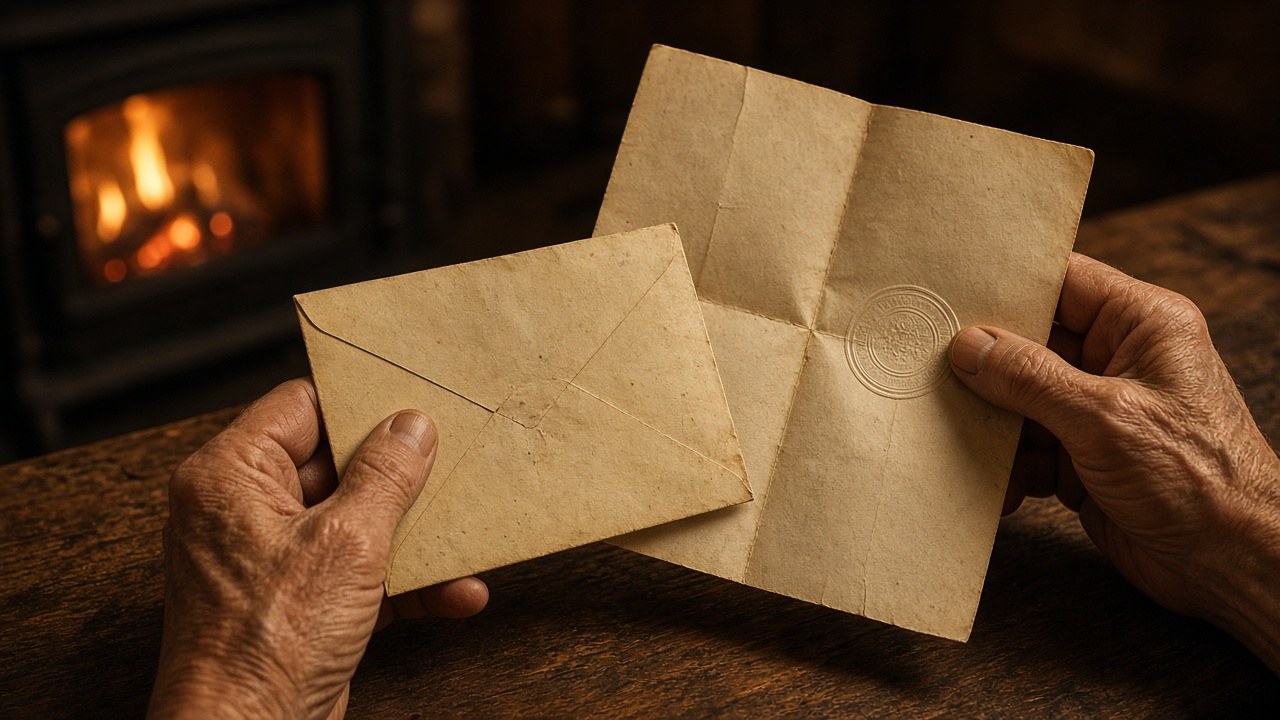
The first was a thick envelope, yellowed at the corners, with three words on the front in that heavy slanted hand. For Caroline’s girl.
The second was a folded legal document with a county seal pressed into the paper. I didn’t understand it until Royce took it out of my hands and read the first line out loud, very slowly.
“Deed of gift,” he said. “The Kettering ranch. All of it. The house, the barn, the north pasture, the water rights.” His voice broke. “To Lana Brooks.”
The kitchen went so quiet I could hear the woodstove tick.
“It’s signed and notarized,” Vera said. “Two weeks before he died. He told me to keep it until you proved you could handle a ranch on your own. When you won that barrel race on a horse you trained yourself, I knew it was time.”
I opened the letter with hands that didn’t feel like mine.
Lana. I set the fire on your grandpa’s fence line. I let the whole county call it lightning for twenty-five years. I tried to take a baby from her mother to get a ranch I already had. Daddy’s will said the first grandchild. That was your mother, and now it is you. I can’t undo any of it. I can only give back what was never really mine.
My Brother’s Saddle
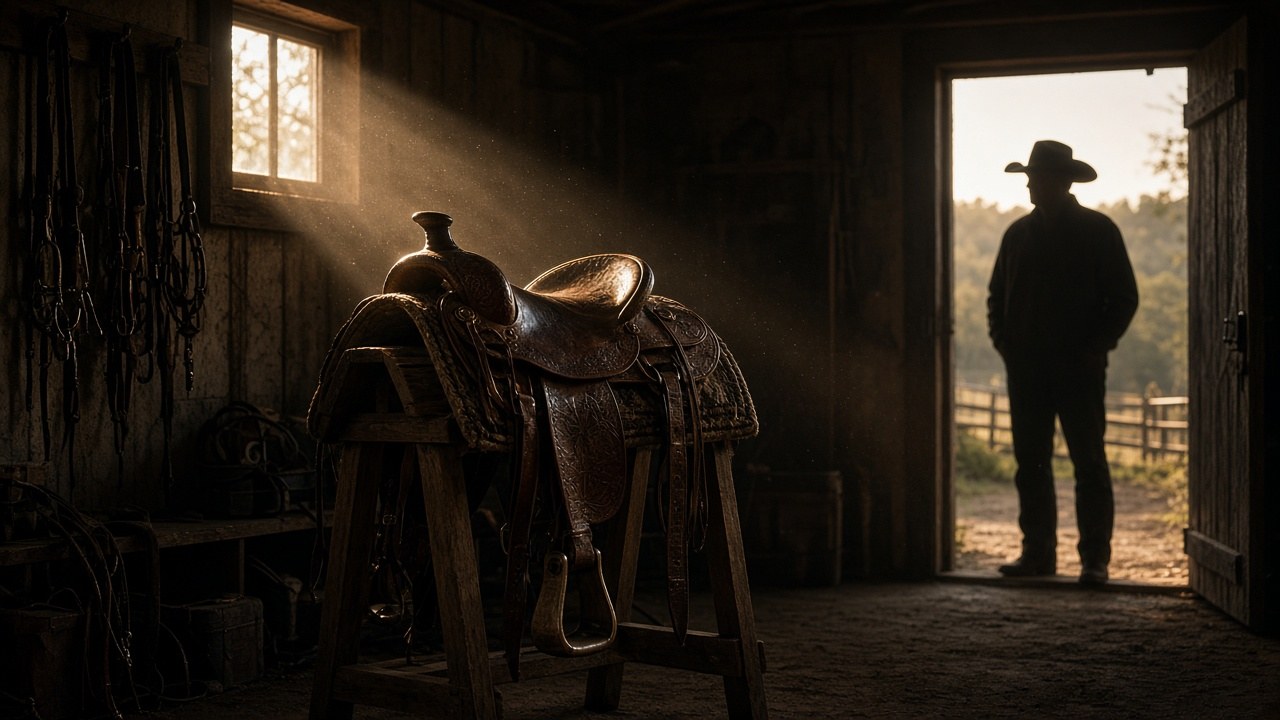
There was one more page. It wasn’t written to me.
I handed it to Royce without reading it. That one belonged to him.
He read it standing up. Halfway down the page he reached for the back of the chair, and then he sat, and then my grandfather — a man who rode out a blizzard in Wyoming with a broken collarbone and never said a word about it — put his face in his hands and cried like a little boy.
Vera knelt down beside him. “He kept it,” she said softly. “Your saddle. The one your daddy gave you when you turned sixteen. It’s in the tack room. He oiled it every spring, even the last one, when he could barely stand.”
Royce lifted his head. His eyes were red and wet and furious and grateful all at once.
“He wrote, Tell Roy I’m sorry I was the one who stayed,” he whispered. “Fifty years, Lana. Fifty years I thought my brother hated me.”
I put my hand on his shoulder. He covered it with his. We stayed like that a long time.
The Name on the County Record
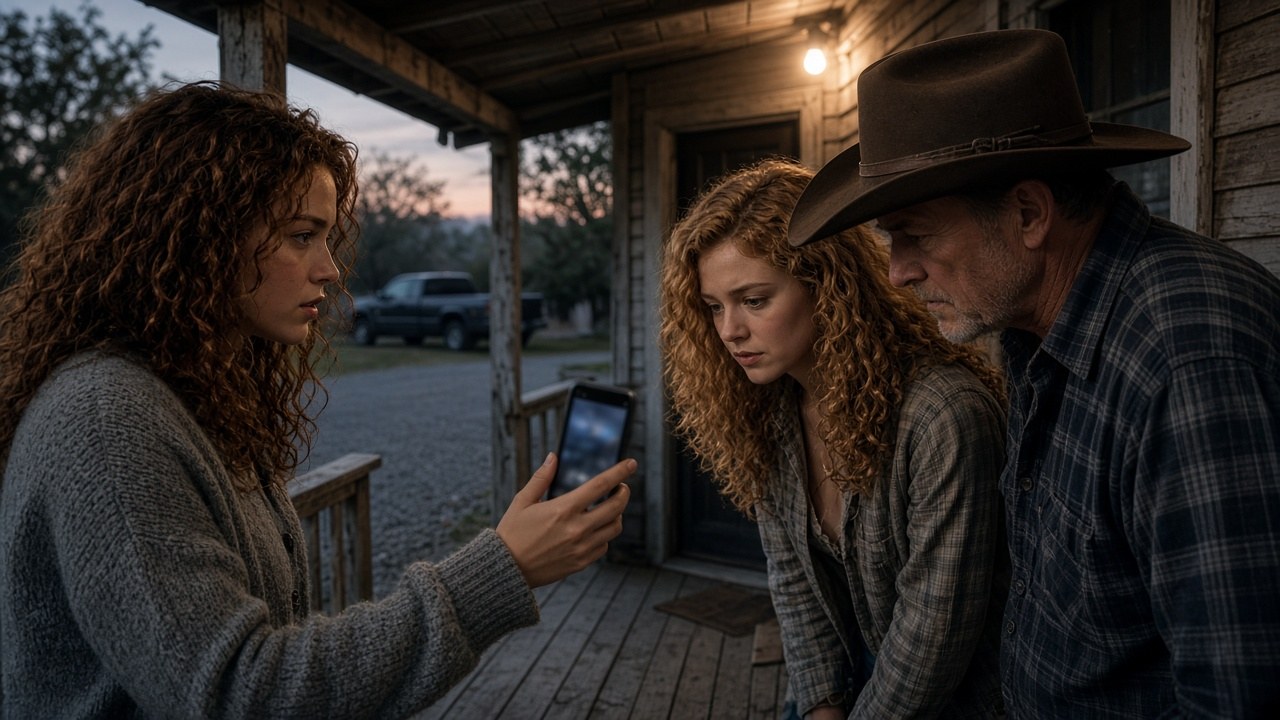
It was almost dark when we walked out to the truck. Raven’s picture was in my jacket pocket. The deed was in Royce’s. I kept thinking about how much land that paper meant, and how this whole story started with a man trying to take our farm.
Vera followed us to the porch steps. She was holding her phone against her chest, and she looked like she’d been fighting with herself all afternoon about whether to show me.
“There’s one more thing,” she said. “That deed was never filed. Daddy made me promise to wait. So last week I went to the county office to ask what I needed to do.”
She turned the screen toward me. It was a photo she’d taken of a page in the county land records.
The Kettering ranch. All of it. Transferred twenty-three days ago.
The seller’s signature at the bottom said Clay Kettering, in a heavy, slanted hand that looked almost exactly like the letter in my lap.
Royce went completely still. “Clay’s been in the ground eleven years,” he said.
“I know,” Vera whispered. “Look at the buyer.”
I looked. And every hair on my arms stood up.
Pruitt.
The same family that forged papers on June’s land in 1998. The same name as the man who stood in Willow’s stall with a shovel, the night the State Police came.
Vera pulled her cardigan tight. “Somebody else learned to copy his handwriting, Lana,” she said. “And they did it a lot better than I ever did.”
So now I’m asking you. How did a man who died eleven years ago sign away his ranch last month? And which Pruitt is still forging papers in this county?
Part 17 is coming soon. Follow Reiterin on Facebook so you don’t miss what happens next.
Related Posts
 A Dog Was Trapped in a Water-Filled Hole. A Neighbor Heard Him Crying and a Constable Brought a Rope
 A Grandfather in a Wheelchair Fell Into Shark Waters. A Sergeant Took Off His Gun Belt and Jumped In
 Firefighters Pulled 3 Dogs and 3 Cats From a Burning Phoenix Home. Some Needed Oxygen to Survive
 A Kitten Was Trapped Inside a Brick Wall. Firefighters Opened It One Brick at a Time
 Lana’s Story Part 15: The Girl Who Opened Clay Kettering’s Door
 Firefighters Found a Dog Unconscious Inside a Burning House. They Refused to Give Up