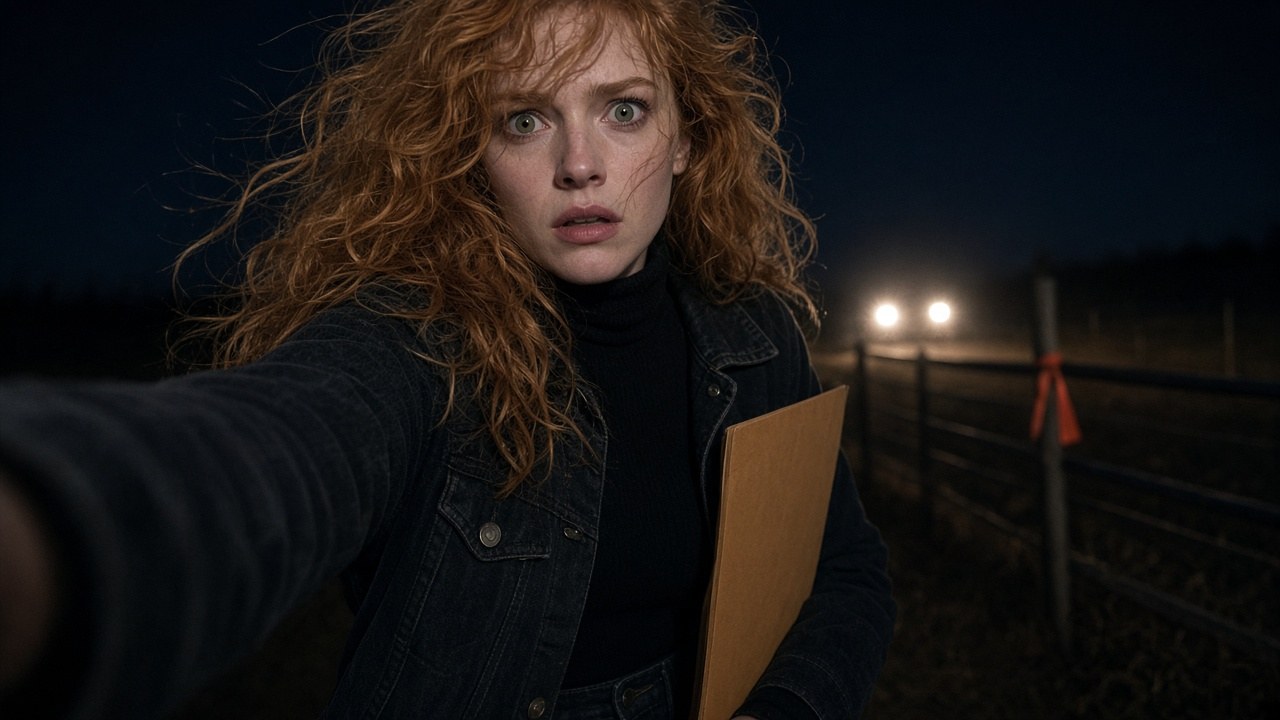
Just finding Lana’s story? Read Part 18 here to catch up on Deke Pruitt’s tire tracks and survey flag on our north fence, Willow’s stolen papers, the photo of Clay’s private letter timestamped fourteen days early, and the headlights waiting at midnight.
Last time, those headlights sat idle beyond our wire while Deke’s voice told us to bring a quitclaim — or watch him file the amendment that already had our parcel number on it.
“If we go out there blind, he wins,” Vera had whispered. “We need proof before midnight — not another empty chase.”
Midnight was forty minutes away. Proof was still a photo in my shaking hands. And the man at our fence already thought he owned the next move.
The Call We Made Before the Fence
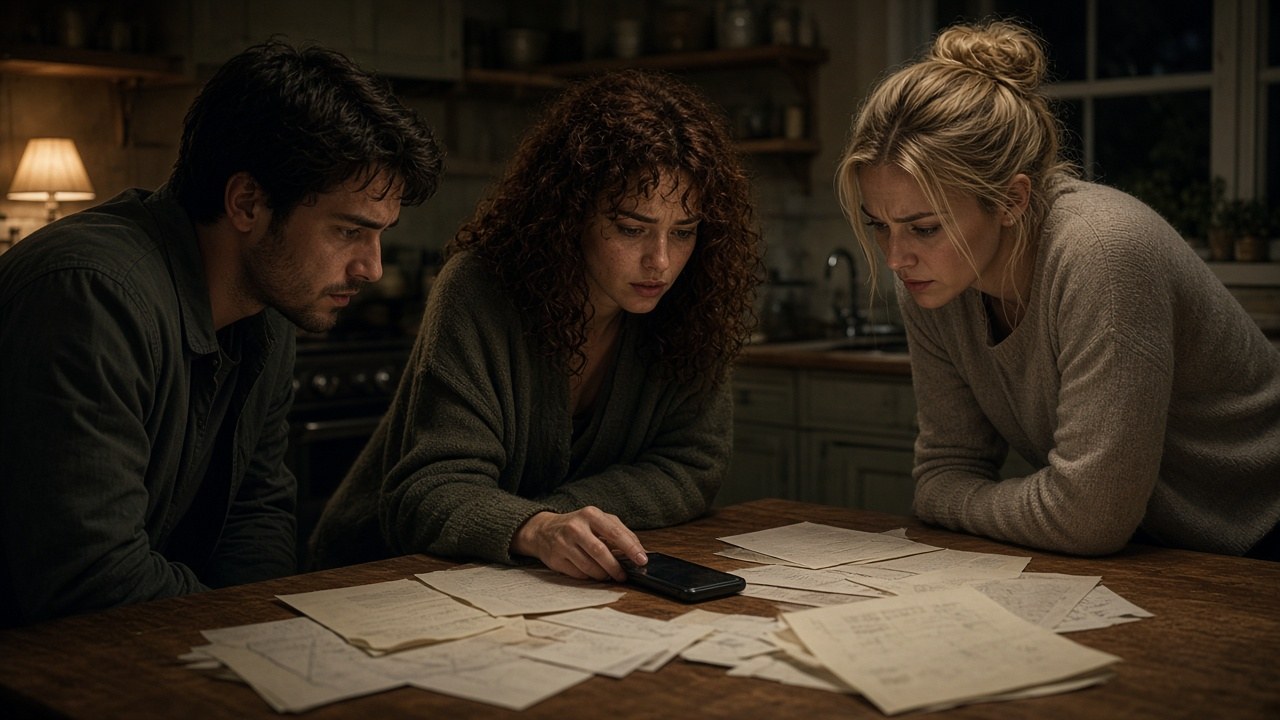
Vera wouldn’t let Royce take the shotgun out the door. Not yet. She flipped Clay’s carbon copies onto the kitchen table and dialed the land-office clerk from her personal phone, not the county number.
Three rings. Four. Then a thin, frightened voice.
“I can’t talk on a recorded line,” the clerk whispered before Vera even said her name. “And I can’t meet you at the office. Someone watched me leave today.”
Royce and I leaned in so hard the speaker crackled. Vera kept her voice soft. “Fourteen days ago, someone photographed my father’s private letter inside his locked house. You helped him file the real deed of gift years ago. Did you still have a key?”
Silence. Then, smaller: “I never kept a key. Clay’s locksmith did. But two weeks ago a young man in a clean shirt asked me to pull the Kettering parcel map after hours. He said he was settling an estate. He knew the letter’s wording — Caroline’s girl — before I had ever seen that envelope. I thought he was family. I printed the map. I did not open any house.”
My stomach dropped. “Deke,” I said.
“I didn’t know the name then,” she whispered. “I know it now. And I know the notary stamp on that forged transfer is the same stamp I warned you about. I tried to flag the file. Someone above me cleared it the same afternoon your farm showed up as adjacent disputed acreage.”
Vera’s knuckles whitened on the phone. “Are you friend or helper?”
A shaky breath. “I’m the woman who will lose her job if I say this out loud in the building. But I will meet you at the north fence at 11:50 with a stamped copy of the rejection I tried to file. If Deke is already there, don’t get out of the truck.”
The line went dead.
What We Took Into the Dark
We didn’t bring Willow’s papers. We couldn’t. They were already gone.
What we did bring: Clay’s carbon copy of the letter. The notarized, never-filed deed of gift in Royce’s shirt pocket. The photo with the fourteen-day timestamp. And Vera, who refused to stay behind.
“If she’s lying, we need to see her face when she lies,” Vera said. “If she’s telling the truth, Deke will try to stop her from handing us that stamp.”
Royce killed the truck lights a quarter mile out and rolled the last stretch on the soft shoulder. The orange survey flag still glowed faintly in the idle headlights. One truck. Cab dark. Engine ticking.
No second vehicle yet.
11:47.
My phone buzzed. Unknown number again.
“You’re early, Caroline’s girl,” Deke said, almost cheerful. “And you brought company. Good. Saves me a second trip. Slide the quitclaim under the gate post when you’re ready. I already filled in the acreage. You just need to sign like a good granddaughter.”
“We’re not signing anything in the dark,” I said.
“Then look in your passenger seat.”
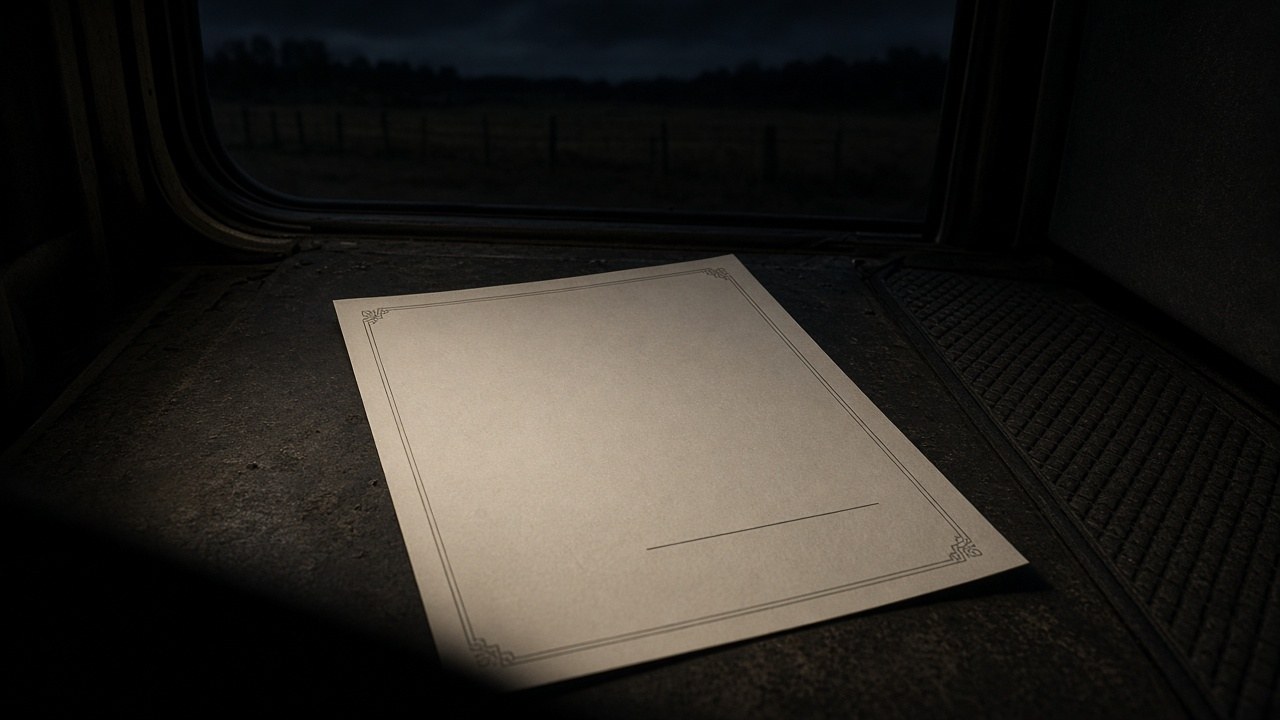
I looked. On the floorboard where Vera’s boots had been sat a folded document I had never put there — cream paper, county header, a signature line with my name already typed in neat block letters. Lana Brooks. Quitclaim. Brooks north pasture to Pruitt Holdings.
Vera’s face went white. “That was not in this truck when we left the house.”
The Woman Who Stepped Into the Headlights
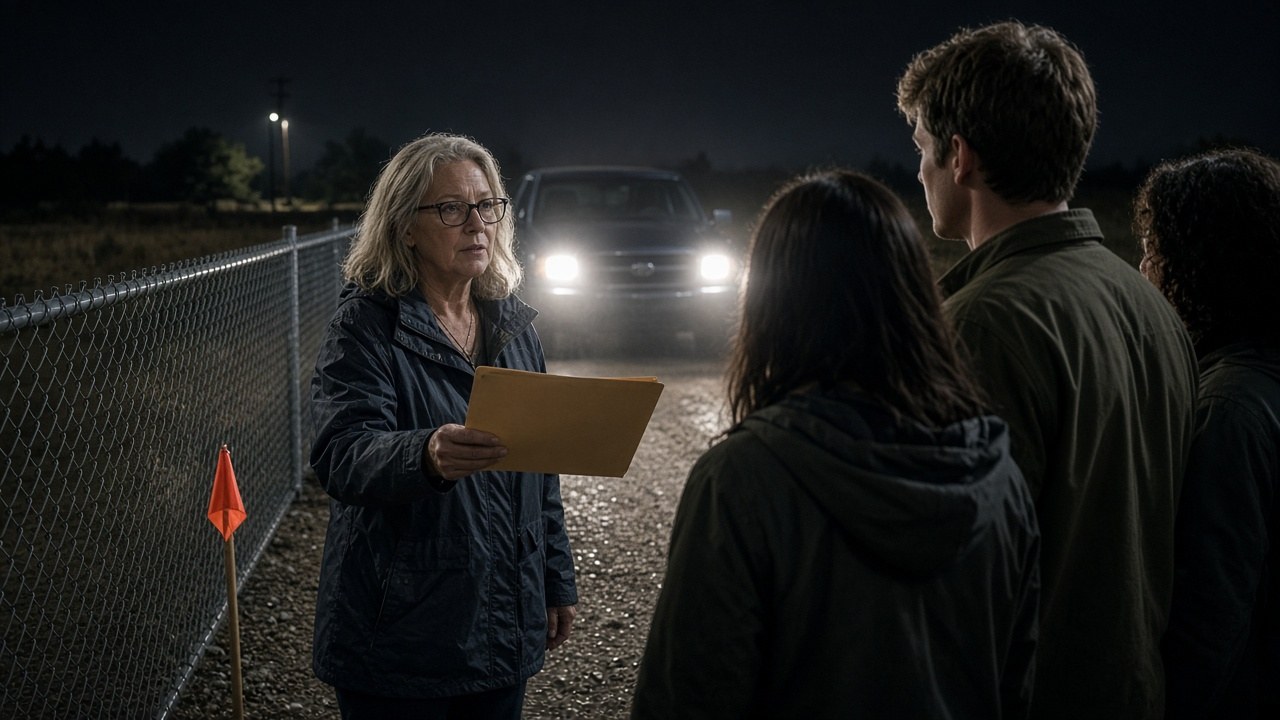
At 11:51, a compact car rolled up the dirt road with its brights off. The land-office clerk got out holding a manila folder against her chest like it might stop a bullet. Glasses on a chain. Rain jacket. Hands shaking so hard the folder rattled.
Deke’s truck door opened. He stepped into his own headlight wash — sharp jaw, clean shirt, the same cold eyes from June’s 1998 school photo grown into a man who practiced dead men’s signatures for sport.
“Evening, Miss Clerk,” he said pleasantly. “You shouldn’t have come.”
She held the folder higher. “This is the rejection stamp I tried to put on your forged Kettering transfer. Someone pulled it. Someone cleared your amendment on the Brooks parcel the same day. I will give this to Caroline’s girl, and then I am done helping anyone in that building pretend they didn’t see.”
Royce moved half a step in front of Vera and me. I kept my hands visible and empty.
Deke smiled like a man who’d already won a hand nobody else could see. “Give them the folder,” he said. “Then tell them whose key opened Clay’s kitchen fourteen days ago. Tell them who sat at that table and photographed a letter that was never supposed to leave the house.”
The clerk’s mouth opened. Closed. Her eyes flicked to Vera — not to me — and something like apology crossed her face.
“It wasn’t me,” she whispered. “But it was someone Clay trusted enough to leave a spare with the locksmith. Someone who still had reason to hate the name Brooks.”
The Name He Wanted Us to Hear
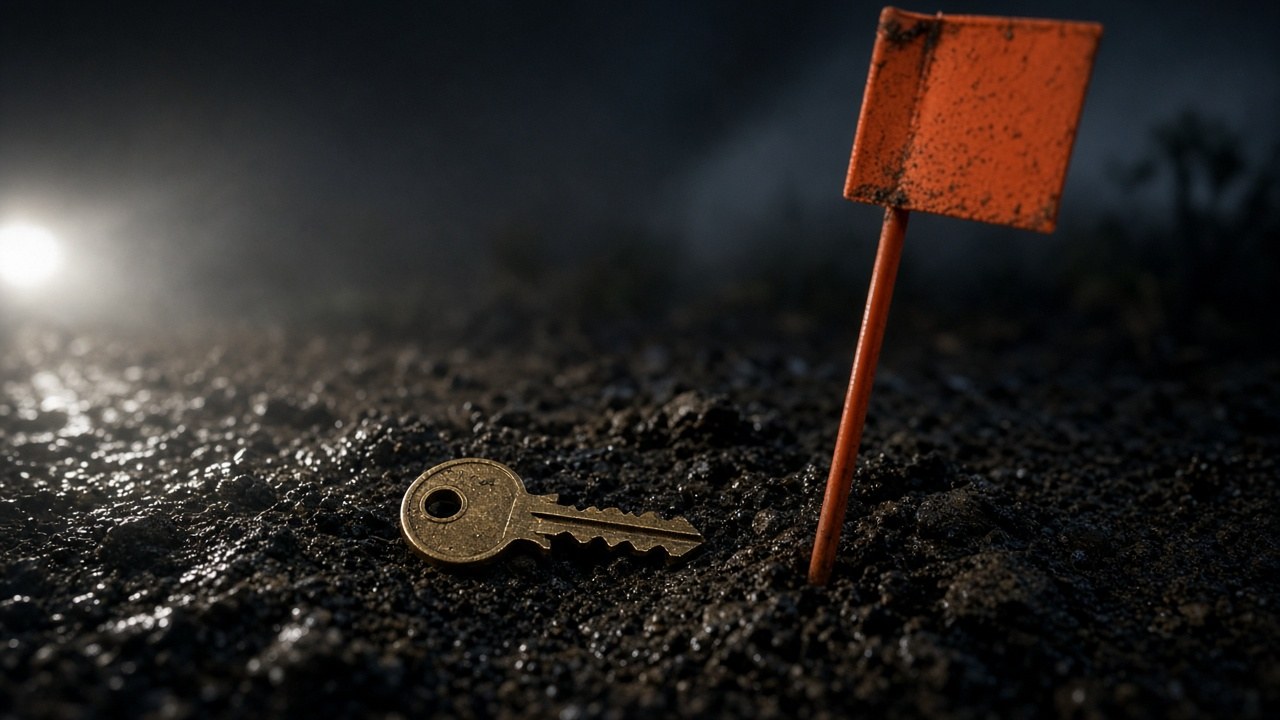
Deke reached into his jacket and tossed a small brass key into the dirt between us. It landed near the survey flag with a soft, ugly sound.
“County locksmith’s spare,” he said. “Checked out two weeks ago under a name you’ll recognize when you stop pretending. I’ve got the sign-out sheet. I’ve got Willow’s papers. And I’ve got a buyer already lined up for every acre your mother almost lost once.”
Vera stepped forward despite Royce’s arm. “Say the name.”
Deke’s smile widened. “Ask your half-sister who else lived one year with Clay before he died. Ask her who left New Mexico angry. Ask her who learned his handwriting first — and who taught me the rest.”
Vera went still in a way that scared me more than the shotgun ever could.
“That’s a lie,” she said. But her voice had no air left in it.
The clerk pressed the manila folder into my hands. Inside: a stamped rejection form with a date matching the forged filing window — and a sticky note in the clerk’s careful print: Check the locksmith log. The name is not Pruitt.
Behind Deke’s truck, a second set of headlights flicked on. Farther up the fence line. Waiting. Not idle this time — rolling slowly toward us through the dark.
Who Else Knew the Letter
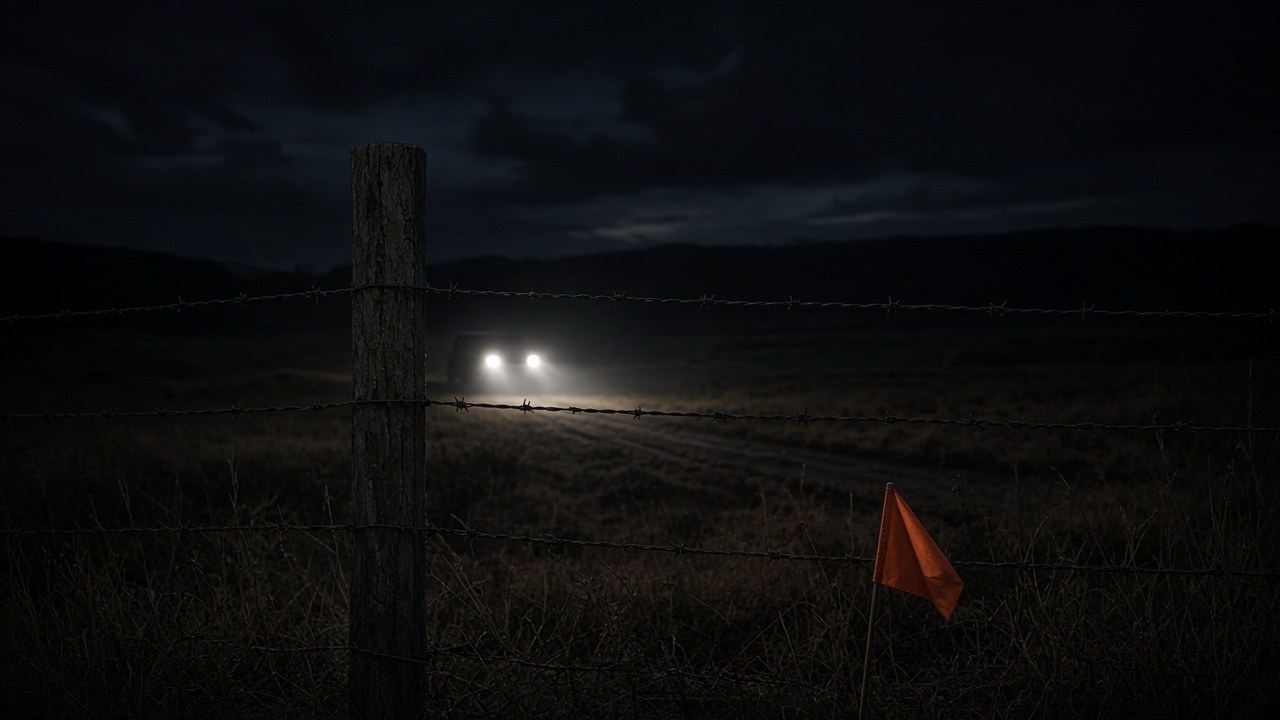
Deke tipped an imaginary hat. “Midnight, Caroline’s girl. Sign the quitclaim, or watch me file everything I already forged — including a story where Vera helped me open that door. Your move looks a lot like panic from where I’m standing.”
He climbed back into his truck. The second vehicle kept coming. The clerk scrambled for her car. Royce pulled Vera and me toward our cab with the folder crushed against my ribs.
I didn’t sign.
But as we reversed down the soft shoulder with the orange flag vanishing in our mirror, Vera whispered the question none of us wanted answered out loud:
“Lana… what if the person who photographed Daddy’s letter wasn’t Deke’s partner from the county?”
She swallowed.
“What if it was someone who already knew how to copy his hand — because she learned it sitting at that same kitchen table eleven years ago?”
So now I’m asking you. Was the clerk telling the truth about the locksmith log? Is Vera the sister who stayed — or the sister Deke just accused in the dark? And if those second headlights belong to someone who already hated the name Brooks… whose side of this fence are we really standing on?
Part 20 is coming soon. Follow Reiterin on Facebook so you don’t miss what happens next.
Related Posts
 Firefighters Saved a Cat From a Grass Valley Apartment Fire, Then Brought It Home to a Tearful Family
 She Saw a ‘Dead’ Walrus Breathe. Then She Saved the Orphaned Calf and Named Him After Her Late Father
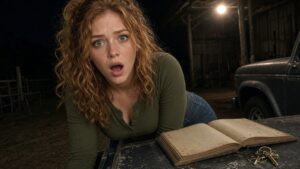 Lana’s Story Part 20: The Name in the Locksmith Log
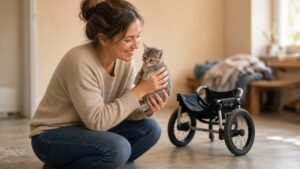 Gelato the Kitten Got a Hot Wheels Wheelchair. This Week He Got a Forever Home
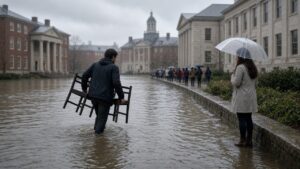 He Built a Path of Chairs Through Campus Floodwater. TikTok Called It Chivalry
 Wildfire Fosters Saved 150+ Gainesville Pets. Nearly Every One Found a Forever Home