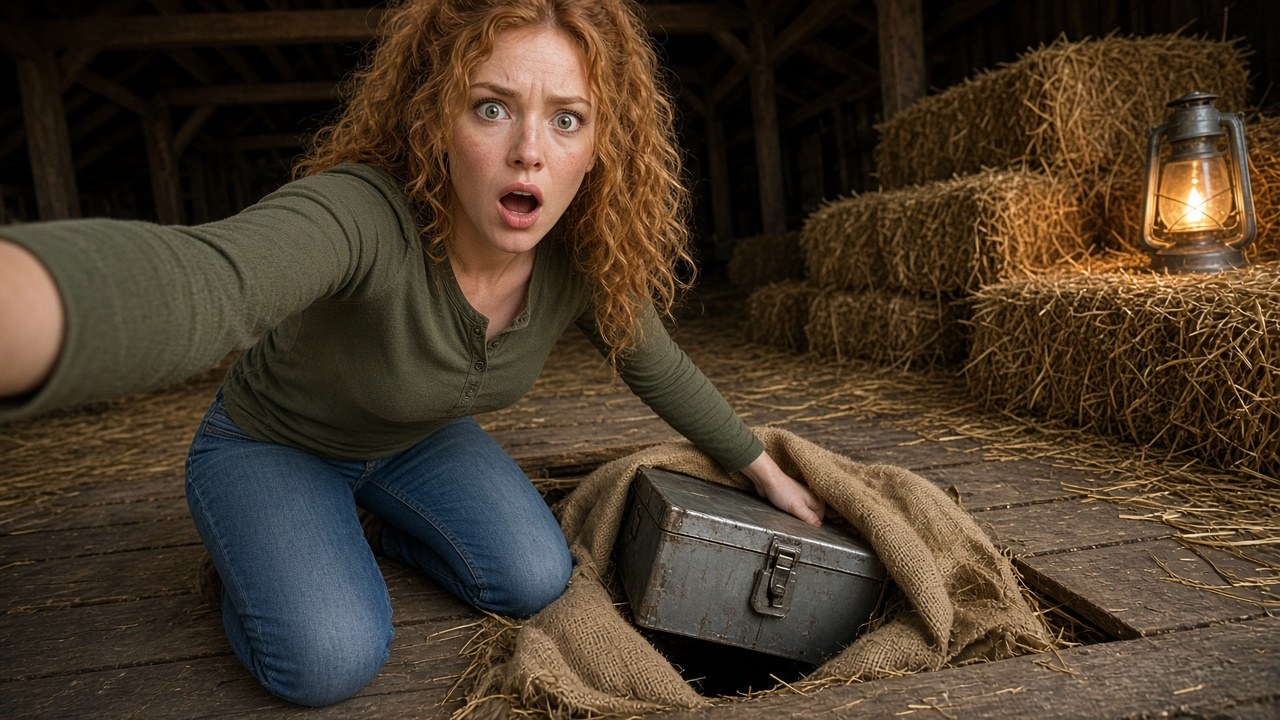
Just finding Lana’s story? Read Part 20 here to catch up on the locksmith who followed us home, the name hidden in his sign-out log, the Thursday June’s calendar proved Vera innocent, and the woman with Willow’s stolen papers standing at the end of our lane.
Last time, Rita Lane stepped out of a silver truck with a Las Cruces decal on the tailgate and Willow’s registration papers in her hand. She called Vera “baby.” She called me “Caroline’s girl.” And she said she hadn’t driven all that way for a quitclaim.
“I came for what Clay hid in your family’s barn the night of that fire.”
Then the hayloft light came on behind me. In my barn. With every one of us standing in the yard.
The Light in the Hayloft
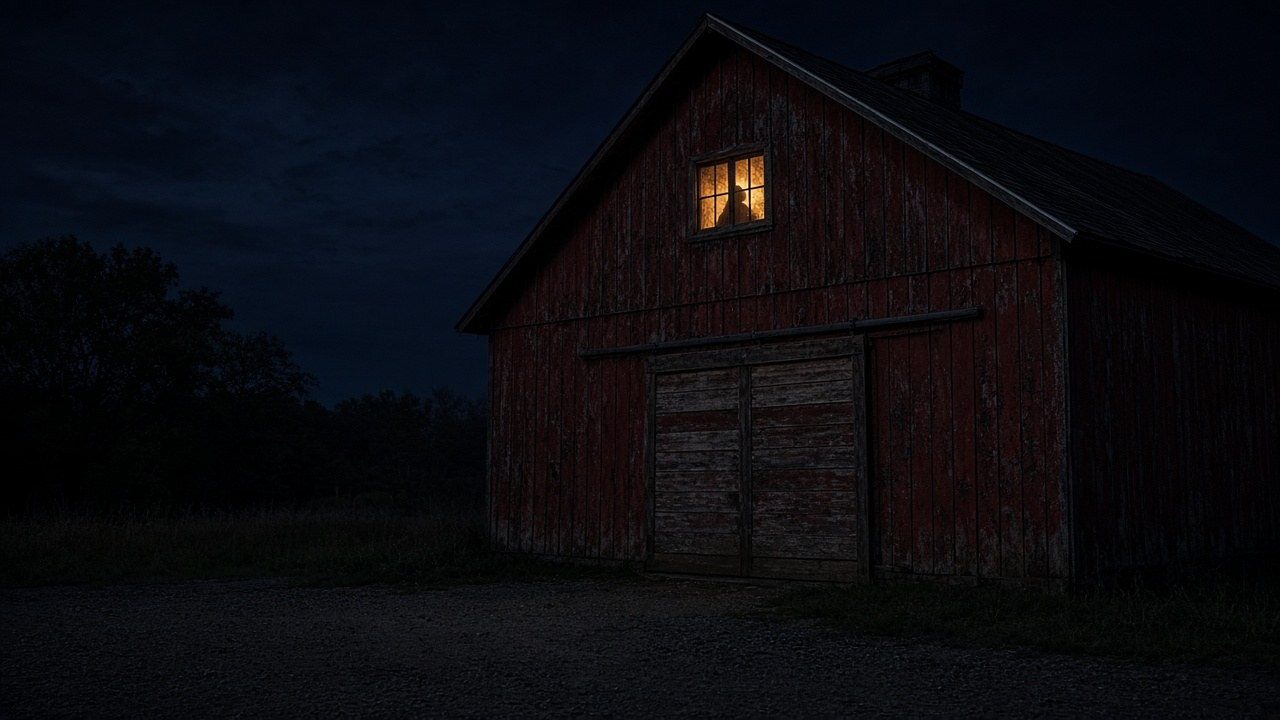
Nobody moved. That’s the thing I remember most. Six people in a farmyard at one in the morning, and not one of us breathed.
The hayloft window glowed yellow above the big sliding door. A shadow crossed it once. Then again. Somebody up there was walking slow and careful, the way you walk when you’re looking for one particular thing.
Rita’s smile slipped for half a second. Just half a second. But I saw it.
“Friend of yours?” I asked her.
“I was going to ask you the same thing, sweetheart.”
Royce was already moving. He put himself between me and the barn door without saying a word, the flashlight low in his fist. Vera grabbed the back of my jacket. Abel Haskins took two steps backward toward his van, his ring of keys jingling, and whispered, “I don’t want any part of a barn fight.”
Inside, Willow nickered. Not scared. Just curious. My mare has screamed at strangers her whole life. Whoever was in that loft, Willow wasn’t afraid of them.
“Hello?” I called up. My voice came out smaller than I wanted. “This is my barn. Come down where I can see you.”
The shadow stopped. A board creaked. And then a woman’s voice drifted down through the hay dust, shaky and out of breath.
“Lana? Oh, thank God. Lana, don’t let her up here.”
I knew that voice. I had heard it crying on the phone four nights ago.
It was the county clerk.
The Clerk Behind the Hay Bales
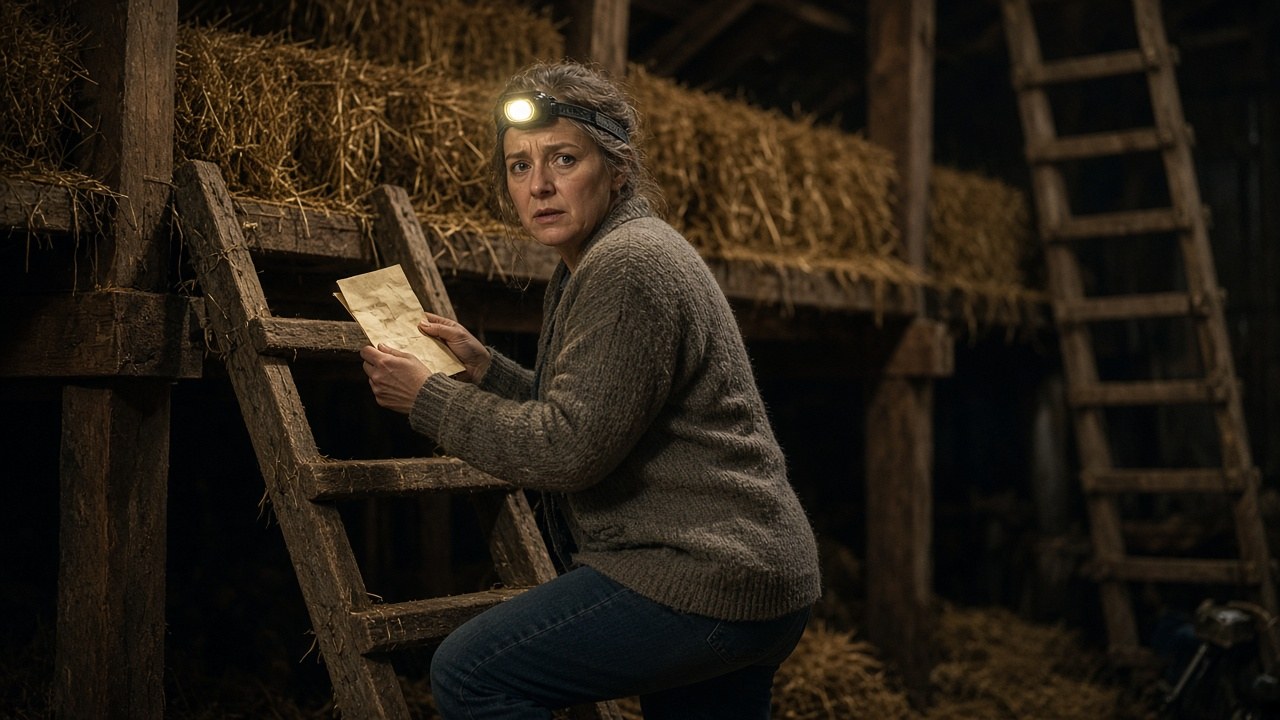
She came down the loft ladder backwards, one rung at a time, hay stuck in her hair and a headlamp strapped crooked over her forehead. She was still in her work cardigan. Her county ID badge swung on its lanyard: Nadine Hollis, Land Records.
“I’m sorry,” she said before her feet even touched the floor. “I’m so sorry. I know how this looks.”
“It looks like you broke into my barn,” I said.
“Abel told me.” She pointed a trembling finger at the old locksmith. “After he left the fence. He called me from the gas station and said, Rita Lane’s truck is parked on the Brooks lane, and she keeps looking at the barn. And I remembered something.”
Abel gave a guilty little shrug. “Thought somebody ought to know.”
Nadine pulled a folded piece of paper out of her cardigan pocket. It was a photocopy of an old county recording slip, the kind they stamp when somebody files a document. The date in the corner was from December, eleven years ago. Three weeks before Clay Kettering died.
“Clay came into our office that December,” she said. “I was brand-new, filing papers in the back. He was so sick he could barely stand, but he recorded a sealed amendment and asked that the original be returned to him by hand. And on the return slip, under where to deliver, he wrote one thing.” She turned it so we could read it.
Brooks barn. Loft. Third board from the east wall.
“The same place he hid something the night of the fence-line fire,” Nadine whispered. “Rita knew about the hiding place. She just never knew he went back.”
Vera made a sound like someone had punched her.
Behind us, gravel crunched. Rita had come up the lane. She stood in the open barn door with Willow’s papers tucked under her arm, and she wasn’t smiling anymore.
“Well,” she said softly. “Isn’t that convenient.”
Under the Third Board
I climbed that ladder so fast I scraped both palms. Royce came up right behind me. Vera stayed at the bottom with Nadine, both of them staring up like they were watching a dam about to break.
The loft smelled like summer hay and old dust. I counted from the east wall. One. Two. Three.
The third board was loose. Not broken — loose, like somebody had pulled the nails a long time ago and set them back in by hand. Nadine’s flashlight had scuffed the dust on top of it. She’d found it. She just hadn’t had the nerve to lift it yet.
Royce worked his pocketknife under the edge. The board came up with a groan.
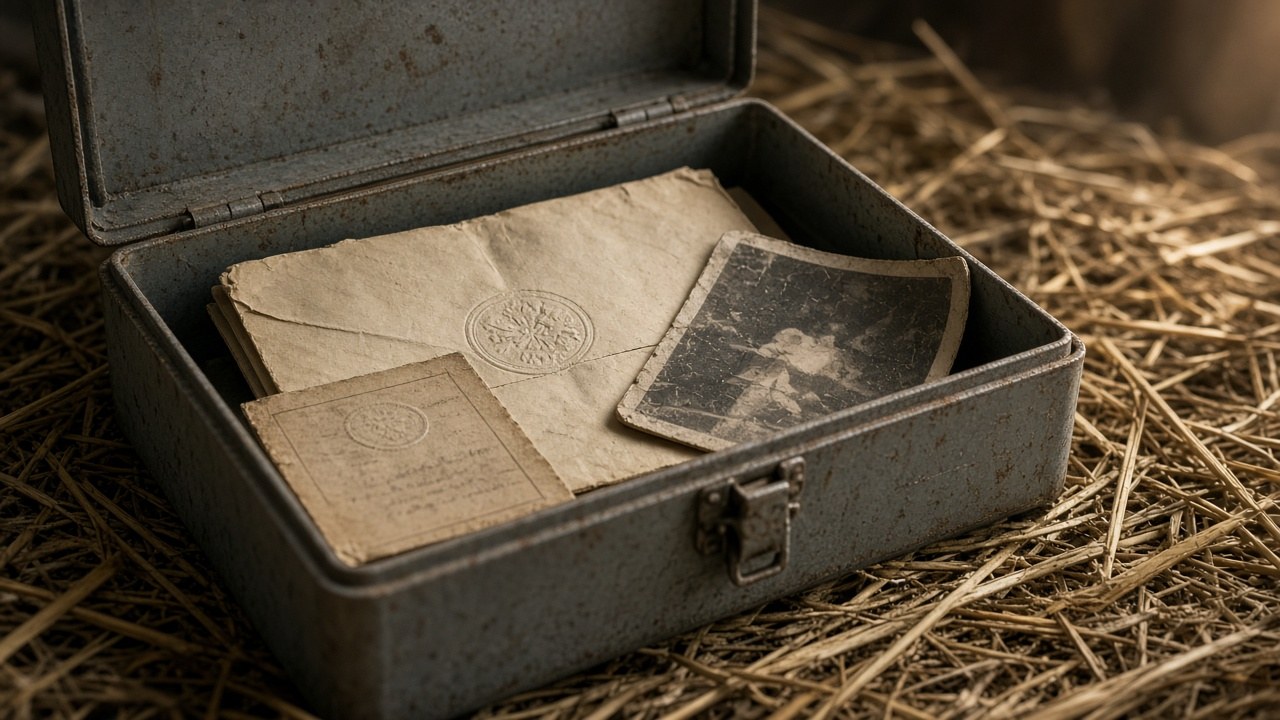
Underneath, wrapped in a feed sack gone stiff with age, was a gray metal lockbox. Small. Heavy. The kind people used to keep cash in before banks. It had a little brass keyhole on the front.
“There’s no key,” I whispered.
From the bottom of the ladder, Abel cleared his throat. “Miss Brooks. Thirty-one years a locksmith. Toss it down.”
It took him eleven seconds. I counted.
The lid creaked open under the barn light, and the five of us leaned in so close our shoulders touched. Inside were three things.
The first was a letter, folded in thirds, with a raised notary seal pressed into the bottom corner. Clay’s handwriting. The same slanted hand from the letter he’d left for me.
I, Clay Kettering, being of sound mind, state that the signatures on the transfers of my mother’s savings and on the trust I set aside for my daughter Vera were not mine. They were made by Rita Lane, who practiced my hand at my own kitchen table and taught the Pruitt boy to do the same. I said nothing to protect my child. If you are reading this, I should have said it sooner.
The second was a recorded amendment, stamped and sealed by the county. It restored Willow’s full bloodline papers — her dam, her grand-dam, the Kettering foundation mares — to the Brooks family. And it deeded the forty-acre creek strip along the Kettering east pasture to “Caroline’s daughter and my daughter Vera, equally, forever.”
The third was a photograph. Faded, curled at the edges. A younger Rita, silver rings already on her fingers, sitting at Clay’s kitchen table beside a skinny boy of maybe twelve. Both of them had pens in their hands. Between them was a sheet of paper covered in the same signature, over and over.
The boy was Deke Pruitt.
Vera put her hand over her mouth and sat down right there in the straw.
June at the Barn Door
I didn’t see Rita move. Nobody did.
One second she was in the doorway. The next she had crossed half the barn floor with her hand out for the lockbox, her rings flashing, her voice sweet as syrup. “Baby, give that to Mama. You don’t understand what Clay was really like. Those papers will hurt you.”
“Stop right there, Rita.”
The voice came from behind her. Calm. Old. Absolutely certain.
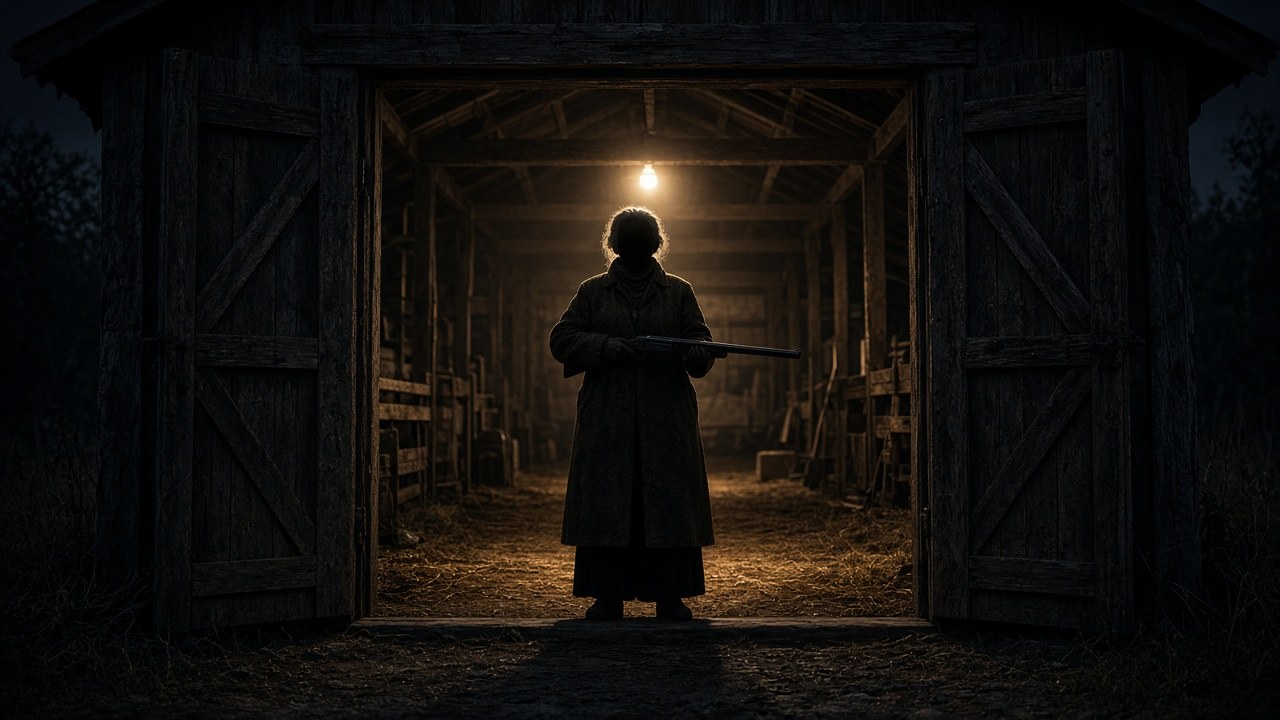
June Whitaker stood in the barn door in her barn coat and slippers, Hank’s old double-barrel shotgun held level across the doorway — not pointed at anyone, just laid there like a fence rail nobody was getting past. The barrel didn’t shake. Not even a little.
“Hank carried this same gun the night he met Clay at the fence line,” June said. “He didn’t use it then. I don’t plan to use it now. But you are not leaving this barn with anything that belongs to these girls.”
Rita looked at June. Then at Royce. Then at the photograph in my hand, the one with her own younger face on it.
Something in her shoulders gave up.
She dropped Willow’s registration papers on the barn floor. They scattered across the straw like leaves. Then she turned and walked — didn’t run, walked — past June and out to the silver truck. The engine roared. Gravel sprayed the mailbox. Her taillights shrank to two red dots at the end of our lane and disappeared toward the county road.
Royce let out a breath. “She’s going to Deke.”
“Let her,” June said, lowering the shotgun at last. “Now. Everybody in my kitchen. I’m making coffee, and nobody is touching that box again until I’ve had a cup.”
The Number Under the Letter
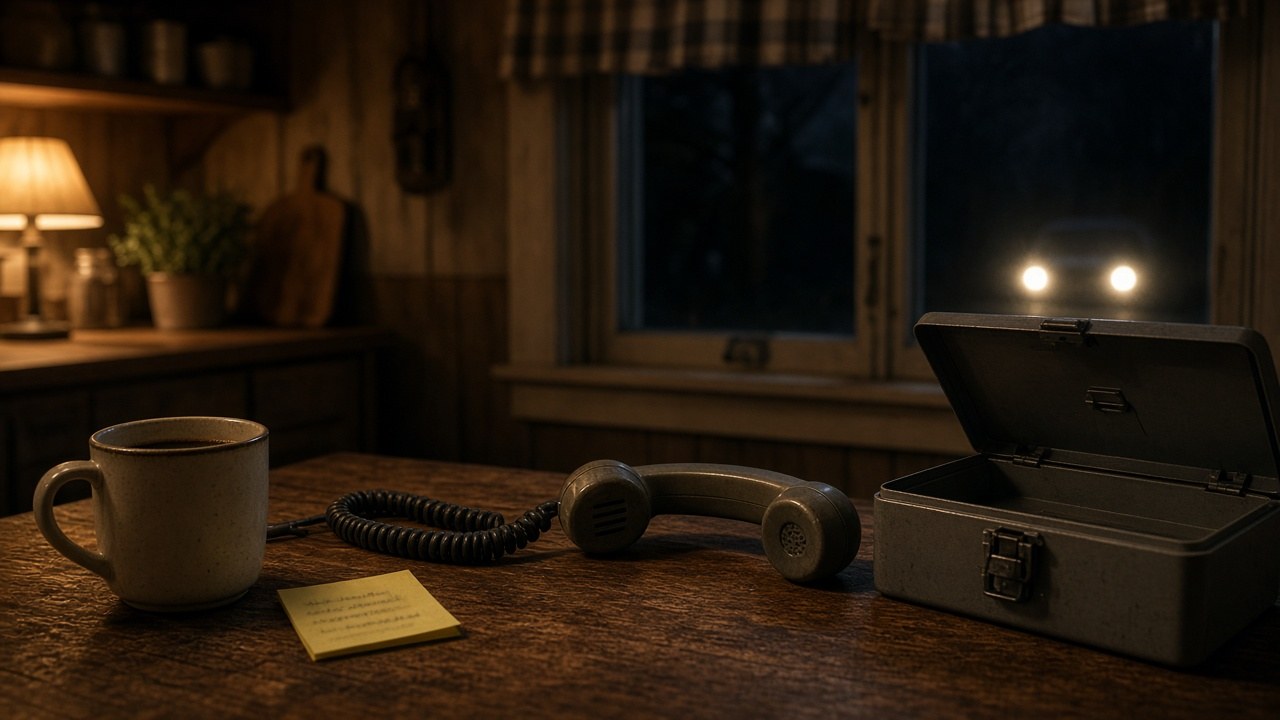
June’s kitchen was warm and smelled like burnt coffee. We set the lockbox in the middle of her table like it might bite. Nadine took pictures of every page with her phone. Abel sat in the corner and didn’t say a word.
I was the one who found it.
When I lifted Clay’s notarized letter to fold it back up, a little yellow square fell out from underneath. A sticky note. Old, dry, barely holding on. Clay’s handwriting again, but quick and messy, like he’d written it standing up.
If Rita comes, call the number. He already knows.
Under it was a phone number with our county’s area code.
“Don’t,” Vera said. “Lana, we don’t know who that is.”
“Clay knew,” I said. “He knew Rita would come. He knew it before he died.”
June stared at the note for a long time. “That last winter,” she said quietly, “Clay knocked on my door one night and asked if he could sit alone in Hank’s barn for ten minutes. Said he wanted to say goodbye to the place. I let him.” Her eyes filled. “I never asked what he carried in under his coat.”
June slid her old wall phone across the counter without a word. The cord stretched almost to the table. My fingers were shaking so badly I misdialed the first time.
It rang once. Twice. On the third ring, a man picked up. His voice was deep and slow, and he didn’t sound sleepy at all, even though it was nearly two in the morning.
“Pruitt.”
My whole body went cold. I couldn’t speak.
“This is Sheriff Cole Pruitt,” the voice said. “Go ahead. I know who you are.”
Royce’s face went white. Across the table, June set her coffee cup down so hard it cracked. Cole Pruitt. Deke’s uncle. The man whose name was on every county patrol truck I had ever seen.
“Sheriff,” I whispered. “My name is—”
“Lana Brooks. Caroline’s girl.” He let out a long, tired breath. “I’ve been waiting for this call for eleven years, Miss Brooks. Don’t hang up. And don’t trust anyone who says they’re bringing you the original quitclaim — because I have it.”
The line went quiet. Behind me, out in the dark, a set of headlights turned into our lane.
So now I’m asking you. Is Sheriff Cole Pruitt protecting us — or protecting his nephew? Why would Clay leave his number in that box? And whose headlights just turned onto our lane, an hour after Rita disappeared?
Part 22 is coming soon. Follow Reiterin on Facebook so you don’t miss what happens next.
Related Posts
 This Rescue Puppy Had a Heart Defect That Could Have Killed Him. Now He Has a Forever Home
 Firefighters Learned Pet CPR. A Week Later They Helped Deliver 15 Puppies
 Firefighters Saved a Cat From a Grass Valley Apartment Fire, Then Brought It Home to a Tearful Family
 She Saw a ‘Dead’ Walrus Breathe. Then She Saved the Orphaned Calf and Named Him After Her Late Father
 Lana’s Story Part 20: The Name in the Locksmith Log
 Gelato the Kitten Got a Hot Wheels Wheelchair. This Week He Got a Forever Home