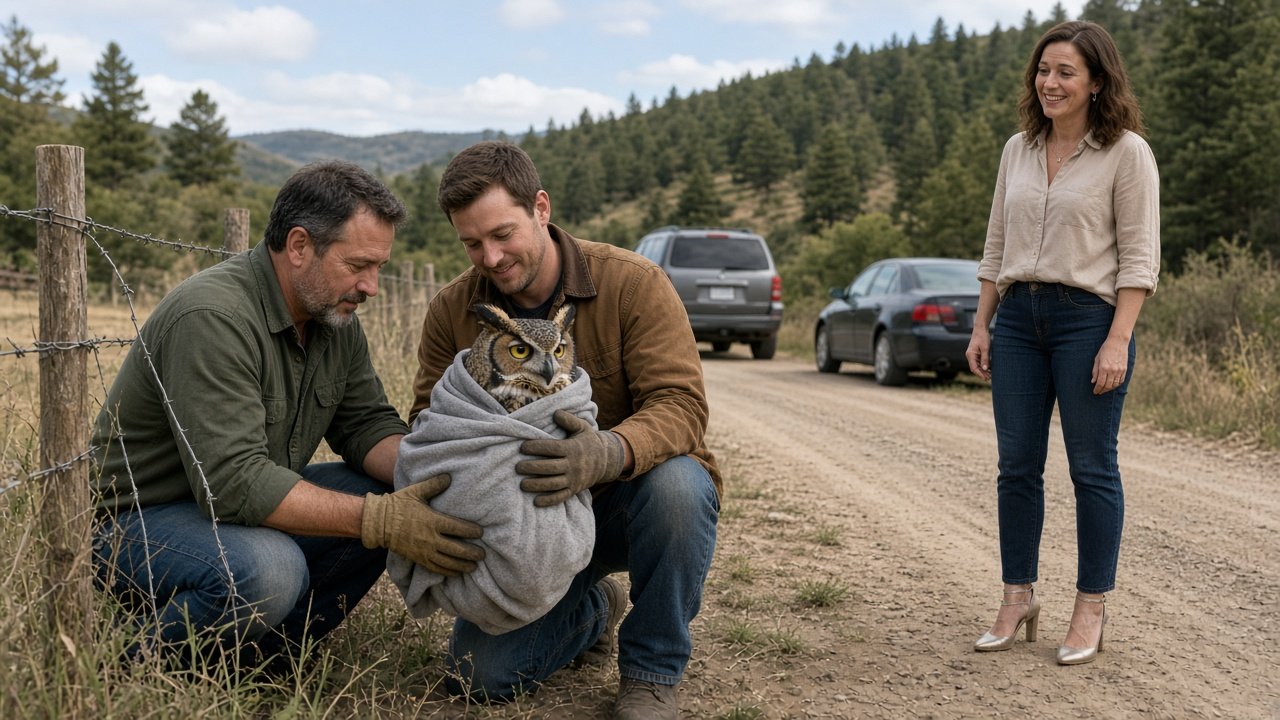
Sharon and Scott Jacobs were just driving to work. They had a staff meeting to get to, and Sharon was wearing her favorite shiny silver heels. Then Scott noticed something strange hanging from a roadside fence near Spearfish, South Dakota.
What happened in the next hour turned a group of total strangers into a rescue team, and gave one magnificent wild bird a second chance at life.
Something Caught on the Fence
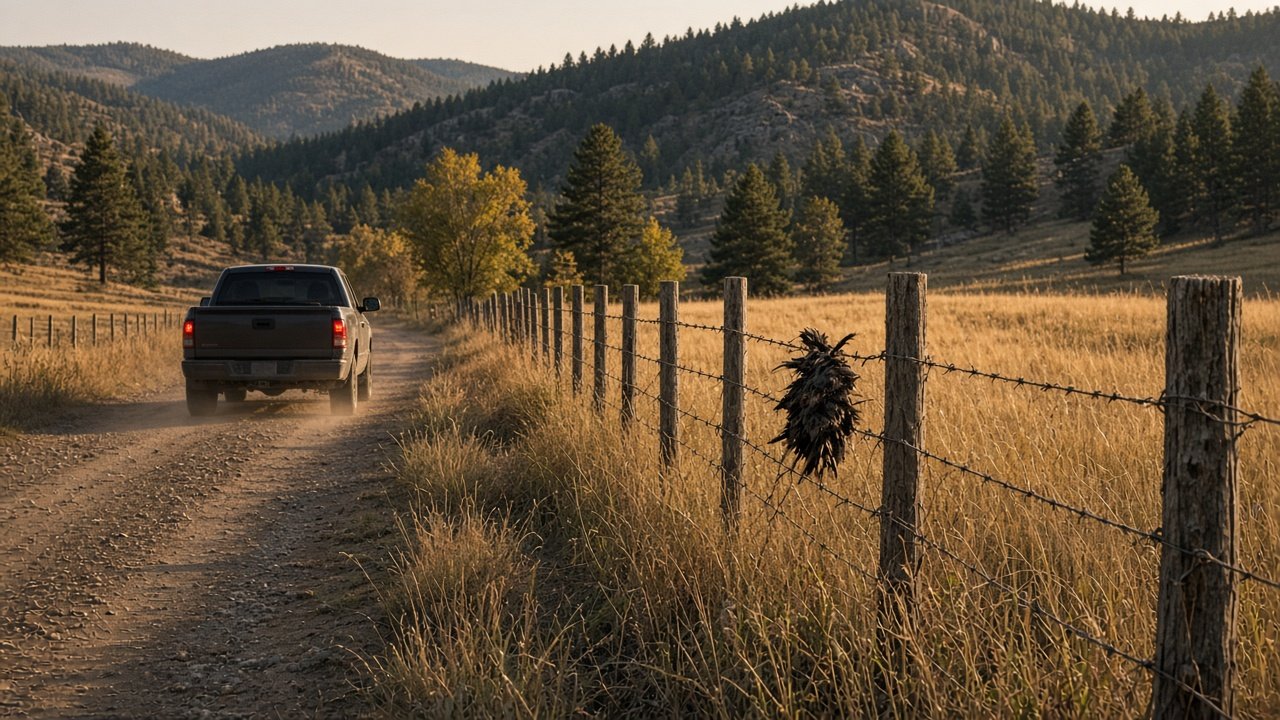
The couple, who run an art gallery and brewery in nearby Deadwood, were heading in for an employee meeting on Thursday, October 1, when Scott spotted a bundle of feathers stuck on a barbed-wire fence. He thought it was a hawk, and he was sure it was already dead, so he kept driving.
Sharon was not having it. She has rescued horses, cats and dogs over the years, and she asked her husband to turn around right away.
In her silver heels, she hurried down the dirt road toward the fence line. Only when she got close did she realize what it was: a great horned owl, wound tightly in the wire, its feathers lifting in the wind.
“It’s an owl!” she called back to Scott.
Then the owl turned its head and looked straight at her.
Calming a Frightened Wild Bird
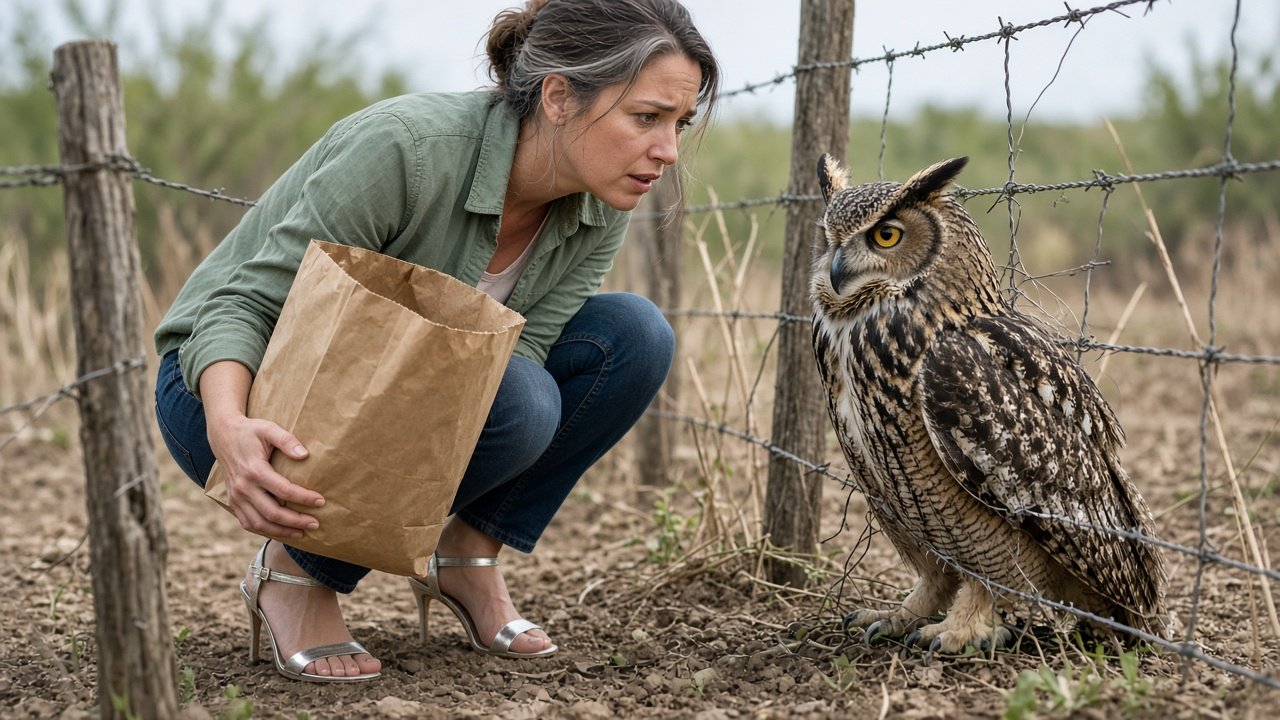
The owl began clicking its beak, a warning sound these birds make when they feel threatened or are in distress. Sharon did what she does with frightened horses. She kept her voice low and soft.
“It’s OK, buddy. I’m here to help you. We’re here to help you,” she told it, shushing it gently over and over.
She knew that covering a bird’s head can help it stay calm, and the couple had a large grocery bag in their vehicle. What they did not have were gloves, and nobody wants to grab a frightened owl’s talons with bare hands.
Then another car pulled over.
Strangers Who Had Exactly What Was Needed
The driver was a man named Brandon, a shift manager at a local business, who stopped to see what was going on. Scott asked if he happened to have gloves. He did.
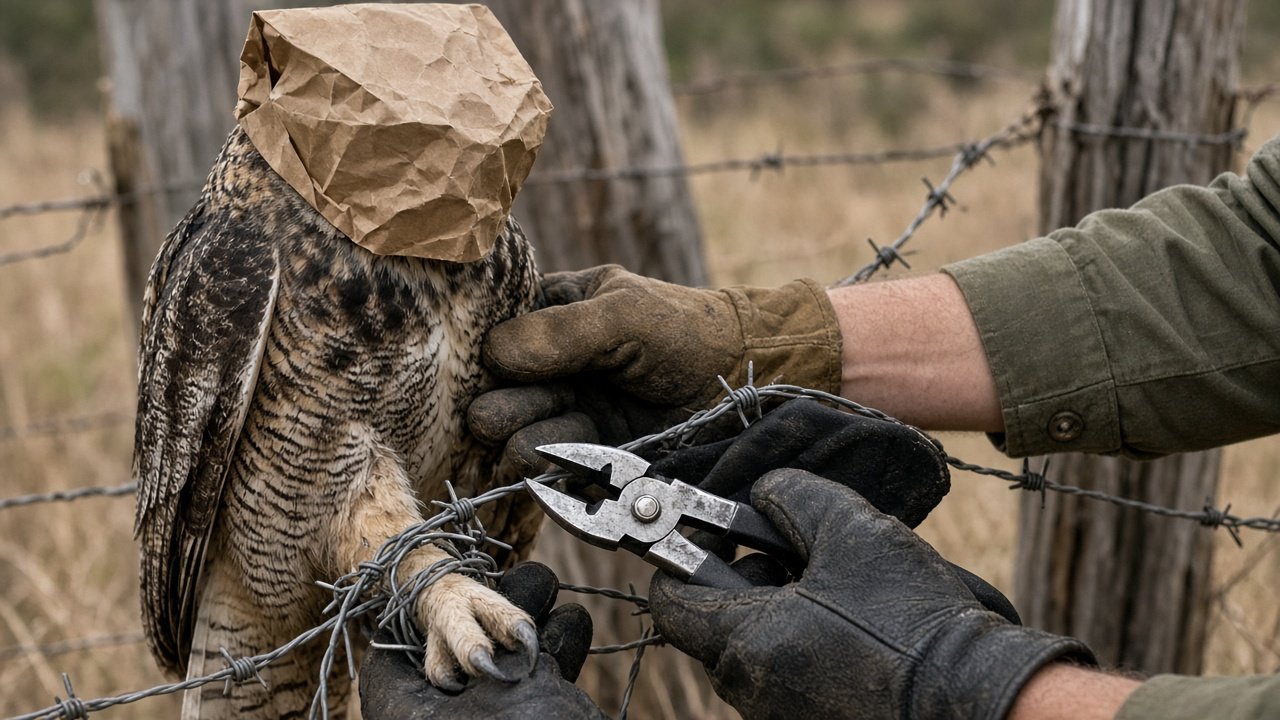
The two men carefully slipped the bag over the owl’s head and part of one wing. Sharon said the bird barely fought them. “It’s almost as if he sensed we were there to help,” she said.
But the owl was wrapped so badly that they would need to cut the fence. Right then, the property owner, a young woman, happened to drive up. She called her father, who gave an immediate answer: cut it.
And then came the luckiest part of all. Brandon also had wire cutters in his car. “What are the chances?” Sharon said.
Scott freed one foot, and the owl calmly placed its other foot on his gloved hand. Brandon pulled off his own sweatshirt to wrap the bird, and Scott held it close, keeping its powerful feet secure.
A Trip to the Vet and a Small Miracle
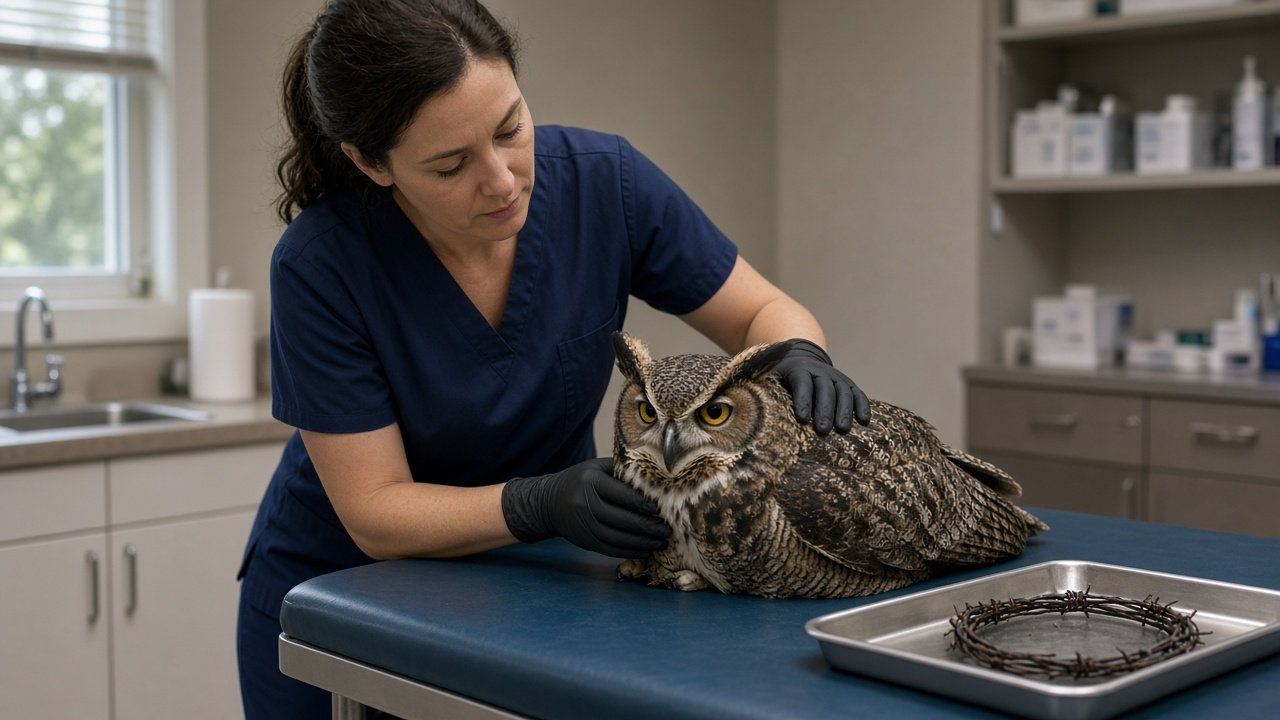
Sharon had already called her veterinarian, who agreed to meet them. They drove the owl there in a small pet carrier, the same one Sharon once used to rush her cat to the vet after a rattlesnake bite.
A few minutes into the exam, the vet came out holding a piece of barbed wire about a foot long, with blood on two of the barbs. Incredibly, nothing on the owl seemed broken. The vet believed the bird had hit or snagged the fence and then twisted itself deeper while trying to escape.
Sharon got on the phone with South Dakota Game, Fish and Parks and the Black Hills Raptor Center. Soon the owl was in the center’s care, receiving pain medication and antibiotics.
There, the team found even better news. The owl had avoided tearing its patagium, the stretchy membrane along the front edge of the wing that a bird needs to fly. The center’s director called it short of a miracle, and staff were cautiously hopeful the owl would heal.
Going Home, With a Promise
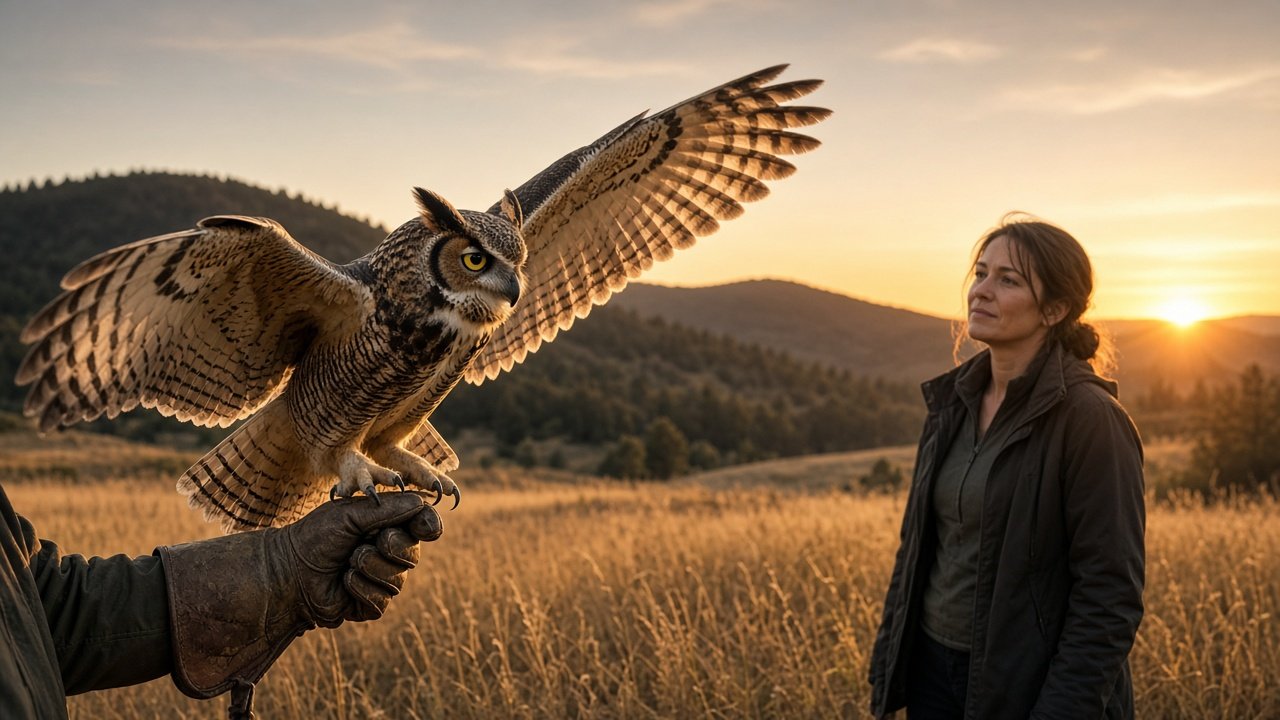
If the recovery goes well, the owl will be released back into the wild, right in its home territory. That mattered to Sharon. “I don’t know if there’s mates or babies,” she said.
She plans to be there on release day. “And I know I’ll cry,” she admitted.
This rescue carries a special meaning for her. Seven years ago, during a fierce storm in the Black Hills, a great horned owl sitting on her garage roof was struck by lightning and killed. Sharon buried it on her land, following the advice of a Lakota friend who told her that in Lakota tradition, horned owls are seen as protectors.
For years she carried the memory of that owl she could not help.
“That owl died,” she said. “I got to help save this one.”
One stubborn wife who made her husband turn around, one stranger with gloves and wire cutters, one landowner who said yes, and one caring vet. Sometimes that is all a wild life needs.