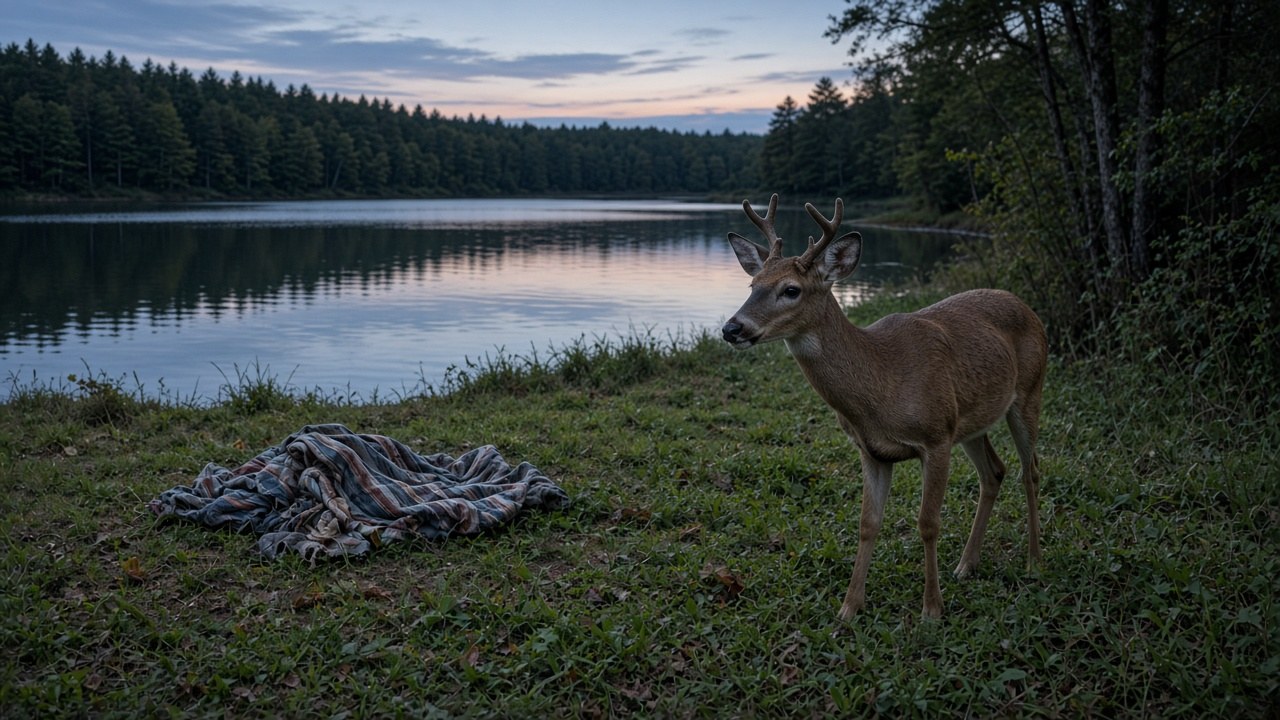
The sun was going down over Lake of the Woods when Jennifer Britton looked out at her yard and saw something thrashing.
It was a young buck. And he was caught in the family’s garden hammock.
His antlers had tangled in the ropes. Every time he pulled, the hammock pulled back.
What happened next took three wildlife officers, a sedative dart, a bucket of ice and a lot of patience.
And it ended with a moment Jennifer says she was almost too scared to watch.
A Curious Young Buck
Jennifer, 47, lives in Lake of the Woods, in Halifax, Nova Scotia.
Deer wander through her yard all the time. That part is normal. The hammock was not.
“We have deer here often, but they’ve never been interested in the hammock before,” she said.
She thinks this one was simply too curious for his own good.
“This deer was fairly young, so I think he was just exploring and sniffing around, and maybe wasn’t quite used to his antlers yet.”
Anyone who has watched a young animal figure out its own body will understand that.
New antlers. A swinging net of rope. One wrong turn of the head.
And suddenly a wild animal is tied to a tree in somebody’s backyard, panicking as the light fades.
“We Backed Away Quietly”
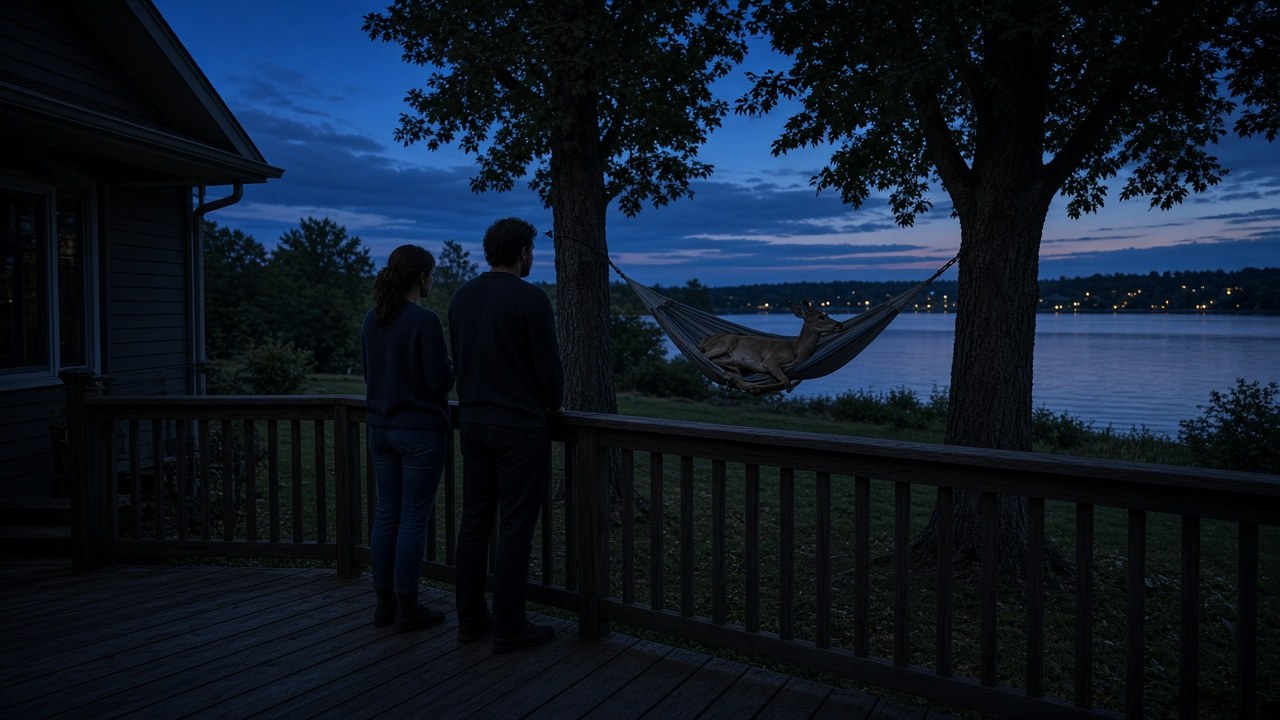
Jennifer and her husband’s first instinct was to help him themselves.
They hoped they could get close enough to cut the hammock away from the tree.
But every time they tried to get closer, the buck panicked even more.
“It quickly became clear that we wouldn’t be able to get near enough without him panicking and getting even more hurt,” she said.
So they made a hard choice. They stopped trying.
“So we backed away quietly and I decided to call the Nova Scotia Department of Natural Resources (DNR).”
According to Jennifer, the staff told the couple they had done the right thing.
They also warned her about something most of us would never think of. For a deer, stress itself can be deadly.
A long struggle in those ropes could kill him, even if the ropes themselves didn’t.
As darkness fell, the family was told to turn off their lights and keep everyone away.
So they did. And they waited.
Waiting in the Dark
An officer named Lindsay arrived first.
Lindsay didn’t rush in. The officer quietly assessed the scene while waiting for two colleagues trained to sedate the animal.
Jennifer and her family watched from their deck.
“The officers were extremely compassionate and hopeful to save the deer, but they were also realistic that it might not be possible,” she said.
That’s a hard thing to hear when there’s a frightened animal just a few yards from your back door.
When the rest of the team arrived, they fired a sedative dart. Then they stepped back and gave it time to work.
It took about 15 to 20 minutes for the buck to fall asleep, Jennifer said.
Only then could the officers move in and start cutting away the tangled ropes.
Ice, Lake Water and Oxygen
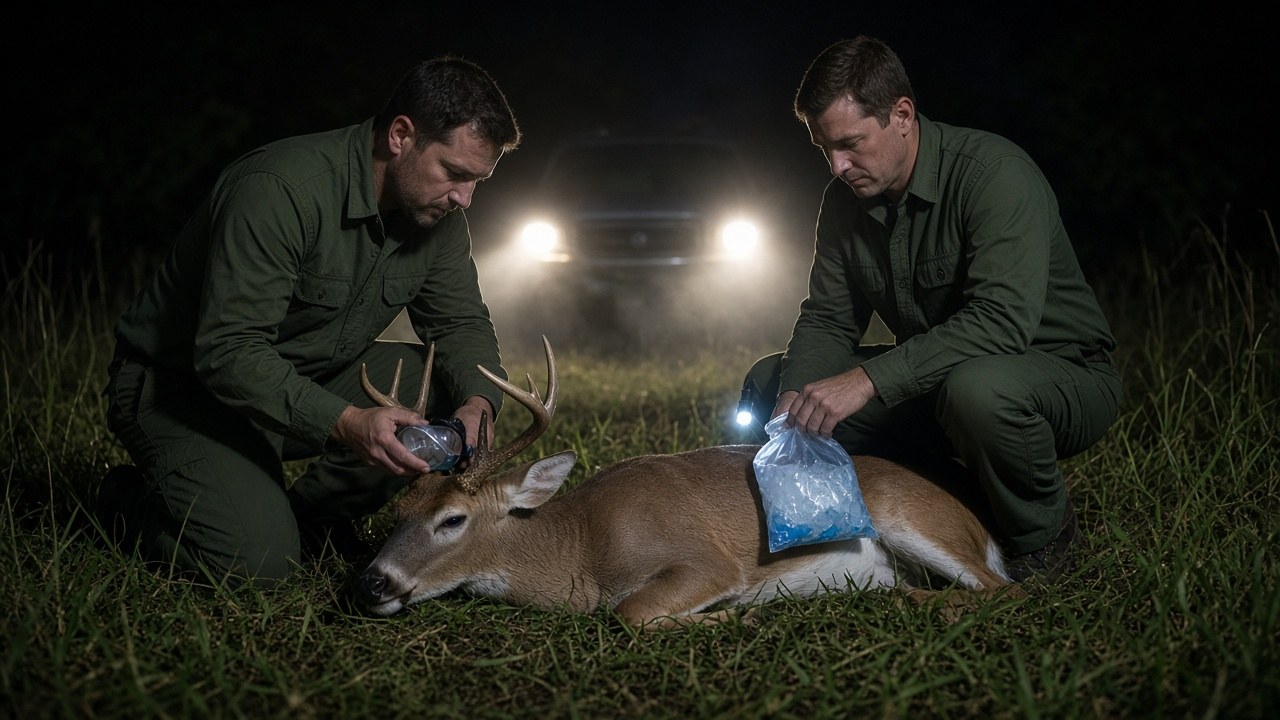
Once he was free, the work wasn’t over. It was just getting started.
The officers checked him over carefully. Then they worked to cool him down.
They placed ice beneath his belly. They used water from the nearby lake.
They gave him oxygen and kept watching his temperature, according to Jennifer.
The good news was his neck. It appeared to have escaped serious injury.
The ropes had damaged his mouth. But he was out of the hammock, breathing, and in good hands.
Before they woke him, the officers fitted him with an ear tag.
Then they gave him another medication to bring him back around.
For Jennifer, that was the moment that scared her most.
“That was one of the scariest parts for me. I was afraid it wouldn’t wake up,” she said.
Everyone on that deck held their breath.
He Walked Back Into the Woods
Then the buck lifted his head.
“But he got up and walked off into the woods like nothing happened,” Jennifer said.
Just like that. A young deer heading home after the strangest night of his life.
Jennifer filmed the whole rescue. The video has since been shared by the SWNS news agency and Yahoo News.
It’s hard to watch the first part. It’s even harder to stop watching the end.
This isn’t the first time Nova Scotia has seen something like this, either.
Back in 2017, CBC News reported that the province’s Department of Natural Resources had been getting calls about deer tangled in hammocks and swings.
Hope Swinimer, founder of the wildlife rehabilitation centre Hope for Wildlife, explained why these cases are so tricky.
“It’s a difficult case because you’re talking about a dangerous, large animal. And as a homeowner, I wouldn’t want to be faced with that,” she told CBC.
She also explained why every minute matters.
“Deer get very stressed, they can die very easily from something called ‘capture myopathy,'” she said.
Her advice was simple. Don’t leave hammocks and swings hanging loose.
“Even take them in if they are not in use,” she said. The same goes for soccer nets.
“It is something that we can simply fix by picking these items up and not leaving them out longer than they need to be out.”
That’s the lesson from Jennifer’s yard, too.
And if you ever do find a deer caught in something, her story is a pretty good guide.
Don’t try to wrestle it free. A panicking deer can hurt you, and it can hurt itself even worse.
Back away quietly. Call your local wildlife or natural resources office.
Keep people and pets inside. If they tell you to turn the lights off, turn them off.
Then let the trained team do the hard part.
She did the bravest thing you can do when a wild animal is in trouble. She stepped back and called the people trained to help.
And three officers in the dark made sure one curious young buck got a second chance.
If you live near deer, take a look at your yard tonight. That hammock might be worth bringing inside.