Just finding Lana’s story? Read Part 16 here to catch up on Vera Kettering, Clay’s letter, the deed of gift that was never filed, and the county record with a forged Clay Kettering signature — and a Pruitt as the buyer.
Last time, I was standing on Clay Kettering’s porch in the dark, staring at a phone screen that said the ranch had been signed away twenty-three days ago by a man who’d been in the ground for eleven years.
“Somebody else learned to copy his handwriting, Lana,” Vera whispered. “And they did it a lot better than I ever did.”
I didn’t sleep. Neither did Royce. And by the time the county office unlocked its doors, we already knew we weren’t going home empty-handed.
The Morning the County Opened
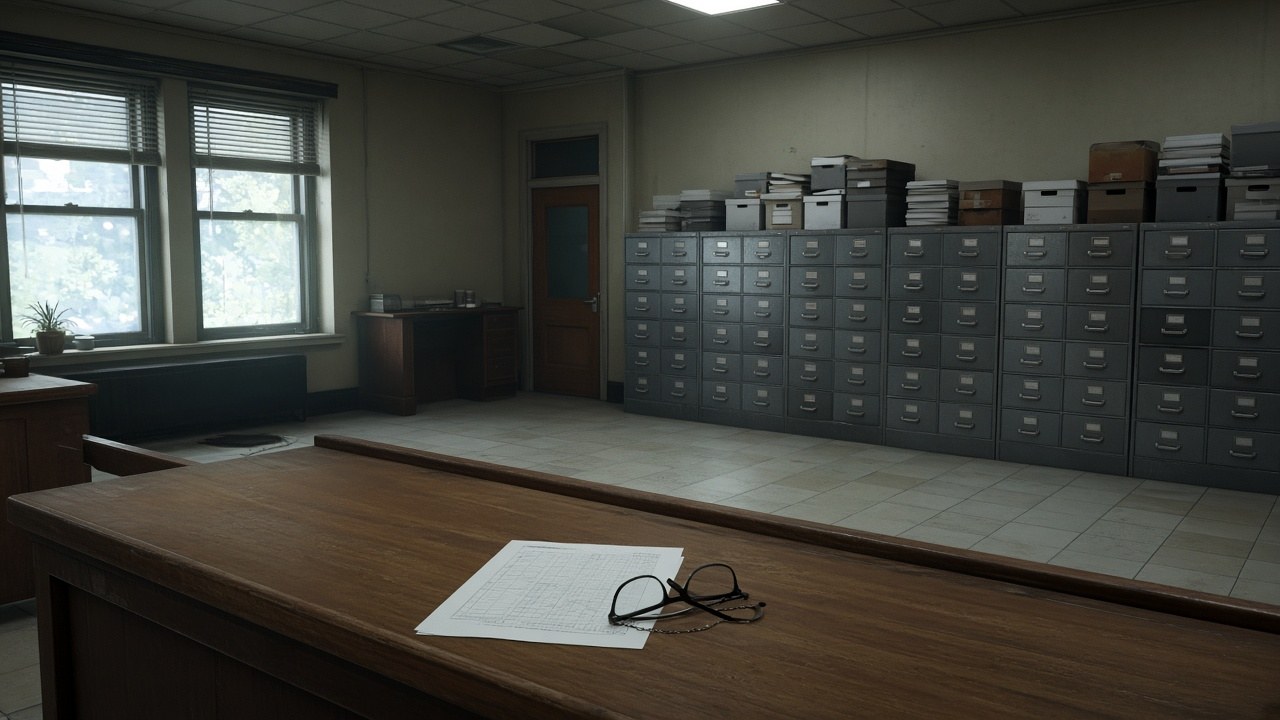
We were the first ones through the door. Royce had the deed of gift folded in his shirt pocket like it might vanish if he let go of it. Vera had the photo of the county record on her phone, zoomed in so hard the pixels looked like scars.
The clerk behind the counter was a soft-spoken woman with reading glasses on a chain. She took one look at the screen, then at Royce’s face, and her mouth went thin. Behind her, a wall of filing cabinets hummed under the fluorescent lights like they knew secrets nobody wanted to say out loud.
“I remember this filing,” she said carefully. “Came in late on a Thursday. Young man. Said he was settling an estate. He had a folder and a smile that never reached his eyes.”
I asked for the buyer’s name. She typed, printed, and slid the paper across the counter without reading it out loud.
Deke Pruitt.
Royce’s knuckles went white on the edge of the counter. “His daddy forged papers on June’s land in ’98,” he said. “I sat in that courtroom. I never forget a Pruitt.”
The clerk glanced toward the hallway like she wished she hadn’t said anything. “I can’t tell you more than what’s public,” she whispered. “But if I were you, I’d look at who notarized it. That stamp isn’t from this county.”
A Stamp That Didn’t Belong
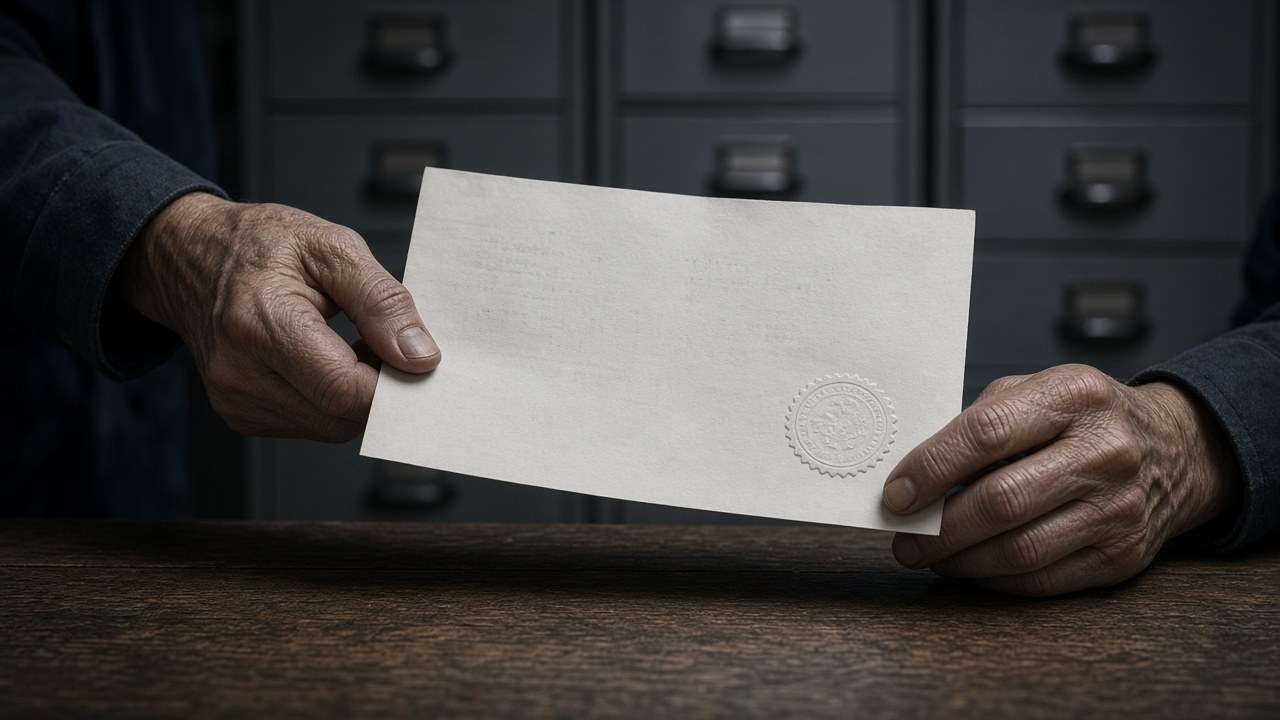
Vera pulled up the full transfer on the public terminal. The signature at the bottom still made my stomach turn — that same heavy, slanted Clay Kettering, almost perfect. Under it, a notary seal from two counties over, dated twenty-three days ago, with a name none of us knew.
“Clay’s real deed was notarized here,” Vera said. “In this building. By a woman who’s been behind that desk since before I was born. This one came from out of town on purpose.”
Royce tapped the property description with one finger. “House, barn, north pasture, water rights. Every acre Daddy ever fought over.” His voice dropped. “And look here. Same-day amendment. ‘Adjacent disputed acreage’ flagged for review.”
I leaned in. The parcel number next to those words was one I knew by heart.
Ours.
The Brooks farm. The fence line Clay burned. The land my mother almost lost before I was even born.
“They’re not done,” I whispered. “They’re coming for us next.”
What June Locked Away
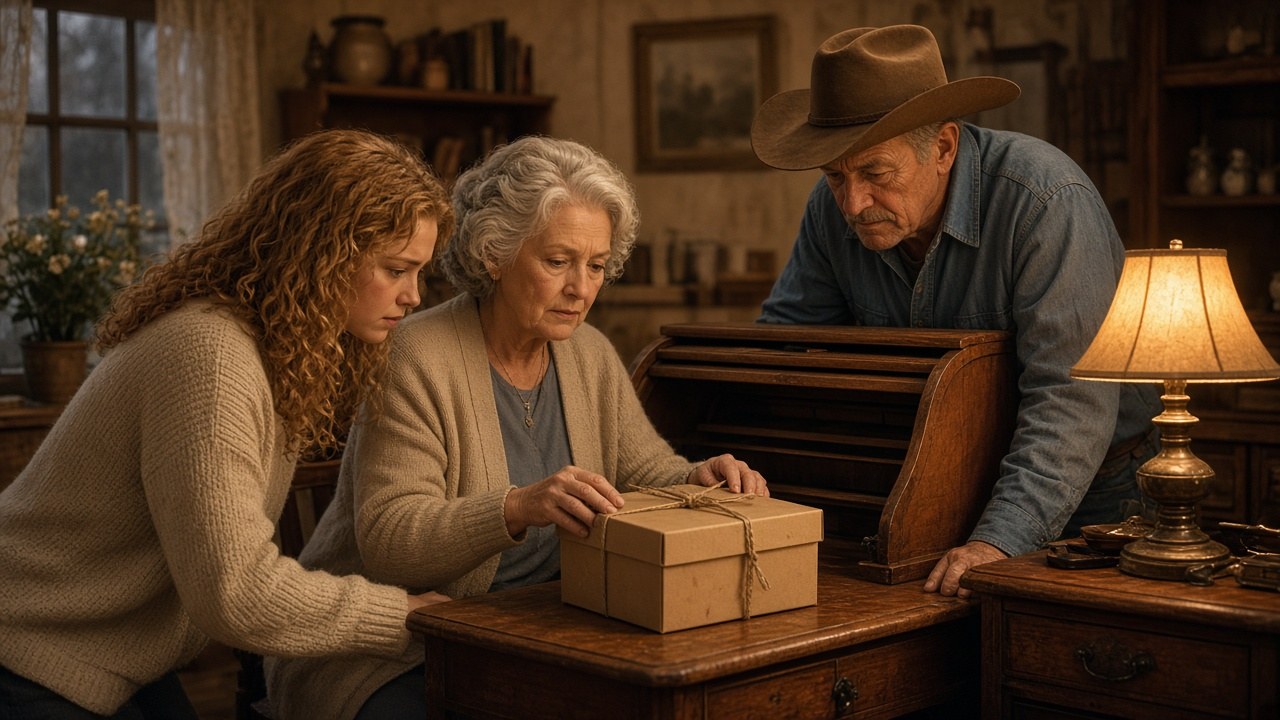
We drove straight to June’s. She took one look at our faces and unlocked the bottom drawer of the old rolltop she never lets anyone open.
Inside was a second shoebox. Smaller. Tied with kitchen string. Labeled in June’s careful print: Pruitt / 1998.
Copies of forged quitclaim papers. A newspaper clipping about a plea deal. And a school photo of a teenage boy with a sharp jaw and cold eyes, stapled to a note in June’s hand: Deke. Learned from his father.
“He used to hang around the rodeos,” Royce said quietly. “Selling bad trailers. Always watching other men’s land like he was measuring it.”
Vera held the photo next to the county printout. “Same jaw,” she said. “Same last name. Different decade. Same trick.”
I flipped through the rest of the box. Court dates. A faded receipt for a surveyor’s fee. A penciled map of our fence line with the burn scar marked in red. Every piece of it felt like a warning we’d already lived through once.
June touched my wrist. “Lana. If that boy has your parcel number on a county amendment, you don’t wait for him to knock. You get ahead of him. Your grandma didn’t keep this box so you could be polite about it.”
The Address on the Filing
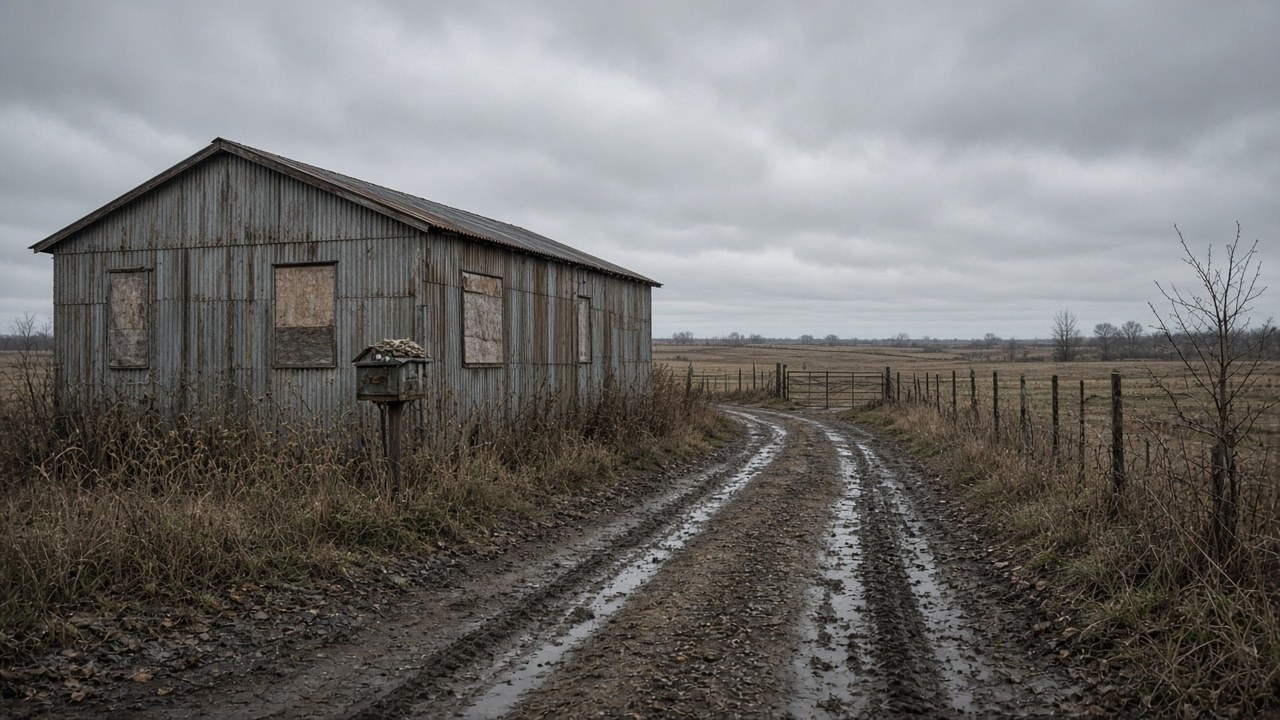
Deke Pruitt’s listed address sat at the end of a gravel spur outside town — a metal building with boarded windows and a mailbox stuffed so full the lid wouldn’t close. No truck. No lights. Fresh tire tracks cutting through the mud toward the back fence, pointing the wrong way for town.
Pointing toward the Kettering ranch.
Royce didn’t say a word. He just turned the truck around hard enough that gravel sprayed the undercarriage, and we tore back the way we’d come.
Vera rode between us, phone pressed to her ear. “I’m calling the house line,” she said. “Daddy never disconnected it. If someone answers—”
Royce’s jaw was set so hard I could see the muscle jump. I kept thinking about Raven in our barn and Willow’s empty stall and the way a forged signature can steal a whole life before breakfast.
It rang. And rang. And then a man’s voice picked up, low and amused.
“Kettering residence,” he said. “Who’s calling?”
Vera went white. Royce slammed the gas. I grabbed the dash and prayed Raven was still safe in our barn and not anywhere near that house.
What He Left on the Table
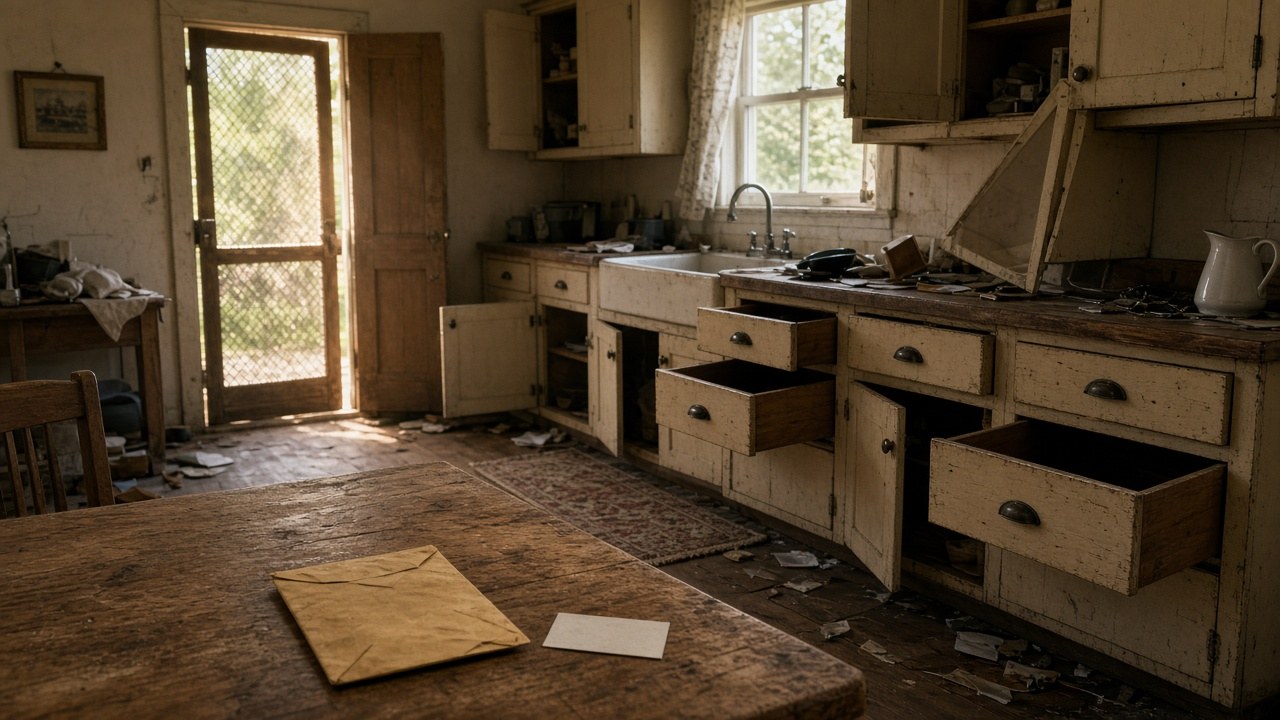
The screen door was open when we skidded into the drive. The kitchen looked like a storm had walked through it. Drawers pulled. The rolltop rifled. Clay’s letter — the one that said For Caroline’s girl — was gone.
Only the empty yellowed envelope remained on the table.
And under it, a business card.
Deke Pruitt. Land Acquisition.
On the back, in that same heavy slanted hand that had fooled a county clerk:
Tell Caroline’s girl I’ll be by for the Brooks place next. Bring the gray mare’s papers if you want to talk.
Royce made a sound I’ve never heard out of him. Vera’s hands were shaking so hard the card fluttered.
I stood in that ruined kitchen and understood three things at once.
He knew the phrase from Clay’s private letter. He knew about Willow. And somehow, before any of us filed a single honest paper, Deke Pruitt had already decided our farm was next.
So now I’m asking you. How did a forger get the words from a letter that never left this house until last night? And if he’s coming for the Brooks place — is he already standing at our fence line?
Part 18 is coming soon. Follow Reiterin on Facebook so you don’t miss what happens next.
Related Posts
 Wildfire Fosters Saved 150+ Gainesville Pets. Nearly Every One Found a Forever Home
 They Drove Into Hurricane Isaias to Save 22 Dogs. Betty White Was Already Wagging
 Lana’s Story Part 18: Headlights at the Brooks Fence
 A Wild Mustang Ran Loose for 66 Days. Now Outlaw Is Calm Enough to Wear a Saddle
 5 Million People Watched His Video. Zero Applications. Then One Ohio Family Brought Harley Home
 A Dog Was Trapped in a Water-Filled Hole. A Neighbor Heard Him Crying and a Constable Brought a Rope