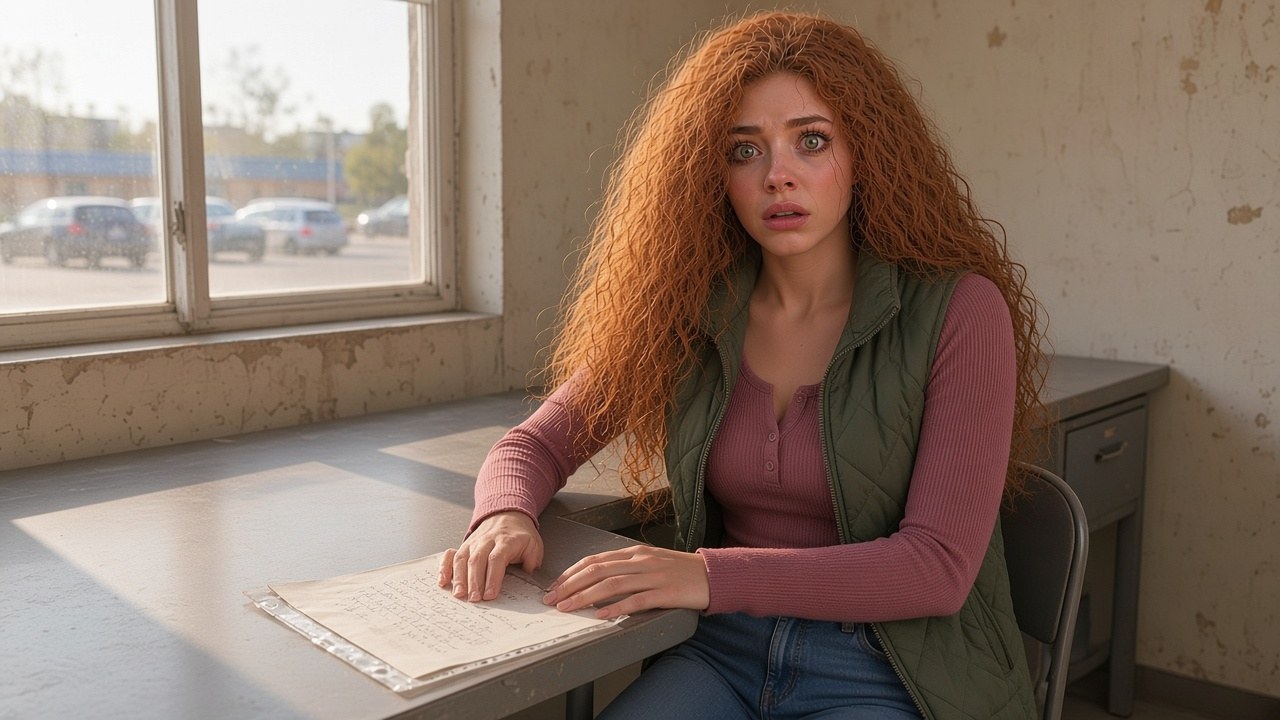
Just finding Lana’s story? Read Part 35 here to catch up on what Rita wrote by the stove, Grandpa Hank’s letter, and the page Cole found sewn inside Rita’s coat.
Last time, Rita’s own handwriting finally told the truth. Annie was never in that car. Rita was driving, and she left a two-year-old in the back seat.
Inside Hank’s envelope was a letter June had waited twenty-three years to read. It ended with an apology about a headlight.
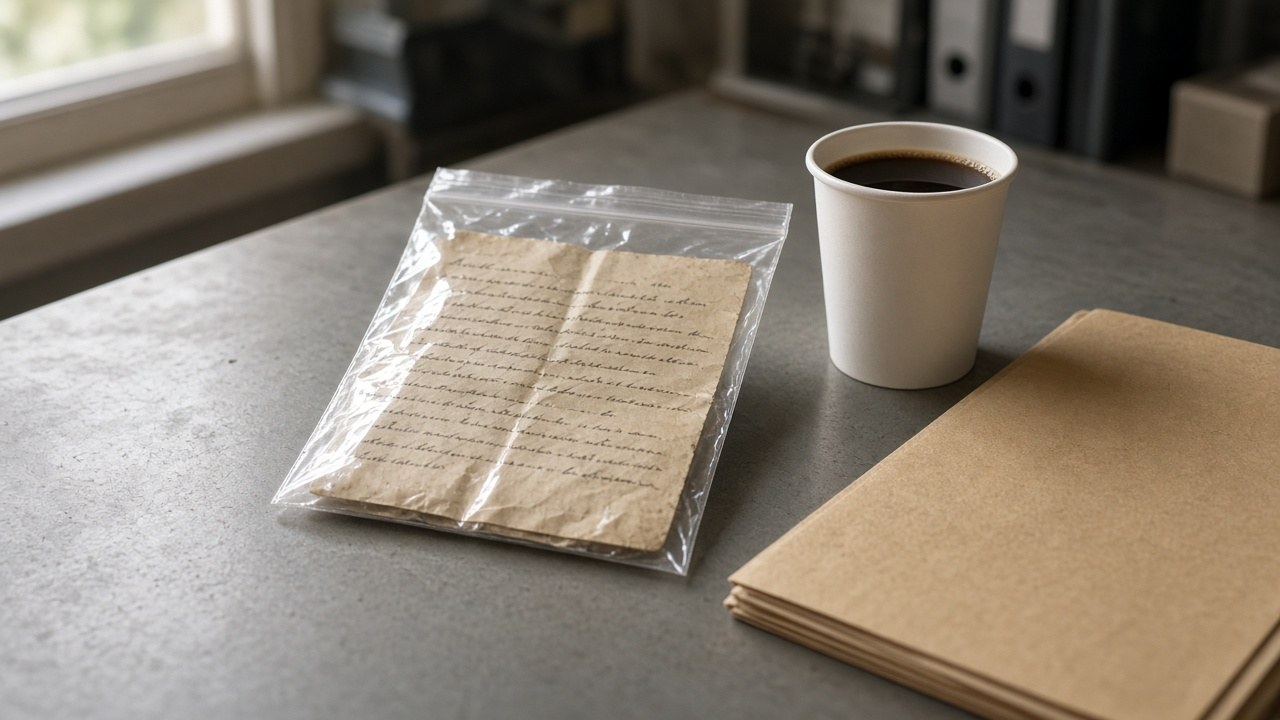
Then Cole came up the lane with one more page in an evidence sleeve. It came from a pocket Rita had sewn into her own coat.
It was in my mother’s handwriting. Signed Caroline Brooks. Dated the week she died.
Clay, Rita Lane came to the farm today. She knows about the paper I signed for you. And now she wants to meet my girl.
Rita would only explain it to me. Tomorrow morning. At the jail. Alone.
But before anybody left June’s kitchen that night, Abel Haskins finally said the name he’d been holding.
The Name Abel Said Once
Cole was still sitting by the stove with my mother’s page in his lap when Abel stood up.
He held his hat against his chest like he was in church.
“Sheriff,” he said. “I told these ladies I’d only say this once. So I’m going to say it to you.”
Cole looked up. He looked so tired. “Go ahead, Abel.”
“Rita wasn’t the first one who asked me to open your desk drawer,” Abel said. “You know that much.”
“I know that much.”
Abel swallowed. Then he looked at June, not at Cole.
“It was Hank,” he said.
The kitchen went so quiet I could hear the coffee pot tick as it cooled.
June put her hand flat on the table, the way she does when a horse spooks under her.
“My Hank,” she said. It wasn’t a question.
“Yes, ma’am. The spring after the creek.”
Abel turned his hat around in his hands. Once. Twice.
“He came into my shop right at closing time. Said he wanted to see what the new deputy wrote about that night.”
“I told him no. I told him twice. The third time, he said there was a little girl’s whole life sitting in that drawer.”
“So I went. Cheap county furniture back then, same as now.”
Cole closed his eyes.
“He read it standing up,” Abel said. “Didn’t take a thing. Didn’t copy a thing. He made me lock it right back.”
“Then he said, ‘That boy wrote a lie to save a baby. You never saw this, Abel. Neither did I.'”
Now I understood a line in Hank’s letter that had been bothering me all afternoon.
That boy had already written his lie, and he’d done it to save somebody.
Hank didn’t guess that. He knew it. He’d stood in the dark and read it with his own eyes.
“I wrote it in my book,” Abel said. “Hank’s name, the date, and two words. No charge.”
“Thirty years. That’s the only job I ever wrote down as no charge.”
Cole laughed, but it came out broken.
“He bought me coffee at the feed store every Saturday for a year after that,” he said. “I never knew why.”
“I thought he just felt sorry for the youngest deputy in the county.”
“He did,” June said softly. “That’s exactly what he felt.”
I looked at Abel. “Why did you need Cole to hear it?”
Abel didn’t answer right away. When he did, his voice was rough.
“Because two weeks ago Rita asked me, and I said yes. I’ve been ashamed of that every day since.”
“I wanted the sheriff to know the first time I opened his drawer, I did it for something good.”
Cole stood up. He walked over and put out his hand.
Abel stared at it for a long second. Then he shook it.
Nobody said much after that. Annie and Vera sat close together on the bench by the window. Royce rinsed the coffee cups.
Before Cole left, he slid the little red mitten into its own plastic sleeve.
“It comes back to you,” he told Vera. “I promise. Soon as I’m done.”
Vera nodded. She didn’t let go of the sleeve until he gently tugged it.
Then Cole turned to me at the door.
“Eight o’clock,” he said. “Come to the side entrance. And Lana, eat something first.”
Eight O’Clock at the County Jail
I didn’t sleep. I don’t think I even closed my eyes.
Every time I tried, I saw that round handwriting with the little curl on every Y.
At five, I gave up and went out to the barn. Willow nickered at me like she’d been waiting.
I leaned my forehead against her warm neck and stayed there until the sky went gray.
Vera found me there at six-thirty with two cups of coffee.
“I’m coming with you,” she said.
“She said just me.”
“I know what she said.” Vera handed me a cup. “I’ll sit in the truck. I just don’t want you driving home alone.”
In the end it was Royce who drove. Vera rode in the middle. Neither of them said a word the whole way to town.
I kept my hands in the pockets of my jacket so nobody would see them shaking.
The county jail is a low brick building behind the courthouse. I must have driven past it a thousand times without looking at it once.
Cole was waiting by the side door in his uniform. He had a manila folder under his arm.
“Before you go in there,” he said, “I want you to read the whole page. By yourself. With me, not her.”
“Why?”
“Because I don’t want Rita Lane reading your mother’s words to you,” he said. “She doesn’t get to do that.”
He took me into a small office with a metal desk and a window that looked out at the parking lot.
I could see Royce’s blue Chevy from there. Vera was sitting in it with her knees pulled up.
Cole set the evidence sleeve down in front of me. Then he stepped out and closed the door.
My mother’s handwriting was right there under the plastic. Round and quick, like she was in a hurry to get it all down.
I had read the first line a dozen times last night. This time I made myself keep going.
The Rest of Mama’s Letter
Clay, Rita Lane came to the farm today. She knows about the paper I signed for you. And now she wants to meet my girl.
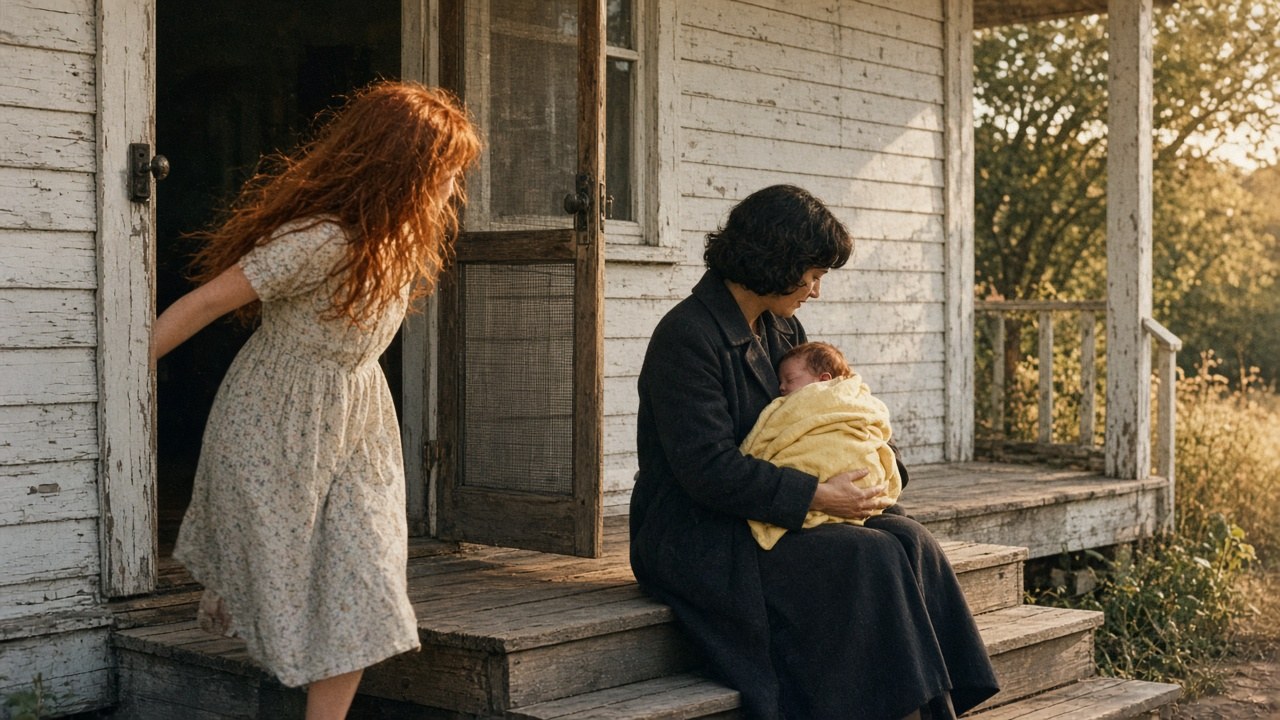
She sat on Mama’s porch steps like she’d been invited. She asked to hold the baby. I said no.
She held her anyway. Just for a minute, while I was getting the screen door open. Lana didn’t even cry.
I stopped. I read that line again.
Rita Lane had held me. I was a baby on a porch, and Rita had held me in her arms.
I didn’t know what to feel about that. I still don’t.
She said Lana has Kettering hands. She said a paper like mine could go to a judge in Oklahoma just as easy as it could sit in your safe.
You promised me that paper would never leave your house. Rita says she has read every word. Either she is lying or you are.
I am not scared of you anymore, Clay. I am scared of her. She looked at my baby the way you look at a horse at an auction.
If anything happens to me, Lana stays with Mama. Not with you. Not with your family. And never with Rita Lane.
You owe me that much. You know you do.
Caroline Brooks
That was all. Half a page.
I put my hand flat on top of the plastic, right over her name.
Mama died that week. Nobody in my family ever talked about that week. Not Grandma. Not June. Not anybody.
And now here it was, in her own hand. She was scared. She was trying to protect me. And she was writing to Clay Kettering about it.
Cole knocked once and came back in. He didn’t sit down.
“You all right?” he asked.
“No,” I said. “But I want to go in now.”
He nodded like he’d expected that.
“Ten minutes,” he said. “I’ll be right outside the glass. If you want out, you just stand up.”
“Lana. She’s going to try to make you feel sorry for her. That’s what she does best.”
“I know,” I said.
I didn’t know. Not really. Not yet.
What Rita Kept
The visiting room was smaller than I expected. One table, bolted down. Two plastic chairs. A clock behind a little metal cage.
Rita was already sitting there.
I had only ever seen her in that long dark coat, with the warm church smile and the pearl buttons.
Now she was in county orange. Her short silver hair was flat on one side. She looked older. Smaller.
But her eyes were exactly the same. Bright and sharp and amused.
“Caroline’s girl,” she said. “You read it first, didn’t you? Cole made you.”
I sat down. I didn’t answer.
“Good for him,” she said. “He’s not as slow as he looks.”
“Why did you have my mother’s letter?” I asked. “Why was it sewn inside your coat?”
Rita folded her hands on the table. Her nails were bitten down. I’d never noticed that before.
“Clay kept it,” she said. “In the back of his Bible, of all places.”
“When he died, I cleaned out that house. I found it the first night. I’ve carried it ever since.”
“Why?”
She tilted her head and looked at me for a long time.
“Because it’s the only piece of paper in this whole county that says I held you,” she said.
I felt it hit me somewhere under my ribs. That was exactly what Cole had warned me about.
“You lied to her,” I said. “You never read that paper. You told her you did, so she’d be scared.”
Rita smiled. Not the church smile. A smaller, tireder one.
“Clay told me about it one night when he’d been drinking,” she said. “That’s all I had. A man bragging.”
“But scared people make deals, honey. I needed your mother to make a deal.”
“What kind of deal?”
“Your mother had something the Ketterings wanted,” Rita said. “And I wanted a seat at that table. That’s the whole ugly truth.”
I thought about Annie. About Vera in a car seat in the dark, in the water.
“You took a baby out of a house,” I said. “Because you wanted a seat at a table.”
For the first time, Rita looked away.
“You think I don’t know what I did?” she said quietly. “I wrote it down. Hank made sure of that.”
The clock ticked behind its little cage. I had six minutes left.
“Mama wrote that letter the week she died,” I said. “So tell me what happened that week. That’s why I came.”
Rita looked back at me. Something in her face changed. The amusement just drained right out of it.
“Two days after she wrote that letter,” she said, “your mother came to my house on Mill Street.”
The Night Before
I hadn’t expected that. I’d expected Rita to say she went back to the farm. Or that Clay did.
Not that Mama walked up to Rita’s door on her own.
“She didn’t knock,” Rita said. “She just stood on my porch until I noticed her. About nine o’clock at night.”
“She wasn’t crying. She wasn’t begging. She looked at me like she already knew how this was going to go.”
“She asked me one question. Where does Clay keep the paper?”
“And you told her,” I said.
“I told her,” Rita said. “Then I did something I’ve never told a living soul.”
She leaned forward until her face was a foot from mine.
“I drove her out there myself,” she said. “To Clay’s place. That same night.”
My mouth went completely dry.
“What night was that?” I asked. I already knew. I just needed somebody to say it.
Rita held my eyes. “The night before she died, honey.”
“I parked at the end of his lane with my lights off,” Rita said. “She walked up to that house alone.”
“She was in there forty minutes. I counted every one of them on the dashboard clock.”
“When she came back out, she wasn’t carrying the paper.”
I could barely get the words out. “Then what was she carrying?”
“An envelope,” Rita said. “Sealed. With one name on the front, in Clay’s handwriting.”
She watched my face very carefully when she said the next part.
“Royce.”
The door behind me opened. Cole’s voice said, “Time.”
Rita stood up before the guard even touched her arm. She didn’t take her eyes off me.
“Your mother never mailed it,” she said. “She didn’t get the chance. But I know exactly where it went.”
“Come back tomorrow, honey. And bring Royce with you.”
“He’s going to want to hear what his brother told her that night.”
I walked out to the parking lot without feeling my feet touch the ground.
Royce was leaning against the Chevy with his arms folded. He took one look at my face and stood up straight.
“Lana,” he said. “What did she tell you?”
I opened my mouth. And I realized I had no idea how to tell the man who just found his family that his brother had written to him, twenty-five years ago.
And that the only person who knew where that letter went was sitting in a jail cell, smiling.
So now I’m asking you. Was Rita telling the truth about driving my mother to Clay’s house that night?
What did Clay Kettering write to his brother, and why did he hand it to my mother?
Should I take Royce back to that jail tomorrow, or is this exactly what Rita wants?
Next Part: Lana’s Story Part 37 is coming soon. Follow Reiterin on Facebook so you don’t miss it.
Related Posts
 A Young Buck Got His Antlers Tangled in a Backyard Hammock. Three Wildlife Officers Worked in the Dark to Free Him
 He Raced to Break Up a Cafeteria Fight. It Was a Birthday Surprise, and the Student Behind It Has a Story
 A Tiny 10-Year-Old Dog Survived Over a Month Alone in Yellowstone. Then Her Owner Checked the Trap