Just finding Lana’s story? Read Part 39 here to catch up on the lie I told Cole, the rest of Clay’s second page, and what Nadine told me at the grain elevator at midnight.
Last time, I lied to Cole Pruitt for the first time in my life. I told him the text on my phone was a wrong number.
Then I read the rest of Clay’s second page. Cole’s name was on Wade’s weigh tickets. In his own hand.
At midnight, I walked to the grain elevator alone. Royce waited in the dark at the crossroads, a quarter mile back.
Nadine was there. She told me she was the one driving the white Ford behind Rita’s car the night before my mother died.
Then a pair of high beams came on from the old rail line, where there isn’t supposed to be a road at all.
“That’s Wade’s truck,” Nadine whispered. “Wade’s been dead twelve years,” I said. “I know,” she said. “I’m the one who buried him.”
The driver’s door opened. Somebody stepped out into the light and said my name.
The Man in the High Beams
“Lana.”
He said it quietly. Not like a threat. More like he’d practiced it in his head a hundred times.
I couldn’t see his face. Just a shape, tall and narrow, with the light pouring around him like water.
I clicked on Hank’s old flashlight and pointed it straight at him. My hand was shaking so hard the beam jumped all over the gravel.
A young man. Mid-twenties, maybe. Ball cap pulled low. A gray sweatshirt with the sleeves shoved up.
He raised one hand against my light. And when he did, I saw a long scratch healing across his knuckles.
I knew that scratch. Royce had one to match it, from the night he chased a man out of our hayloft.
“Deke,” Nadine said. It came out of her like a sob. “Baby, what are you doing here? You promised me you’d stay put.”
“You promised me you wouldn’t come out here alone,” Deke said. “So I guess we’re even, Mama.”
He didn’t come any closer. He stood right where the light could reach him, like he wanted me to see every bit of him.
He had Cole’s jaw. I’d never noticed it before. You can’t see a jaw from a tree line.
“You’ve been taking pictures of my family for weeks,” I said. “June and her egg basket. Me in the loft window.”
“Yes, ma’am,” he said. “I have.”
He didn’t make one excuse. Somehow that scared me more than if he had.
“Why?” I asked.
Deke looked at his mother. Then back at me.
“Because somebody in this family had to start writing things down,” he said. “And Daddy can’t do it anymore.”
Wade’s Truck
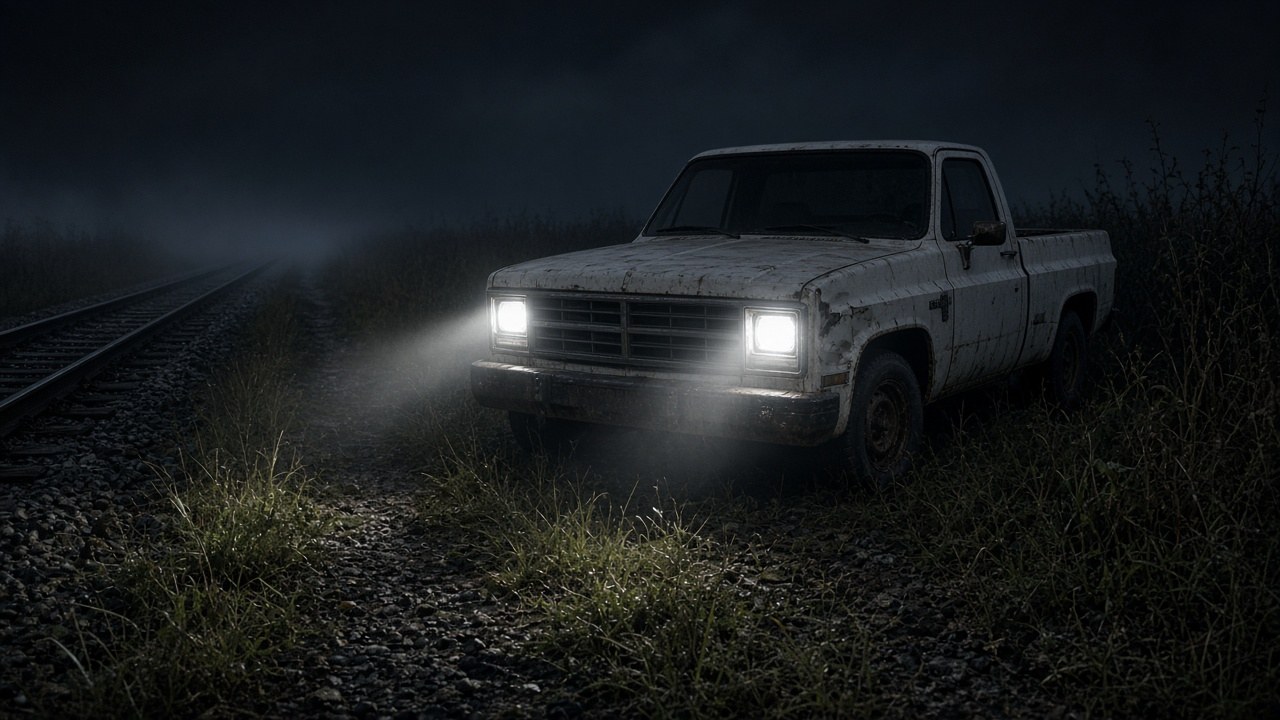
I swung the flashlight past him, onto the truck.
It was old. Square headlights. A long flat hood. A dent in the front fender somebody had tried to pound out by hand.
The white paint had gone chalky. Rust bloomed around the wheel wells like it had been sitting somewhere dark for a very long time.
“Where has that thing been for twelve years?” I asked.
“Under a tarp,” Deke said. “In the pole barn on the old Pruitt place. Back behind the rail line.”
“There’s a service track that runs along the rails. Nobody uses it anymore. Grass grows right up the middle.”
So that was the road that wasn’t supposed to be there.
“Mama couldn’t stand to sell it,” he said. “Couldn’t stand to look at it either. So she covered it up and never went in that barn again.”
“I got it running last spring. New battery, new plugs, new fuel line. Took me three months of Saturdays.”
Nadine had both hands pressed over her mouth. “I didn’t know,” she whispered. “Deke, I didn’t know you’d touched it.”
“I know you didn’t, Mama.”
I stood there and thought about my mother. Climbing out of Rita’s car at the mailbox by Ruth’s lane, twenty-five years ago.
These same headlights rode Rita’s bumper that night. This same long hood. These same square lights, on bright.
And the girl behind the wheel had been eighteen years old.
“Why bring it here?” I said. “Tonight. Why this truck?”
“Because Mama was going to tell you it was her,” Deke said. “All of it. Like she always does.”
“She was going to stand out here and take every bit of it on herself. And it isn’t all hers to carry.”
He reached through the open driver’s window and pulled something off the dashboard.
It was small. About the size of a deck of cards. Wrapped in a plastic sandwich bag.
Twenty Minutes
Behind me, an engine turned over.
I didn’t have to look. I knew that old Chevy’s cough by now. Twenty minutes were up.
Royce came down the county road with his own lights on this time. Low beams. Slow.
He stopped well back and got out without shutting his door. He walked into the light with his hat in his hand.
He looked at Deke for a long time.
“You’re the boy from my hayloft,” Royce said.
“Yes, sir,” Deke said. “Sorry about your hand.”
“Sorry about yours,” Royce said. And I swear one corner of Deke’s mouth almost moved.
Then Royce looked past him at the truck. His whole face changed.
“I never saw that truck,” he said quietly. “I was long gone by then. But I know exactly what it is. My daddy bought trucks like that for the men who did his hard work.”
Nadine made a small sound. Royce turned and looked at her too. Really looked.
“And you’d be Nadine,” he said.
“Yes, sir.”
“I’m not going to yell at you,” he said. “I’m too old, and you look too tired. But I called Cole on the way down. Like I promised Lana I would.”
Nadine’s knees almost went. Deke caught her by the elbow.
“How long?” she asked.
“Ten minutes,” Royce said. “Maybe less. That boy drives like his hair’s on fire.”
Nadine turned to me. Her face was wet in the headlights.
“Lana, please. If he sees those weigh tickets tonight, he’ll turn himself in before sunrise. You know he will.”
I did know. That was the worst part. Cole Pruitt would put the cuffs on himself if he thought it was the right thing to do.
“Then tell me the rest before he gets here,” I said. “You asked me out here, Nadine. You owe me that much.”
You owe me that much. It’s what my mother wrote to Clay. I didn’t plan to say it. It just came out of me.
Nadine heard it. I watched it land.
Wade’s Tally Book
“Mama,” Deke said gently. “Show her. Or I will.”
Nadine took the sandwich bag from him. Her fingers were so cold she could hardly get it open.
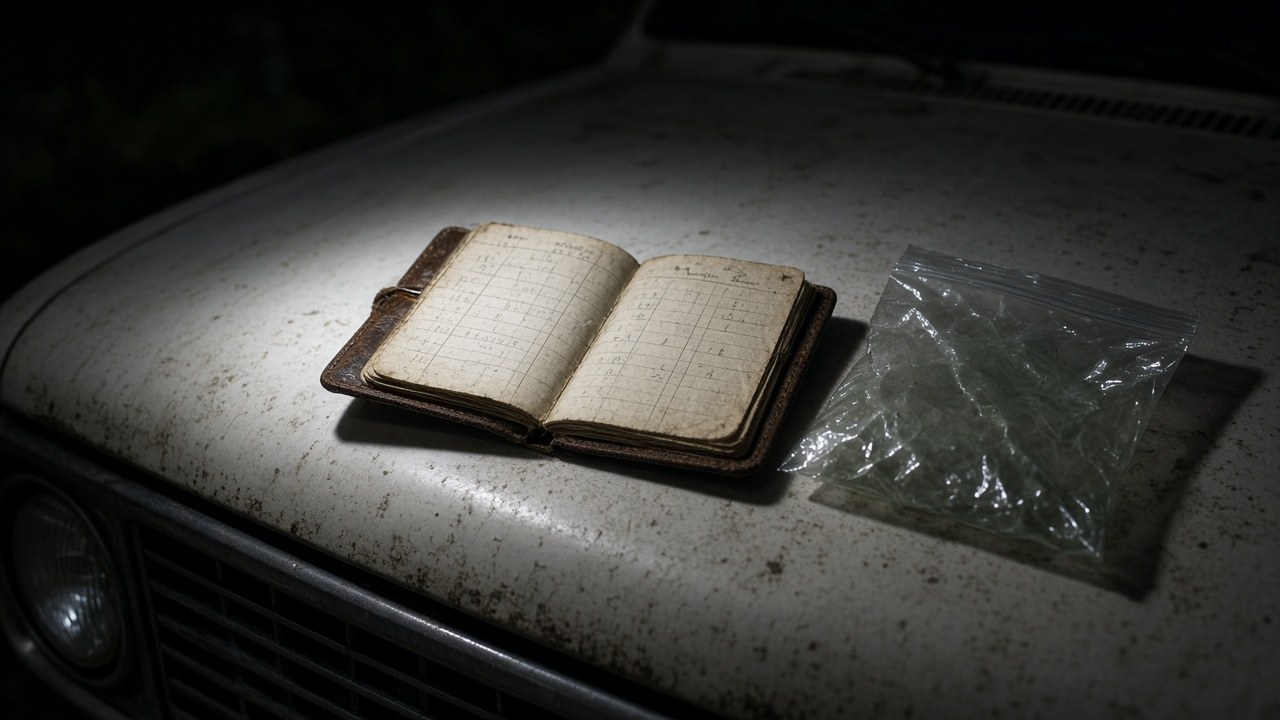
Inside was a little book. A brown cover, soft as an old glove. The kind cattlemen carry in a shirt pocket.
“Wade’s tally book,” she said. “He wrote down everything. Every load. Every dollar. Every night he drove.”
“He used to say a man who keeps his own books never gets blamed for somebody else’s.”
“It was in the glovebox when they brought the truck home twelve years ago,” she said. “I never opened it. I couldn’t.”
“I did,” Deke said. “Last spring. I’ve read it a hundred times.”
Royce held out his hand for my flashlight. I gave it to him. He held the beam steady while Nadine turned the pages.
Columns of numbers. Dates. Head counts. Wade’s printing was small and square, nothing like Clay’s heavy slant.
On two of the lines, next to a Friday load, somebody had written C.P. in a younger hand. I felt Royce see it too. Neither of us said a word.
Then, in the back, a page with a date I knew by heart. The night before my mother died.
Nadine read it out loud. Her voice barely carried over the wind and the banging tin.
“Thurs. Followed R.’s car from Clay’s. N. driving. Envelope went under the seat. Girl got out at Ruth’s mailbox.”
Girl. To Wade Pruitt, my mother was just a girl at a mailbox.
“Told the old man,” Nadine read. “He says leave it till morning.”
The old man. Royce’s daddy. My great-grandfather.
The flashlight didn’t move. Royce held it perfectly still. But I heard him breathe out, long and slow, like something heavy had just been set down on his chest.
“He knew,” Royce said. “That night. He knew right where she was.”
“I’m sorry,” Nadine whispered. “Mr. Kettering, I am so sorry.”
“Don’t call me that,” Royce said. Not mean. Just tired. “I’m Royce. I was never a Kettering the way he was.”
“What happened in the morning?” I asked her. “You never answered me. What did that night turn into?”
Nadine closed the book over her finger.
“Wade left before light on Friday,” she said. “He took the truck. He told me to stay in the house and not answer the phone.”
“He came home after dark. He sat out in this truck for an hour with the engine off. He never told me where he went.”
“And I never asked him,” she said. “Twenty-five years, Lana. That’s what I’ve been carrying. I never once asked.”
Cole’s Headlights
Before anybody could say another word, red and blue lights came over the rise.
No siren. Just the lights, spinning across the elevator, across the tin roof, across all of our faces.
Cole’s truck slid to a stop in the gravel. He was out before it quit rocking.
He didn’t look at me first. He didn’t look at Royce. He looked at the white Ford.
I watched him go still. All the way still, the way Willow does when she hears something moving in the trees.
“That’s Wade’s,” he said.
“Yes, sir,” Deke said.
Then Cole saw his sister.
“Nadine.” His voice cracked right down the middle. “Nadine. Where in God’s name have you been?”
She didn’t answer. She just started to cry. And the sheriff of this county walked across the gravel and held her like she was still eighteen.
Deke looked away. So did I.
When Cole finally let her go, he turned to me. I didn’t make him ask.
“It wasn’t a wrong number,” I said. “That text in Clay’s kitchen. It was Nadine. I lied to you, Cole. I’m sorry.”
“I know,” he said.
“You knew?”
“You’ve got your mama’s face,” he said. “Caroline couldn’t lie worth a dime either. I knew the second I saw one page on that table instead of two.”
“Then why didn’t you stop me?”
“Because June stood on that porch and talked about pie crust for twenty-five minutes,” he said. “June has never talked about pie crust for twenty-five minutes in her life.”
“I’m not stupid, Lana. I let her do it. I figured you’d tell me when you were ready.”
Royce laughed. One short bark that bounced off the elevator wall.
Then Cole saw the little brown book in Nadine’s hands. And he stopped smiling.
“Is that Wade’s?” he asked.
Nadine pulled it against her chest. She looked at me. Deke looked at me. Royce looked at me.
Somehow it had become my decision.
I thought about Clay’s letter. He’s a good boy, Roy. He doesn’t know. Get him clear of it.
And I thought about Cole wading into a freezing creek after a baby, twenty-three years ago, because it was right.
“Give it to him, Nadine,” I said. “He’s carried enough things he didn’t know about. He can carry this one knowing.”
The Page After Thursday
Nadine held the book out. Cole took it like it might be hot.
He read the Thursday page twice under Royce’s flashlight. A muscle in his jaw kept jumping.
“The old man,” he said. “He says leave it till morning.”
Nobody answered him. There wasn’t anything to say.
Then Cole turned the page. Friday. The day my mother died.
Wade hadn’t written one thing on it. No loads. No numbers. No initials.
But somebody had.
Across the middle of that page, pressed so hard it had dented the paper, were four lines in heavy, slanted handwriting.
I’d know that handwriting anywhere now. I’d read two whole pages of it tonight on Clay’s kitchen table.
“That’s not Wade’s,” I whispered.
“No,” Royce said. For the first time all night, the flashlight started to shake. “That’s my brother’s.”
Cole tilted the book toward the light so we could all see it.
The first line said: “Roy. If you ever find this book, I need you to know it wasn’t Wade.”
Cole looked up at his sister. Nadine looked down at the gravel.
“Keep reading, Uncle Cole,” Deke said quietly. “Read the last line. That’s the one I’ve been trying to show somebody since spring.”
Cole read it.
Then he closed Wade’s little book, very slowly. He looked straight at me. And he didn’t say a single word.
So now I’m asking you. Did you guess it was Deke who stepped out of Wade’s white Ford?
How do you think Clay Kettering’s handwriting ended up in Wade Pruitt’s tally book? And if it wasn’t Wade, who was it?
Should I have let Cole read that book tonight? Or should I have listened to Nadine and kept it from him?
Next Part: Read Lana’s Story Part 41 here Follow Reiterin on Facebook so you don’t miss it.